01What are withdrawal symptoms?
When someone uses a substance regularly, their body and brain readjust to work with it present. If they stop suddenly or cut the dose sharply, that balance is disrupted and withdrawal symptoms appear: physical and psychological, varying by drug. They're a sign of physical dependence, but they aren't the whole of addiction.
02Common withdrawal symptoms
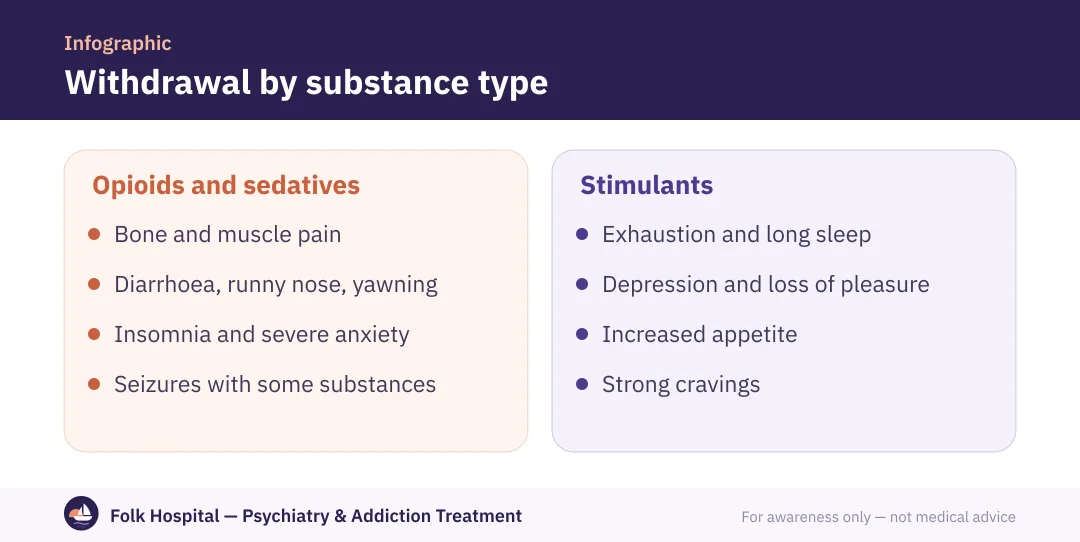
| Type of drug | Common symptoms | Level of risk |
|---|---|---|
| Opioids (heroin, tramadol, painkillers) | Bone pain, diarrhoea, runny nose and eyes, sweating, insomnia, anxiety | Painful and rarely life-threatening; tramadol can cause seizures |
| Alcohol | Tremor, sweating, anxiety, insomnia, and in severe cases seizures or delirium | Can be life-threatening and needs supervision |
| Sedatives (benzodiazepines) | Anxiety, insomnia, tremor, sensitivity to light and sound, seizures with sudden stopping | Can be dangerous and needs gradual tapering |
| Stimulants (crystal meth, cocaine, captagon) | Exhaustion, long sleep, hunger, depression, cravings | Milder physically; psychologically can cause suicidal thoughts |
| Cannabis | Insomnia, irritability, poor appetite, anxiety, vivid dreams | Unpleasant but usually not dangerous |
| Pregabalin and gabapentin | Anxiety, insomnia, sweating, nausea, seizures at high doses | Needs gradual tapering |
Each drug has a detailed page on its withdrawal, such as opioid withdrawal, alcohol withdrawal and cannabis withdrawal.
03What determines how severe withdrawal is?
- The type of drug and how long it stays in the body.
- The dose and length of use.
- Mixing several substances.
- Physical and mental health, and age.
- How the person stops: suddenly or gradually.
04Protracted symptoms: what comes after the first two weeks?
After the acute symptoms end, many people go through a period of mild, protracted symptoms: broken sleep, mood swings, low energy, poor concentration and cravings that come and go. They can last weeks or months and improve gradually. Knowing this in advance protects against discouragement and relapse, because many people think "nothing has changed" and go back. Read about cravings.
05Danger signs that need emergency care
- Seizures or loss of consciousness.
- Hallucinations or severe confusion.
- High temperature or a very fast heart rate.
- Severe vomiting or diarrhoea with signs of dehydration.
- Thoughts of suicide or harm.
06How medical detox eases them
Medical detox doesn't mean "toughing it out" but managing symptoms safely:
- Medicines for each symptom: for pain, diarrhoea, insomnia and anxiety.
- Medicines that prevent complications: such as seizure prevention in alcohol and sedative withdrawal.
- Gradual tapering for some drugs instead of stopping suddenly.
- Fluids, nutrition and vitamins.
- Round-the-clock monitoring and validated scales for symptom severity.
- Psychological support from the first days.
Read about our detox programme.
07Myths about withdrawal
The myth
- Withdrawal always ends in three days.
- Herbs and juices cleanse drugs from the body.
- It has to hurt to work.
- When the symptoms end, the addiction ends.
The reality
- The length varies by drug and can stretch to weeks.
- There's no evidence for this, and some may cause harm.
- Pain isn't treatment; easing it medically is safer and more successful.
- Withdrawal is the first step; rehabilitation is what treats addiction.
؟Frequently asked questions
How long do withdrawal symptoms last?
Acute symptoms usually last from days to two weeks depending on the drug, longer with sedatives. Mild symptoms such as insomnia, anxiety and cravings can last weeks or months.
Are withdrawal symptoms dangerous?
It varies: opioid withdrawal is painful but rarely life-threatening in a healthy person, while alcohol and sedative withdrawal can cause seizures or dangerous delirium, and stimulant withdrawal can cause depression and suicidal thoughts.
Are there herbs or drinks that ease withdrawal?
No herbs have been shown to treat withdrawal, and some may be harmful or interact with medicines. Fluids, nutrition and sleep help, but moderate and severe cases need supervised medication.
Can I go through withdrawal at home?
For some drugs at low doses it may be possible with medical supervision, but alcohol, sedatives, high doses and mixing usually need detox in hospital.
Sources and references
- Drug misuse in over 16s: opioid detoxification (CG52) — National Institute for Health and Care Excellence (NICE)
- Alcohol-use disorders: diagnosis, assessment and management (CG115) — National Institute for Health and Care Excellence (NICE)
- Opiate and opioid withdrawal — U.S. National Library of Medicine — MedlinePlus
- Treatment Approaches for Drug Addiction — DrugFacts — National Institute on Drug Abuse (NIDA)

A psychiatrist specialising in addiction and mental illness in adults and adolescents, with a focus on dual diagnosis.
For awareness only — not a substitute for medical advice. Editorial policy · View profile