01How does the body recover?
When use stops, the body begins a gradual recovery. But each organ recovers at its own pace, and the journey varies with the type of drug, length of use, age and overall health.
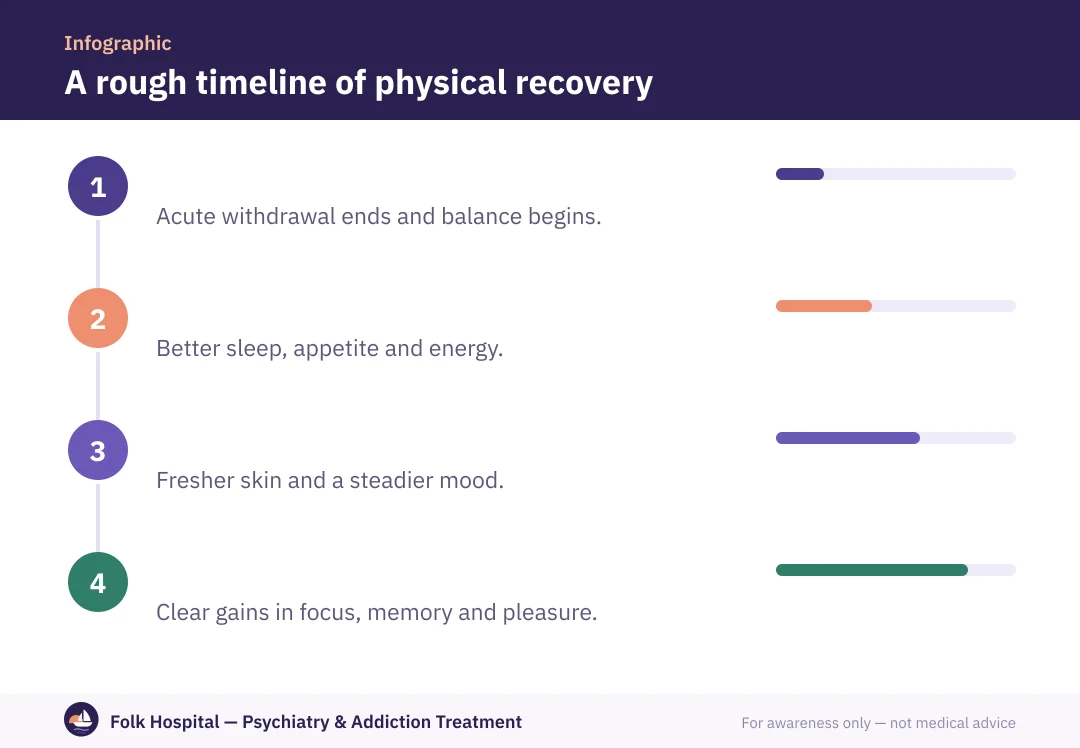
| Period | What usually improves |
|---|---|
| First days | Acute withdrawal symptoms gradually end, and fluids and eating start to settle |
| First weeks | Sleep and appetite improve, digestion settles and energy begins to return |
| 1–3 months | Skin colour and weight improve, mood improves noticeably and cravings fall |
| 3–6 months | Concentration and memory improve, liver function improves after alcohol, and sleep stabilises |
| After that | Gradual improvement continues in the brain and overall health |
02The most affected organs and how they recover
- Liver: fatty liver improves greatly after stopping alcohol, but advanced cirrhosis doesn't reverse. Hepatitis C, common with injecting, is now curable in most cases.
- Heart and blood pressure: improve after stopping alcohol and stimulants, and risks fall over time.
- Lungs: breathing improves after stopping smoking and smoked cannabis.
- Teeth: need a dentist, especially after crystal meth and heroin.
- Skin: regains colour and vitality, and sores and infections heal with care.
- Hormones and sexual function: improve gradually after stopping opioids and alcohol.
03The brain: slowest, but it recovers
The brain is the organ most affected by addiction and the slowest to recover. Research indicates that many changes in reward and control systems improve with long abstinence, such as the ability to enjoy things, concentrate and make decisions. But this takes months, and along the way there may be hard days of insomnia, low mood or cravings. Read about brain chemistry and addiction.
04How to speed recovery
- Regular nutritionbalanced meals rich in vegetables and protein, enough fluids, and supplements prescribed by a doctor for any deficiency.
- Regular sleepfixed times, and less caffeine and screen time at night.
- Physical activitydaily walking, then regular exercise to lift mood and improve sleep.
- Medical follow-upliver and blood tests, treating hepatitis if present, and seeing a dentist.
- Avoid harmful substitutesdon't replace the drug with heavy smoking, excess caffeine or compulsive eating.
05Problems that may need specific treatment
- Hepatitis and HIV in anyone who injected.
- Vein damage or abscesses.
- Heart disease in stimulant users.
- Nerve damage in heavy drinkers or inhalant users.
- Bladder damage in ketamine users.
06Physical recovery isn't the end of treatment
You may feel much better physically after a few weeks and think you're "done". But cravings and triggers are still there, and psychological rehabilitation and follow-up are what protect that improvement. Read about life after recovery and our aftercare programme.
؟Frequently asked questions
When will my body return to normal after stopping?
It depends on the drug and length of use. Sleep and appetite usually improve within weeks, energy and skin within months, and concentration and memory may take several months.
Does the liver recover after stopping alcohol or drugs?
Fatty liver improves greatly with abstinence and liver inflammation may improve, but advanced cirrhosis doesn't reverse, though stopping halts its decline. Viral hepatitis needs specific treatment.
Does the brain return to normal?
Many brain functions improve with long abstinence, such as concentration, memory and the ability to enjoy things, but recovery is slow, takes months, and may be partial with some drugs and long use.
Why have I gained weight since stopping?
Appetite returns after stopping, and some people eat more to compensate or instead of the drug. This is common and can be managed with regular meals and physical activity.
Sources and references
- Treatment Approaches for Drug Addiction — DrugFacts — National Institute on Drug Abuse (NIDA)
- Alcohol — fact sheet — World Health Organization
- Alcohol-use disorders: diagnosis, assessment and management (CG115) — National Institute for Health and Care Excellence (NICE)
- Mental disorders — fact sheet — World Health Organization

A psychiatrist specialising in addiction and mental illness in adults and adolescents, with a focus on dual diagnosis.
For awareness only — not a substitute for medical advice. Editorial policy · View profile