01What to expect in the first months
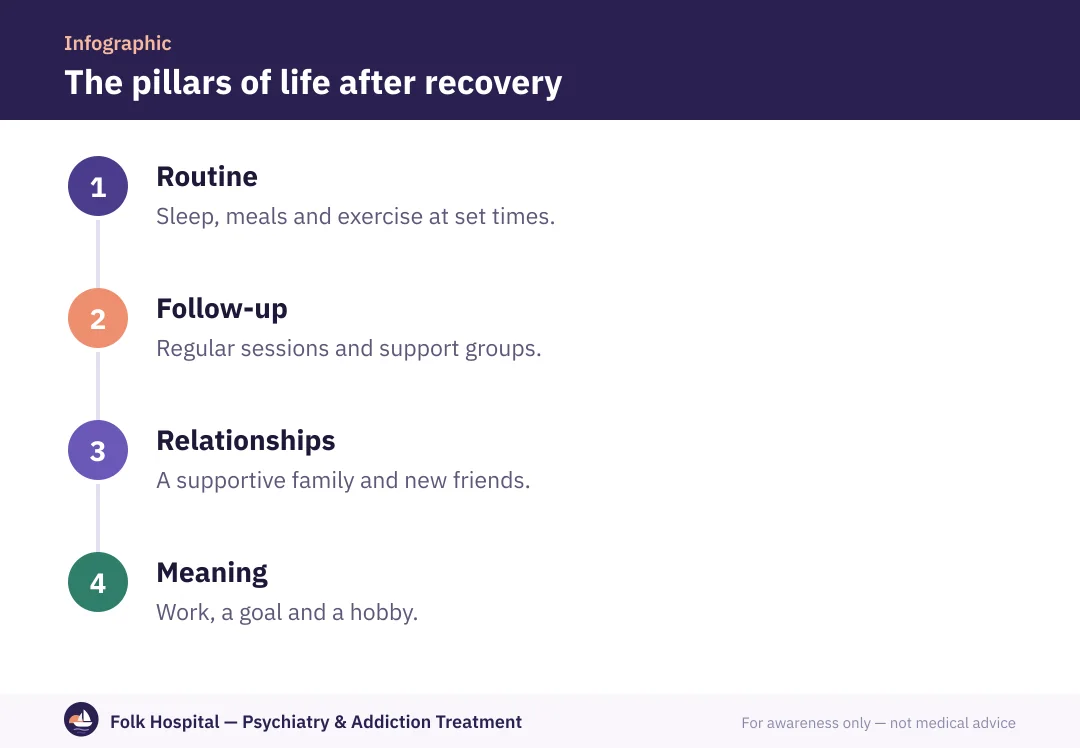
Recovery isn't the moment of leaving hospital but a new life built step by step. In the first months many people go through similar experiences:
| What you may go through | Why it happens | What helps |
|---|---|---|
| Mood swings and insomnia | The brain is rebalancing | A steady sleep routine, exercise and follow-up |
| Strong, unfamiliar feelings | The drug used to mute them | Talking them through with a therapist or trusted person |
| Boredom and empty time | The time the drug used to fill | A daily plan and new activities |
| Caution from the family | Trust takes time | Patience and repeated actions |
| Intermittent cravings | Memory and triggers | A craving plan and avoiding triggers |
Read about cravings and protracted withdrawal.
02Rebuilding relationships
- With family: trust doesn't return through promises but through small daily commitments, repeated. Family sessions help both sides. See our family programme.
- With old friends: anyone whose friendship was built on using usually needs distance, at least at first.
- New relationships: support groups, sport, work and volunteering. Read about the 12-step programme.
- Apologising and making amends: when you're ready, and in ways that don't hurt anyone.
03Work and money
Returning to work gives the day meaning and structure, but it can carry triggers. So it's best gradual where possible, with a plan for stressful situations. At first it helps to manage money with a trusted person, because having cash to hand is one of the strongest triggers.
04How to protect your recovery
- A steady routineregular sleep, meals and appointments.
- Physical activityimproves mood and sleep and reduces cravings.
- Regular follow-upsessions and tests as planned. See our aftercare programme.
- Treating any mental health conditionuntreated depression and anxiety are among the biggest causes of relapse.
- Small goalsdaily and weekly achievements that build self-confidence.
- An emergency planwhat to do with a craving or a slip. Read about relapse.
05Celebrate progress
Every week and month in recovery is an achievement worth recognising. Marking milestones, in ways not linked to the drug, strengthens motivation and reminds you of what you're building.
؟Frequently asked questions
Why do I feel sad even though I've stopped?
Because the brain is still regaining its balance, and you're feeling emotions the drug used to mute. This is common and improves with time, but if the sadness lasts weeks or comes with thoughts of self-harm, you need an assessment for depression.
When will my family trust me again?
Gradually, through repeated actions: keeping appointments, honesty and follow-up. It may take months, and patience is part of recovery.
Should I go back to my old job?
It depends on the work and how it's linked to using. We discuss a gradual return with your therapist, or a change if the environment is risky.
Should I tell new friends about my past?
That's your choice. You don't have to tell everyone, but having one or two people who know and support you helps a great deal.
Sources and references
- Treatment Approaches for Drug Addiction — DrugFacts — National Institute on Drug Abuse (NIDA)
- Drug misuse in over 16s: psychosocial interventions (CG51) — National Institute for Health and Care Excellence (NICE)
- Mental disorders — fact sheet — World Health Organization
A specialist in psychological rehabilitation, behaviour modification and relapse prevention, with over 15 years in addiction programmes.
For awareness only — not a substitute for medical advice. Editorial policy · View profile