01What happens after trauma?
During a traumatic event the brain works in survival mode, and the memory is stored differently: vivid, fragmented and charged with fear. Normally the brain gradually processes the memory until it becomes «the past». In PTSD this processing doesn't finish, so the event feels as if it's happening now and the alarm system stays on alert. Read psychological trauma.
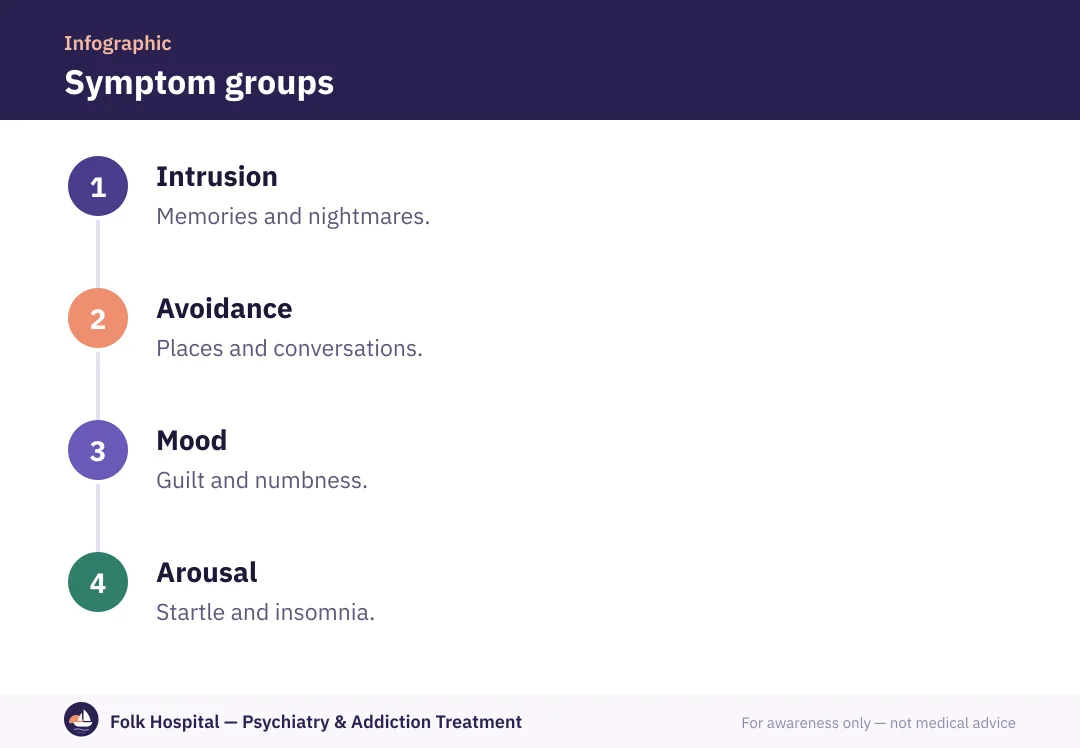
02The four symptom groups
| Group | Examples |
|---|---|
| Re-experiencing | Intrusive memories, nightmares, flashbacks as if it's happening again |
| Avoidance | Steering clear of places, people and conversations that remind of the event |
| Changes in thinking and mood | Self-blame, a sense of constant danger, numbness, lost interest |
| Hyperarousal | Insomnia, irritability, startle at noises, poor concentration |
Details in PTSD symptoms.
03Who is most at risk?
- People exposed to repeated or prolonged trauma, such as domestic violence.
- Those who had no support after the event.
- Those with prior anxiety or depression.
- People in trauma-exposed jobs, such as paramedics and security.
Details in causes of PTSD.
- Suicidal thoughts or self-harm.
- Severe detachment from reality or inability to look after oneself.
- A large increase in alcohol or substance use.
Mental health hotline: 08008880700; ambulance: 123.
Ambulance: 12304Treatment
- Safety and stabilisationmaking sure the danger is over and regulating sleep and routine.
- Trauma-focused therapycognitive behavioural therapy or EMDR to process the memory safely.
- Medication when neededsome antidepressants ease symptoms.
- Treating co-occurring problemsdepression and addiction if present.
Read PTSD treatment.
05What to read next
؟Frequently asked questions
What is PTSD?
A mental health condition following a traumatic event, with intrusive memories, nightmares, avoidance, mood changes and hyperarousal, lasting more than a month and affecting life.
Does everyone who experiences trauma develop it?
No. Most people recover gradually over weeks; a share keep having symptoms and are diagnosed with the disorder.
When do symptoms appear?
Usually in the first months after the event, but sometimes they're delayed by months or years.
Can PTSD be cured?
Yes. Many patients improve clearly with trauma-focused therapy, sometimes with medication, even years after the event.
What's the best treatment?
Trauma-focused cognitive behavioural therapy and eye movement desensitisation and reprocessing (EMDR), with antidepressants in some cases.
Does it affect children?
Yes. In children it may show as repetitive play about the event, clinginess, or losing skills they had learned.
Sources and references
- PTSD (post-traumatic stress disorder) — overview — NHS (UK)
- Post-Traumatic Stress Disorder — National Institute of Mental Health (NIMH)
- Psychotherapies — National Institute of Mental Health (NIMH)
- Mental disorders — fact sheet — World Health Organization

A psychiatrist specialising in addiction and mental illness in adults and adolescents, with a focus on dual diagnosis.
For awareness only — not a substitute for medical advice. Editorial policy · View profile