- Depression is a medical illness affecting mood, energy and thinking, not a character weakness.
- It's diagnosed when symptoms last two weeks or more and affect life.
- Psychotherapy and antidepressants work, and combining them is best in moderate and severe cases.
- Alcohol and drugs worsen depression and hinder treatment.
- Suicidal thoughts signal worsening depression and need immediate help.
01What is depression?
Depression, medically called major depressive disorder, changes mood, thinking and the body together. It isn't just sadness; it includes losing the ability to enjoy things, feeling heavy and tired, and seeing yourself and the future in a dark light. It may follow stress or loss, or arrive without a clear reason.
In short: depression is an illness affecting mood, energy and thinking, lasting two weeks or more, and it needs treatment like any other medical condition.
02What are the symptoms of depression?
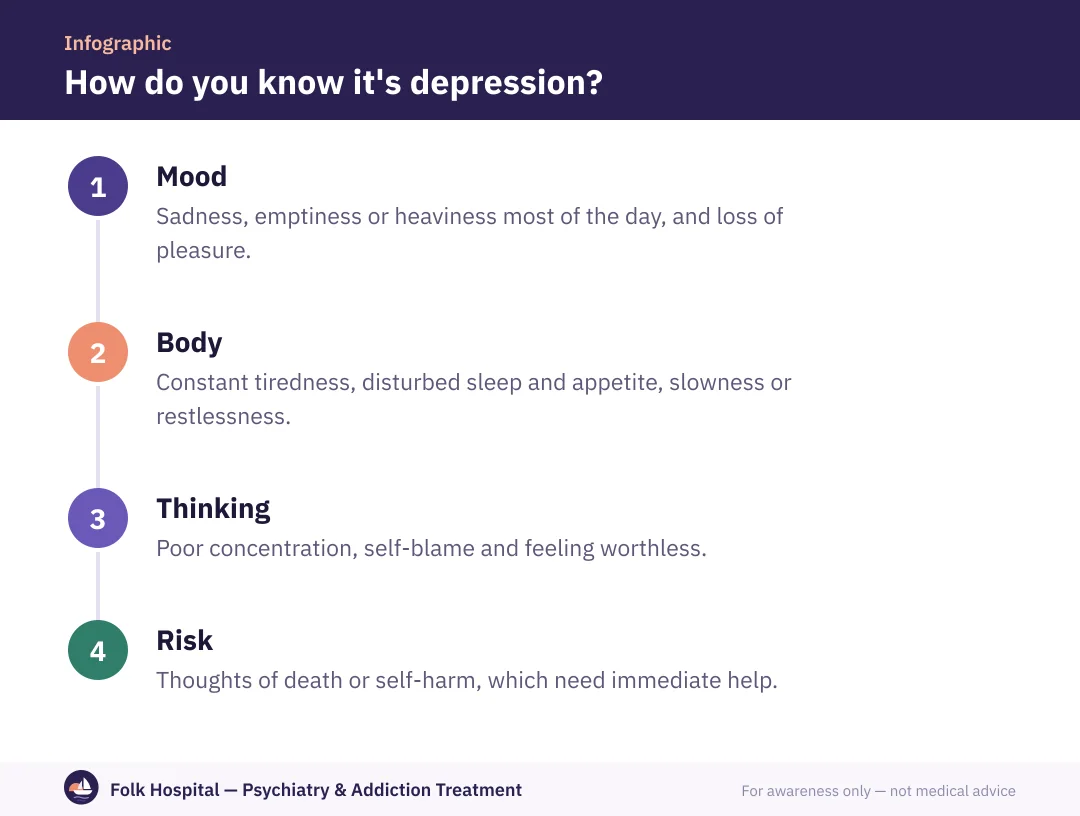
Emotional symptoms
- Sadness, emptiness or heaviness most of the day.
- Loss of interest and pleasure.
- Guilt or feeling worthless.
- Trouble concentrating and making decisions.
- Thoughts of death or suicide.
Physical symptoms
- Constant fatigue and low energy.
- Insomnia or oversleeping.
- Poor appetite or overeating.
- Slowed movement, or agitation.
- Physical pain without a clear cause.
For details read symptoms of depression.
03Why does depression happen?
There's no single cause. Genetic factors and changes in brain function interact with life stresses such as loss, conflict and unemployment, chronic physical illness and drug and alcohol use. Read causes of depression.
04How is depression treated?
- Assessmentan interview with a psychiatrist to establish severity and type and rule out physical causes.
- PsychotherapyCBT and other approaches that change patterns of thinking and coping.
- Medicationantidepressants for moderate and severe depression, taking 4–6 weeks to show full benefit.
- Lifestyleregular sleep, physical activity, social contact and avoiding alcohol and drugs.
- Follow-upcontinuing treatment after improvement to prevent a return.
Details in depression treatment.
If you're having thoughts of suicide or self-harm, it's a sign that depression has deepened and needs help now, not a weakness in you. Call straight away or ask someone close to stay with you.
05What to read next
؟Frequently asked questions
How do I know if I'm depressed or just sad?
Sadness is usually tied to a particular event, eases with time and doesn't completely stop you enjoying things. Depression lasts two weeks or more, drains pleasure and energy, and affects sleep, work and relationships. Read depression vs sadness or try the depression test.
Can depression be fully cured?
Yes, many people recover fully from an episode. It can recur in some, so follow-up and knowing early signs matter. Read about depression relapse.
Are antidepressants addictive?
No, they don't cause addiction in the sense of compulsive craving and escalating doses. But stopping suddenly can cause unpleasant symptoms, so they're tapered under a doctor's guidance.
When does someone with depression need hospital admission?
When there are suicidal thoughts or plans, refusal of food and drink, psychotic symptoms or no response to outpatient treatment. See our psychiatric hospital.
Is depression hereditary?
Genes contribute to vulnerability, but stress, experiences and physical health play a big part; an affected relative doesn't make depression inevitable.
Do antidepressants cause addiction?
They don't cause addiction in the usual sense, but stopping suddenly can cause unpleasant discontinuation symptoms, so stopping is gradual under medical supervision.
Can depression be treated without medication?
Mild cases may respond to psychotherapy and lifestyle changes alone; moderate and severe cases usually benefit from medication plus therapy.
Sources and references
- Depressive disorder (depression) — fact sheet — World Health Organization
- Depression — National Institute of Mental Health (NIMH)
- Psychotherapies — National Institute of Mental Health (NIMH)
- Comorbidity: Substance Use and Other Mental Disorders — National Institute on Drug Abuse (NIDA)

A psychiatrist specialising in addiction and mental illness in adults and adolescents, with a focus on dual diagnosis.
For awareness only — not a substitute for medical advice. Editorial policy · View profile