- Generalised anxiety moves between many topics, not one.
- Physical symptoms such as muscle tension and fatigue are core to it.
- Sedatives give temporary relief but can cause dependence.
- CBT and antidepressants are first-line.
- GAD often comes with depression, insomnia or addiction.
01What does generalised anxiety look like?
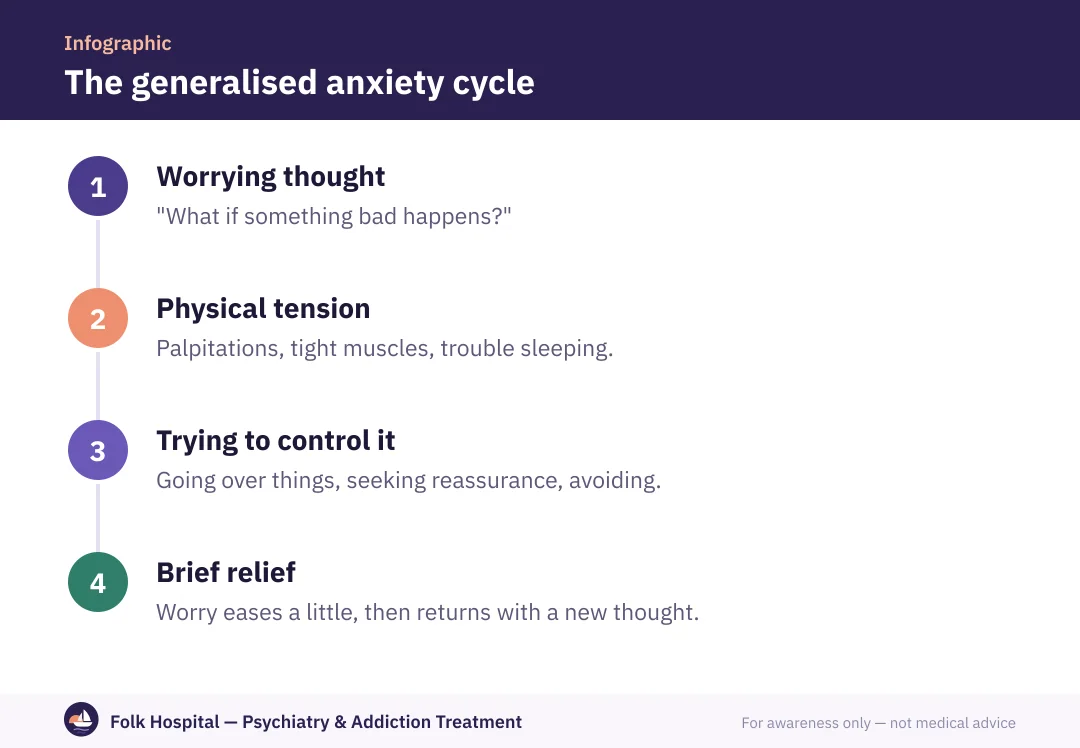
It isn't fear of one thing but a mind on constant alert: worrying about health in the morning, work at noon and the children at night, always expecting the worst, unable to «switch off» the thoughts even when knowing they're exaggerated.
02Symptoms
| Kind | Examples |
|---|---|
| Psychological | Constant worry, expecting the worst, poor concentration, irritability |
| Physical | Muscle tension, fatigue, headaches, stomach upset, palpitations |
| Sleep | Difficulty falling or staying asleep |
| Behavioural | Repeated reassurance-seeking, avoidance, procrastination |
Details in GAD symptoms.
03Treatment
Short-term fixes
- Sedatives that relieve for hours.
- Repeated reassurance from others.
- Avoiding worrying situations.
Effective treatment
- Cognitive behavioural therapy.
- Non-addictive antidepressants.
- Regular sleep and activity.
- Relaxation skills and accepting uncertainty.
- Suicidal thoughts or deep hopelessness.
- Chest pain or breathlessness that hasn't been checked before.
Ambulance 123; mental health hotline 08008880700.
Ambulance: 12304What to read next
؟Frequently asked questions
What is generalised anxiety disorder?
Excessive, persistent, hard-to-control worry about many daily matters, on most days for at least six months, with physical and psychological symptoms.
How does normal worry differ from GAD?
Normal worry is tied to a situation and passes; GAD is persistent, exaggerated, moves between topics and affects life.
Can GAD be cured?
Many patients improve clearly with treatment; symptoms may return under stress, and treatment helps manage them.
What's the best treatment?
CBT, SSRI or SNRI antidepressants, and sometimes other medicines chosen by the doctor.
Are sedatives a treatment for anxiety?
They may be used very briefly, but aren't a long-term solution because they can cause dependence.
Does anxiety cause physical symptoms?
Yes, such as muscle tension, headaches, fatigue, stomach upset, palpitations and insomnia.
Sources and references
- Anxiety Disorders — National Institute of Mental Health (NIMH)
- Anxiety disorders — fact sheet — World Health Organization
- Psychotherapies — National Institute of Mental Health (NIMH)
- Mental Health Medications — National Institute of Mental Health (NIMH)

A psychiatrist specialising in addiction and mental illness in adults and adolescents, with a focus on dual diagnosis.
For awareness only — not a substitute for medical advice. Editorial policy · View profile