01Types of insomnia
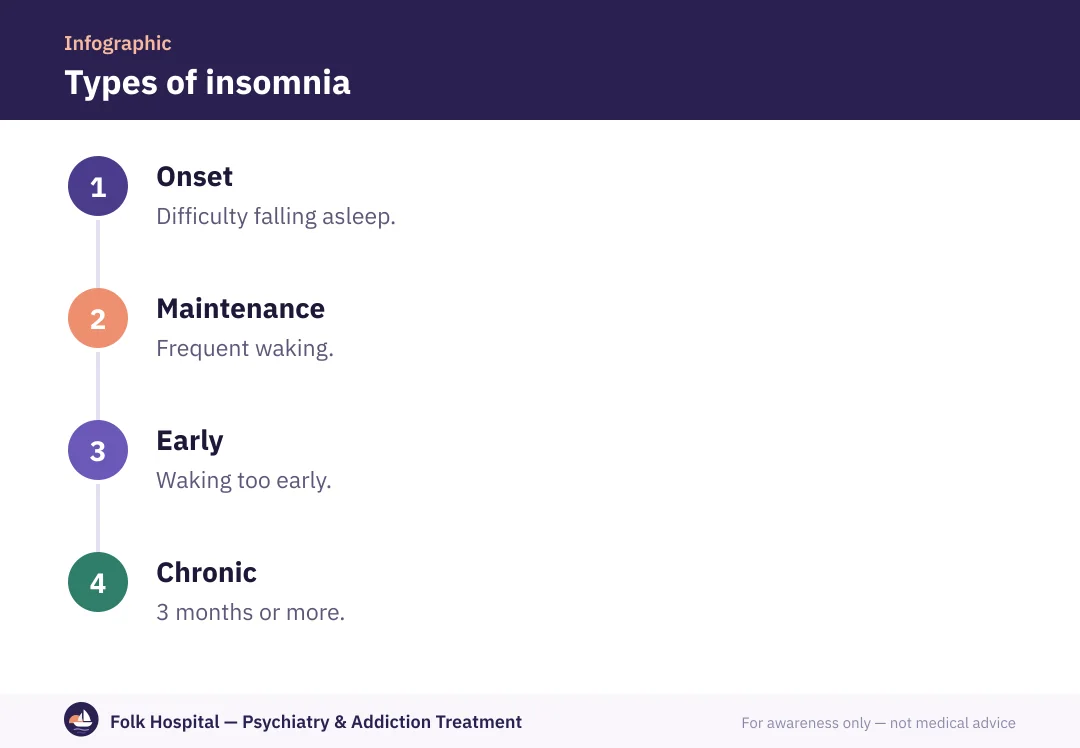
| Type | What happens |
|---|---|
| Onset insomnia | Taking more than half an hour to fall asleep |
| Maintenance insomnia | Frequent waking and difficulty getting back to sleep |
| Early waking | Waking hours early and unable to sleep again |
| Short-term insomnia | Days or weeks with stress or an event |
| Chronic insomnia | 3 nights a week for 3 months or more |
02Common causes
- Psychological: anxiety, depression, PTSD and overthinking.
- Habits: irregular schedules, long naps, screens before bed.
- Substances: caffeine, stimulants, alcohol, and withdrawal from substances.
- Physical: chronic pain, sleep apnoea and thyroid problems.
Details in causes of insomnia.
03Habits that help sleep
- A fixed wake-up timeevery day, even on holidays.
- Bed for sleep onlyno work or screens in bed.
- If not asleep within 20 minutesget up and sit somewhere quiet until drowsy.
- Cut caffeineno coffee, tea or energy drinks after midday.
- Dim light before bedand keep the phone away.
Beware sleeping pills without a prescription
Many sleeping pills and sedatives cause dependence, and stopping them can cause worse rebound insomnia. Read insomnia and addiction and zolpidem.
04Treatment
CBT for insomnia resets sleep patterns and changes anxious thoughts about sleep, with lasting results. The doctor treats any underlying cause. Read harms of insomnia, insomnia treatment, melatonin and the insomnia test.
؟Frequently asked questions
What is insomnia?
Difficulty sleeping, staying asleep or waking early, affecting the day, despite adequate opportunity to sleep.
When is insomnia chronic?
When it happens at least three nights a week for three months or more.
Are sleeping pills a treatment for insomnia?
They may be used very briefly on a doctor's decision, but they don't treat the cause and some cause dependence. CBT for insomnia is first-line.
Does anxiety cause insomnia?
Yes. Anxiety and overthinking are among the commonest causes, and insomnia in turn increases anxiety.
Is insomnia a sign of depression?
It can be. Waking very early with low mood is a common sign of depression.
How many hours of sleep does an adult need?
Most adults need roughly 7 to 9 hours; what matters most is feeling rested during the day.
Sources and references
- Insomnia — NHS (UK)
- Mental disorders — fact sheet — World Health Organization
- Drugs, Brains, and Behavior: The Science of Addiction — National Institute on Drug Abuse (NIDA)

A psychiatrist specialising in addiction and mental illness in adults and adolescents, with a focus on dual diagnosis.
For awareness only — not a substitute for medical advice. Editorial policy · View profile