01The four skills
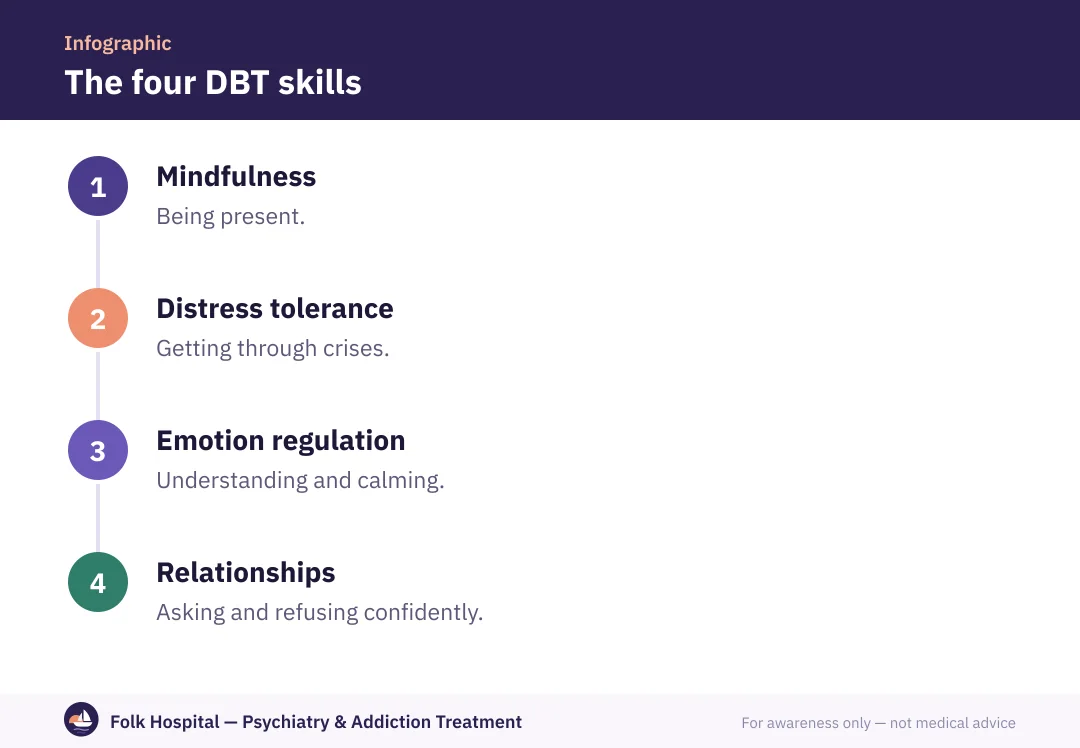
| Skill | What it teaches |
|---|---|
| Mindfulness | Noticing the moment without judgement |
| Distress tolerance | Getting through a crisis without harm |
| Emotion regulation | Understanding emotions and reducing intensity |
| Interpersonal effectiveness | Asking for what you need while keeping the relationship |
02Programme components
- Individual sessionsfor analysis and problem-solving.
- Skills groupweekly learning and practice.
- Crisis supportto apply skills when needed.
- Therapy teamsupporting the therapists themselves.
- Don't wait for the next session.
In Egypt call the ambulance on 123 or the mental-health hotline 08008880700.
Ambulance: 123Read psychiatric therapies and the psychiatric hospital. Also read borderline personality and self-harm.
؟Frequently asked questions
What is DBT?
A psychotherapy combining acceptance and change, teaching emotion regulation, distress tolerance, relationship and mindfulness skills.
Who is it for?
Borderline personality, repeated self-harm, and some eating disorders and addiction.
What does «dialectical» mean?
Balancing accepting the person as they are with working to change what harms them.
How long is treatment?
Full programmes are relatively long, running for months.
How does it differ from CBT?
It's derived from CBT but focuses more on intense emotions, acceptance and crisis skills.
Does it reduce suicide attempts?
Studies show it reduces self-harm and suicidal behaviour in those it suits.
Sources and references
- Psychotherapies — National Institute of Mental Health (NIMH)
- Types of talking therapies — NHS (UK)

A psychiatrist specialising in addiction and mental illness in adults and adolescents, with a focus on dual diagnosis.
For awareness only — not a substitute for medical advice. Editorial policy · View profile