01The basis of handling it
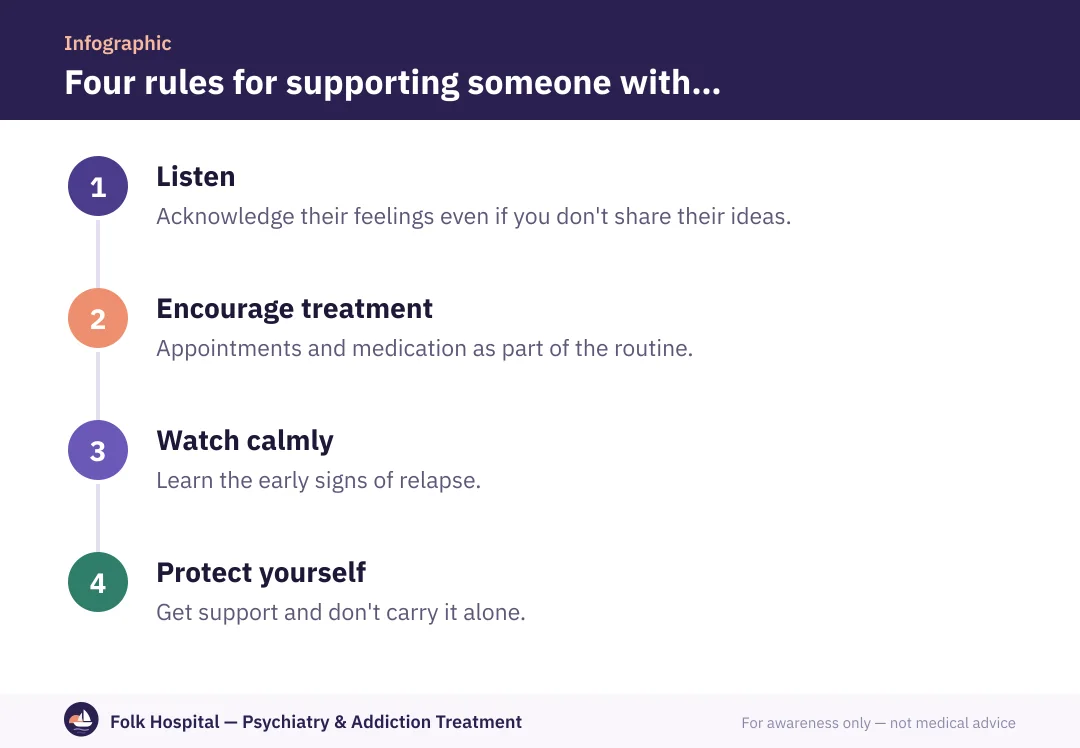
Mental illness isn't weakness or attention-seeking, and your relative isn't «the illness». Successful handling combines respect, patience and clear boundaries.
02What to say and what to avoid
Raises tension
Helps
- «It's all in your head» | «I can see you're struggling, and I'm with you»
- Arguing about strange ideas | Acknowledging feelings without confirming the idea
- Mocking or threatening | Calm and respect
- Pushing to stop medication «because you're better» | Encouraging a talk with the doctor
03Supporting treatment
- Understand the diagnosisread about it and ask the doctor.
- Help with adherencereminders about medicines and appointments without suffocating monitoring.
- Notice side effectsand encourage them to tell the doctor.
- A daily routineregular sleep, meals and activity.
- Avoiding drugs and alcoholbecause they increase relapse.
04Signs of relapse by illness
| Illness | Early signs |
|---|---|
| Schizophrenia and psychosis | Less sleep, withdrawal, suspicion and strange speech |
| Bipolar disorder | Overactivity, little sleep and spending, or sadness and withdrawal |
| Depression | Withdrawal, loss of interest and talk of hopelessness |
05Emergencies
- Talk of suicide or an attempt at self-harm.
- Threats or violence towards others.
- Refusing food and drink, or severe confusion.
Ambulance 123, or the mental health hotline 08008880700.
Ambulance: 12306Look after yourself
The caregiver needs rest, support and shared responsibility with the rest of the family. Read about our psychiatric hospital and how to deal with someone with psychosis.
؟Frequently asked questions
My relative refuses medication. What should I do?
Ask why; it may be side effects that the doctor can address. Encourage them to discuss it with the doctor rather than stopping. In dangerous situations the law allows treatment under safeguards.
Should I argue with their strange ideas?
No. Arguing strengthens their hold on them. Acknowledge their feelings without confirming the idea, and focus on what worries them and what they need.
How do I know a relapse is coming?
Signs such as disturbed sleep, withdrawal, stopping medication and changes in speech or mood often come before relapse. Note them and contact the doctor early.
Can they live a normal life?
Many patients work, marry and live stable lives with regular treatment and support.
I'm exhausted from caring for them. Is that normal?
Yes. Caregiver exhaustion is common, and seeking support, rest and sharing responsibility are essential for you to keep going.
Sources and references
- Schizophrenia — National Institute of Mental Health (NIMH)
- Bipolar Disorder — National Institute of Mental Health (NIMH)
- Depression — National Institute of Mental Health (NIMH)
- Suicide Prevention — National Institute of Mental Health (NIMH)
- Mental disorders — fact sheet — World Health Organization

A specialist in psychological rehabilitation, behaviour modification and relapse prevention, with over 15 years in addiction programmes.
For awareness only — not a substitute for medical advice. Editorial policy · View profile