- Bipolar disorder is more than ordinary mood swings; episodes last days or weeks.
- Mania can look like energy and productivity at first but leads to destructive decisions.
- Antidepressants alone can trigger a manic episode.
- Sleep loss, stimulants and hashish trigger episodes.
- Sticking with treatment reduces episodes and protects against suicide.
01The two poles of mood
Manic episode
- Excess energy and little need for sleep.
- Fast speech and racing thoughts.
- Inflated confidence or grandiose ideas.
- Impulsivity: spending, risk-taking, relationships.
- Irritability and agitation.
Depressive episode
- Sadness or emptiness most of the day.
- Loss of pleasure and energy.
- Oversleeping or insomnia.
- Poor concentration and guilt.
- Thoughts of death or suicide.
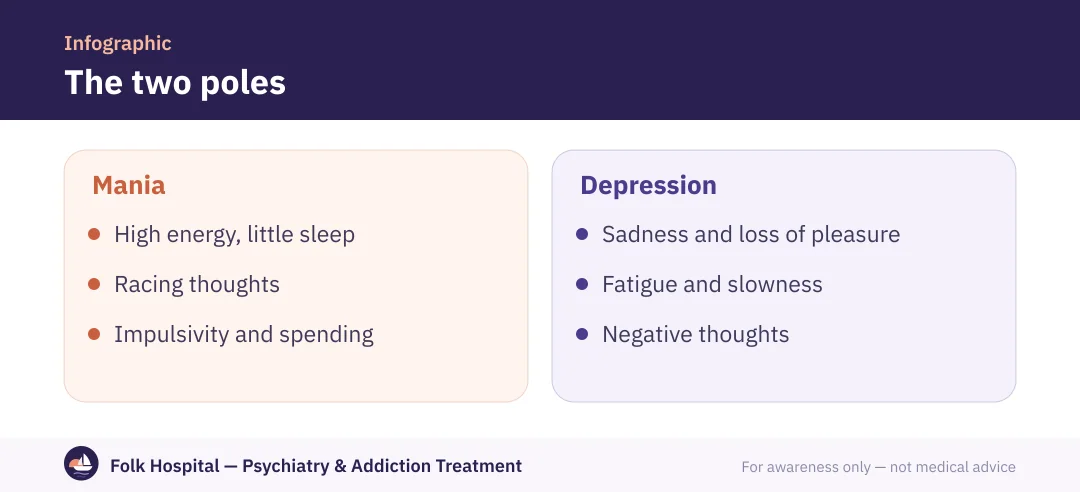
Details in bipolar symptoms.
02The main types
| Type | What defines it |
|---|---|
| Bipolar I | At least one full manic episode |
| Bipolar II | Hypomania plus major depressive episodes |
| Cyclothymia | Milder fluctuations lasting at least two years |
Details in types of bipolar disorder.
- Suicidal thoughts or plans, especially in depressive or mixed episodes.
- Severe mania with days of little sleep and risky decisions.
- Psychosis or agitation with risk to self or others.
Mental health hotline: 08008880700.
Ambulance: 12303Treatment
- A mood stabiliserthe foundation for preventing episodes, such as lithium or lamotrigine.
- Treating acute episodesantipsychotics for mania, cautious treatment for depression.
- Psychological therapyeducation, routine and sleep regulation, and CBT.
- Relapse preventionknowing early signs and avoiding drugs and late nights.
Read bipolar treatment and the bipolar test.
04What to read next
؟Frequently asked questions
What is bipolar disorder?
A mood disorder in which manic or hypomanic episodes alternate with depressive episodes, affecting energy, sleep, thinking and behaviour.
Can bipolar disorder be cured?
It's usually lifelong, but it's managed successfully with treatment, and many patients stay stable for many years.
How does it differ from ordinary mood swings?
Ordinary swings happen within hours and follow events; bipolar episodes last days or weeks and clearly change sleep, energy and behaviour.
Is bipolar disorder hereditary?
Yes. Genes play a strong role; an affected relative clearly raises risk but doesn't make it inevitable.
What's the most important medicine?
Mood stabilisers such as lithium and some anticonvulsants, plus some antipsychotics, chosen by the doctor according to the episodes.
Can a person live a normal life?
Yes. With regular treatment, good sleep, avoiding drugs and follow-up, many work, marry and live stable lives.
Sources and references
- Bipolar Disorder — National Institute of Mental Health (NIMH)
- Bipolar disorder — fact sheet — World Health Organization
- Mental Health Medications — National Institute of Mental Health (NIMH)

A psychiatrist specialising in addiction and mental illness in adults and adolescents, with a focus on dual diagnosis.
For awareness only — not a substitute for medical advice. Editorial policy · View profile