01A map of causes
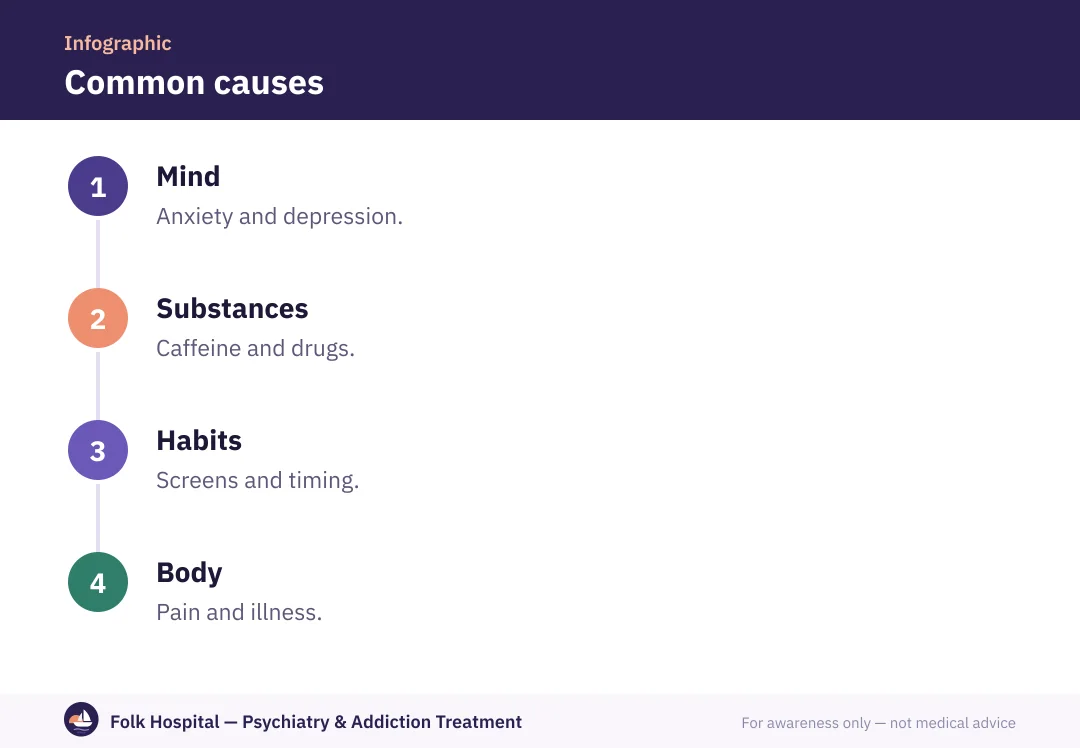
| Category | Examples |
|---|---|
| Psychological | Anxiety, depression, trauma, overthinking, bipolar disorder |
| Behavioural | Shifting schedules, long naps, screens, working in bed, night shifts |
| Substances | Caffeine, nicotine, stimulants, alcohol |
| Withdrawal | Sedatives, opioids, hashish |
| Physical | Chronic pain, sleep apnoea, thyroid, reflux, frequent night-time urination |
| Medicines | Steroids, some asthma medicines, some antidepressants, ADHD medicines |
02How temporary insomnia becomes chronic
- An initial causestress, illness or an event.
- Bad nightsworry about not sleeping begins.
- Compensating habitslying in bed longer, napping, extra coffee.
- Linking bed with worrythe brain learns that bed is for thinking, not sleeping.
- The resultinsomnia persists even after the first cause has gone.
03Signs that need medical assessment
See a doctor if you notice
- Heavy snoring or pauses in breathing during sleep.
- Severe daytime sleepiness despite sleeping.
- Restless, uncontrollable leg movements when lying down.
- Persistent low mood or early waking.
- Insomnia that began with a new medicine.
Read insomnia, harms of insomnia and insomnia and addiction.
؟Frequently asked questions
What are the commonest causes of insomnia?
Stress, anxiety, irregular habits, caffeine and screens, followed by depression, pain and substances.
Does my phone cause insomnia?
It can delay sleep through light and mental stimulation, especially when used in bed.
Why does insomnia continue after its cause has gone?
Because worry about not sleeping and habits formed during it, such as lying awake in bed, keep it going.
Does quitting hashish cause insomnia?
Yes. Insomnia and vivid dreams are common hashish withdrawal symptoms and improve gradually over weeks.
Do medicines cause insomnia?
Some do, such as steroids, some asthma medicines, activating antidepressants and ADHD medicines.
Is snoring related to insomnia?
Heavy snoring with pauses in breathing and daytime sleepiness may indicate sleep apnoea and needs assessment.
Sources and references
- Insomnia — NHS (UK)
- Mental disorders — fact sheet — World Health Organization
- Drugs, Brains, and Behavior: The Science of Addiction — National Institute on Drug Abuse (NIDA)
- Caffeine — U.S. National Library of Medicine — MedlinePlus

A psychiatrist specialising in addiction and mental illness in adults and adolescents, with a focus on dual diagnosis.
For awareness only — not a substitute for medical advice. Editorial policy · View profile