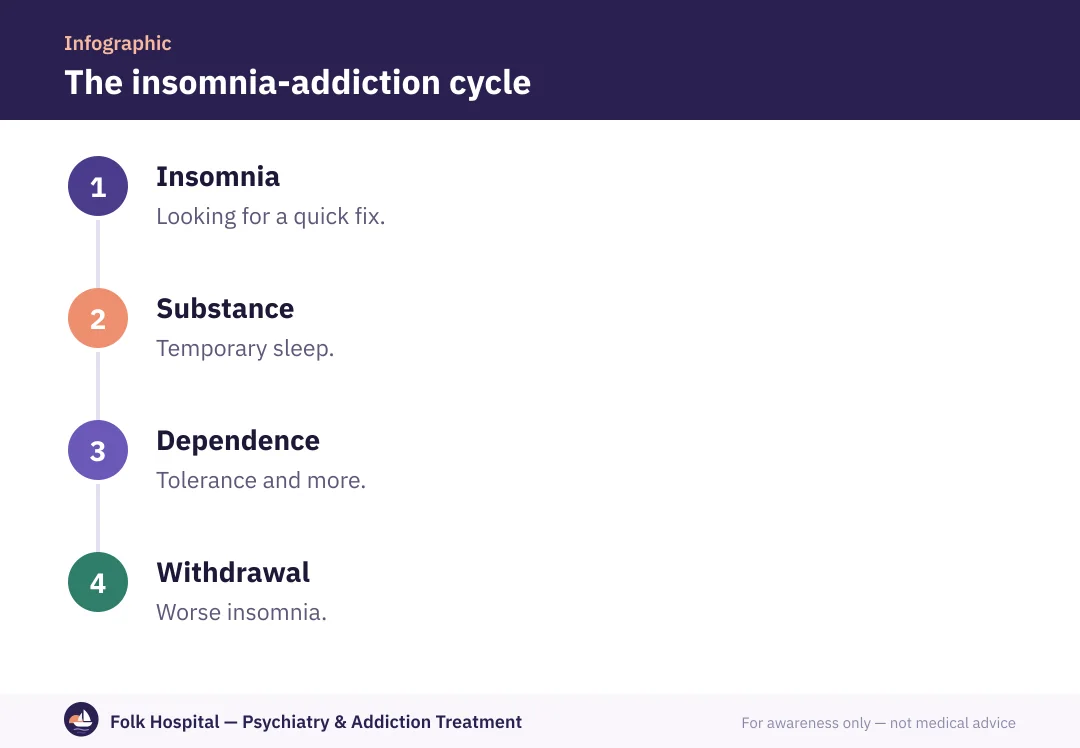
01The insomnia-addiction cycle
- Insomniafrom stress or anxiety.
- A sleeping pill or alcoholquick sleep at first.
- Tolerancethe dose is no longer enough.
- Dependenceno sleep without the substance.
- Trying to stopworse rebound insomnia, so back to the substance.
02Substances and their effect on sleep
| Substance | Effect on sleep |
|---|---|
| Sedatives and zolpidem | Quick sleep, then tolerance and rebound insomnia on stopping |
| Alcohol | Quick sleep, night waking, poorer quality |
| Hashish | Temporary drowsiness; insomnia and vivid dreams on stopping |
| Stimulants | Severe insomnia, then long sleep in the crash |
| Opioids | Fragmented sleep; severe insomnia in withdrawal |
| Pregabalin | Drowsiness; insomnia on stopping |
03Insomnia in recovery
Insomnia is among the commonest and longest-lasting withdrawal symptoms, and it worries people in recovery because it reminds them of the substance that used to make them sleep. The good news is it improves gradually, and behavioural treatment works even at this stage.
What raises relapse risk
- Sleeping pills without a prescription.
- Lying awake in bed for hours.
- Long naps.
- Coffee to make up for tiredness.
What helps
- A fixed wake-up time.
- Daytime activity and morning sunlight.
- CBT for insomnia.
- A non-addictive medicine when needed.
Don't mix sleeping pills
Mixing sleeping pills or sedatives with alcohol, opioids or pregabalin can stop breathing. Read the dangers of mixing drugs.
Read insomnia, relapse and withdrawal symptoms.
؟Frequently asked questions
Do sleeping pills cause addiction?
Some, especially benzodiazepines and drugs such as zolpidem, can cause dependence with long daily use.
Does alcohol help sleep?
It speeds sleep onset but ruins quality and causes waking in the second half of the night; over time it causes dependence and worse insomnia.
How long does insomnia last after quitting drugs?
It varies by substance and can last weeks to months, improving gradually with treatment and good habits.
Should I use a sleeping pill after quitting drugs?
Not without a doctor. The doctor chooses a non-addictive treatment and focuses on behavioural treatment for insomnia.
Why does insomnia cause relapse?
Tiredness, irritability and weaker self-control increase cravings, and the person is tempted back to the substance that used to make them sleep.
What's the best insomnia treatment in recovery?
CBT for insomnia, regular schedules, daytime activity, and sometimes non-addictive medicines chosen by the doctor.
Sources and references
- Insomnia — NHS (UK)
- Mental disorders — fact sheet — World Health Organization
- Drugs, Brains, and Behavior: The Science of Addiction — National Institute on Drug Abuse (NIDA)
- Prescription Medicines — research topic — National Institute on Drug Abuse (NIDA)
- Comorbidity: Substance Use and Other Mental Disorders — National Institute on Drug Abuse (NIDA)

A psychiatrist specialising in addiction and mental illness in adults and adolescents, with a focus on dual diagnosis.
For awareness only — not a substitute for medical advice. Editorial policy · View profile