- Cannabis withdrawal is real, not "all in your head", and it's the top reason people go back in week one.
- Insomnia and very vivid dreams are common and improve gradually.
- Exercise, a regular sleep routine and avoiding caffeine late in the day help a lot.
01Why does hashish withdrawal happen?
With daily use the brain relies on THC to regulate sleep, appetite and mood. When it stops, the endocannabinoid system needs time to resume normal work, and withdrawal symptoms appear in the meantime.
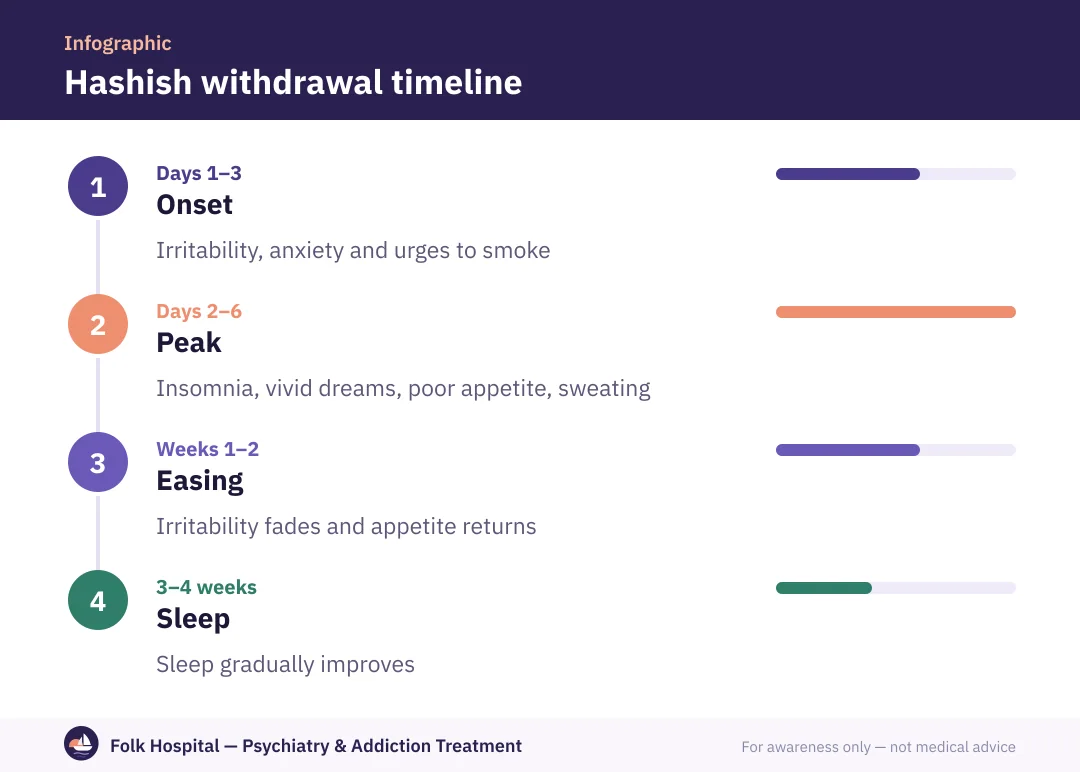
- Days 1–3
Onset
Irritability, anxiety, tension and growing urges to smoke.
Intensity - Days 2–6
Peak
Severe insomnia, vivid or disturbing dreams, poor appetite, night sweats.
Intensity - Weeks 1–2
Easing
Irritability gradually fades and appetite comes back.
Intensity - 3–4 weeks
Sleep
Sleep improves and disturbing dreams lessen.
Intensity
02What are the symptoms?
Psychological symptoms
- Irritability and quick temper
- Anxiety and tension
- Low mood
- Urges to smoke
Physical symptoms
- Insomnia and trouble falling asleep
- Vivid, disturbing dreams
- Poor appetite and weight loss
- Sweating, chills and headache
03How can you get through hashish withdrawal?
- Plan the first two weeksreduce pressures and stay away from smoking places and friends.
- Regulate sleepfixed times, no caffeine after mid-afternoon and no screens before bed.
- Movedaily exercise eases irritability and improves sleep.
- Eat small mealseven when appetite is low.
- Get helpif symptoms are severe or past attempts failed, medical support makes it easier. See hashish addiction treatment.
؟Frequently asked questions
Is cannabis withdrawal dangerous?
It's rarely physically dangerous, but irritability and insomnia can be severe, and depression or anxiety needing treatment may emerge, especially after years of heavy use.
When does sleep return to normal after quitting hashish?
It usually improves over two to four weeks. Vivid dreams may last a little longer; they're a sign that dream sleep is returning to normal.
Sources and references
- Cannabis (Marijuana) — research topic — National Institute on Drug Abuse (NIDA)
- Treatment Approaches for Drug Addiction — DrugFacts — National Institute on Drug Abuse (NIDA)
- Drug addiction: getting help — NHS (UK)

A psychiatrist specialising in addiction and mental illness in adults and adolescents, with a focus on dual diagnosis.
For awareness only — not a substitute for medical advice. Editorial policy · View profile