01What is this test based on?
We wrote the questions in plain language to cover the main signs of insomnia that specialists ask about in an assessment. It helps you see whether you need another step.
02How to read your result
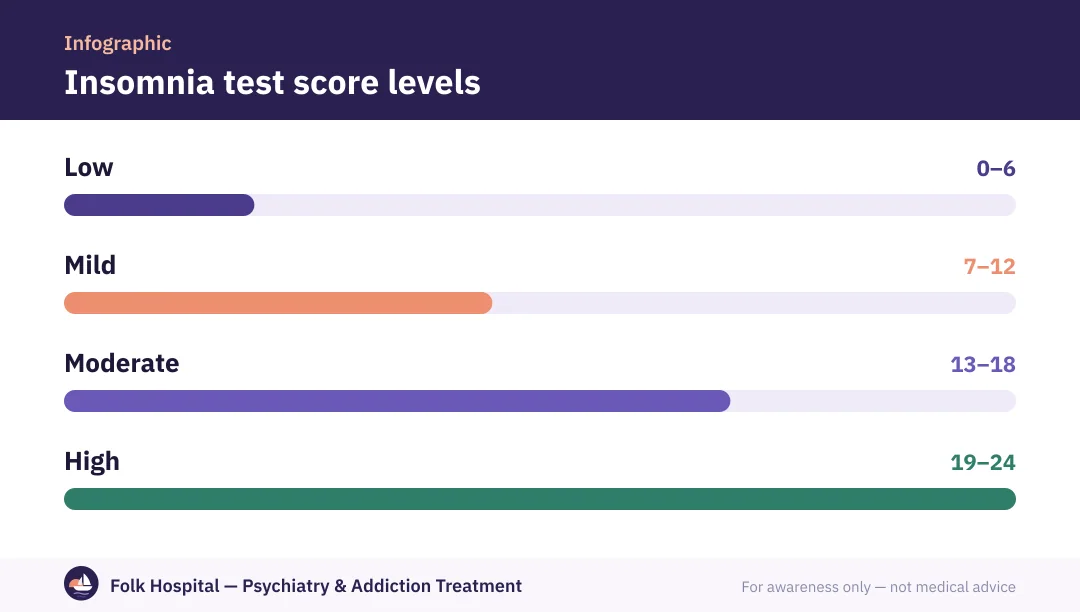
| Score | Level |
|---|---|
| 0–6 | Low |
| 7–12 | Mild |
| 13–18 | Moderate |
| 19–24 | High |
Read about insomnia and its treatment.
03The type of insomnia guides treatment
| Type | Picture |
|---|---|
| Trouble falling asleep | Taking over 30 minutes |
| Broken sleep | Frequent waking |
| Early waking | Unable to get back to sleep |
| Unrefreshing sleep | Tired despite enough hours |
- Fix your wake timeeven at weekends.
- Get out of bedif you can't sleep for a long time.
- Stop screens and caffeine in the evening.
- Get an assessmentif insomnia lasts three months.
؟Frequently asked questions
Are sleeping pills the answer to insomnia?
They may help briefly under supervision, but some cause dependence; cognitive behavioural therapy for insomnia is usually the first choice.
Does the site store my answers?
No, the score is calculated on your device and isn't sent or stored.
When does insomnia become chronic?
When it happens at least three nights a week for three months.
Are sleeping pills the answer?
Short-term under supervision, as some cause dependence.
Does alcohol help sleep?
It speeds drowsiness but fragments sleep and lowers quality.
Is snoring with tiredness insomnia?
It may be sleep apnoea, which needs a different assessment.
Sources and references
- Insomnia — NHS (UK)
- Sleep Disorders — U.S. National Library of Medicine — MedlinePlus
- Sleep problems — Every Mind Matters — NHS (UK)

A psychiatrist specialising in addiction and mental illness in adults and adolescents, with a focus on dual diagnosis.
For awareness only — not a substitute for medical advice. Editorial policy · View profile