01When is insomnia chronic?
Chronic insomnia means difficulty falling asleep, staying asleep or waking too early at least three nights a week for three months, with effects on the day: fatigue, irritability and poor concentration. It differs from the occasional bad night everyone has. Read about the causes of insomnia.
02CBT for insomnia
| Element | What it means |
|---|---|
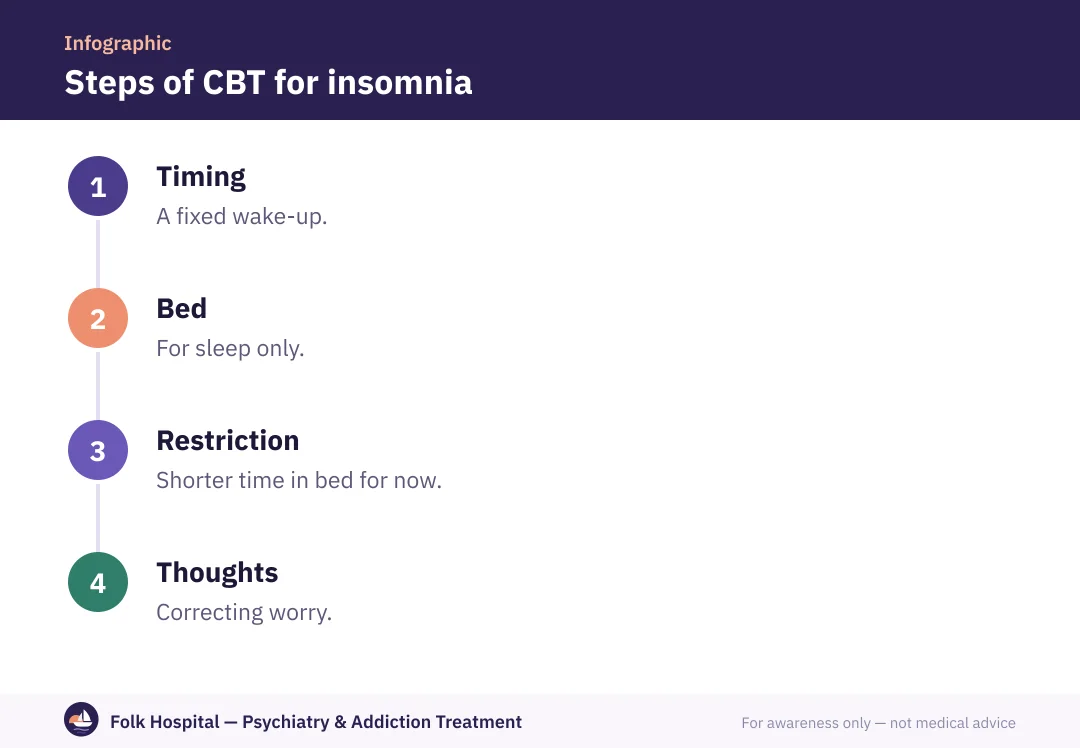
| Sleep restriction | Staying in bed only for actual sleep time, then extending it gradually |
| Linking bed with sleep | No phone or TV in bed, and getting up if you don't fall asleep after a short while |
| A fixed wake time | Every day, including weekends |
| Correcting thoughts | Handling "I'll never sleep" and "tomorrow will be a disaster" |
| Relaxation | Breathing and muscle relaxation before bed |
| Sleep habits | Less caffeine after midday, a quiet dark room, and morning daylight |
It's the treatment guidelines recommend as first-line, because its results last after the sessions end, unlike sleeping pills.
03Sleeping pills: when, and why with caution?
Short-term only
Some sleeping pills, such as benzodiazepines and zolpidem, help temporarily but can cause dependence and rebound insomnia on stopping, and raise the risk of falls in older adults. So they're used short-term and under supervision. Read about treating sleeping-pill dependence.
04Treating the cause
| Cause | What helps |
|---|---|
| Anxiety | Treating anxiety with CBT and non-addictive medicines |
| Depression | Treating depression, which improves sleep with it |
| Snoring and pauses in breathing | A medical assessment for sleep-related breathing disorders |
| Chronic pain | A pain-management plan |
| Substances and alcohol | Stopping them, because they spoil sleep quality |
| Shift work | Managing light exposure and sleep times |
05Insomnia and addiction
Many people turn to alcohol, cannabis or sleeping pills to sleep. It may help briefly, but it disrupts deep sleep, causes rebound insomnia and can turn into dependence. Read about insomnia and addiction.
؟Frequently asked questions
Is melatonin safe?
It can help with body-clock disorders, but check with a doctor before using it regularly.
How long does CBT for insomnia take?
Usually 4 to 8 sessions. Sleep may get slightly worse at first with sleep restriction, then improves clearly.
Should I nap during the day to make up?
Long naps weaken night-time sleep. If you need one, keep it short and before late afternoon.
When is insomnia a sign of another problem?
If it comes with persistent sadness, severe anxiety, snoring and pauses in breathing, chronic pain or substance use, the cause needs assessing.
Sources and references
- Mental Health Medications — National Institute of Mental Health (NIMH)
- Psychotherapies — National Institute of Mental Health (NIMH)
- Anxiety Disorders — National Institute of Mental Health (NIMH)
- Prescription Medicines — research topic — National Institute on Drug Abuse (NIDA)

A psychiatrist specialising in addiction and mental illness in adults and adolescents, with a focus on dual diagnosis.
For awareness only — not a substitute for medical advice. Editorial policy · View profile