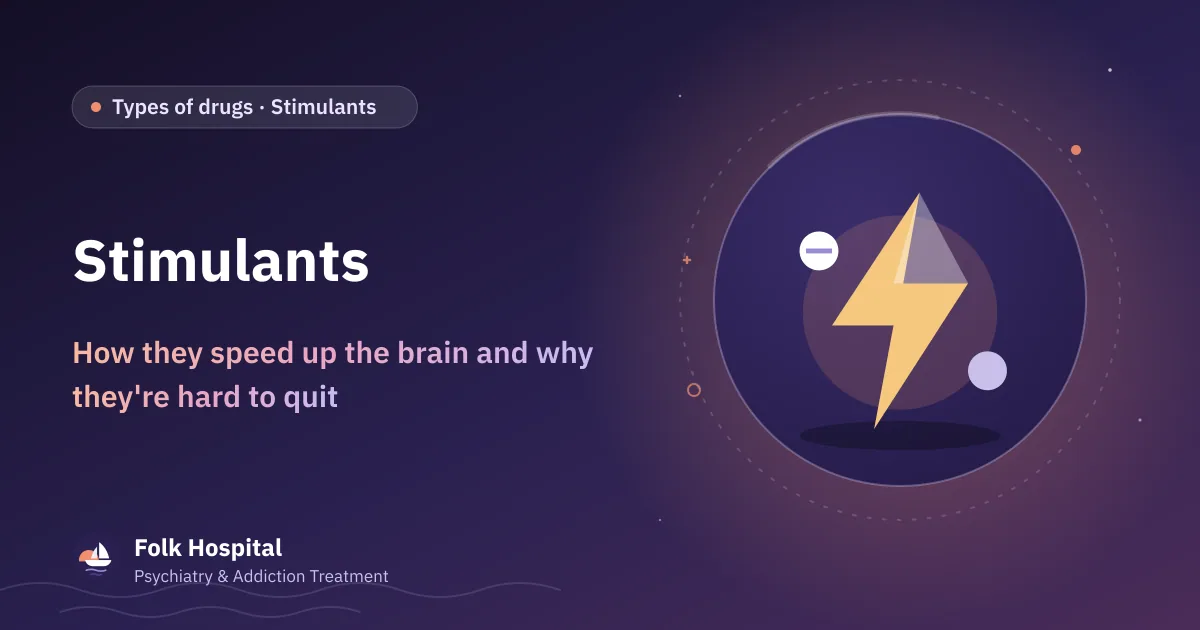
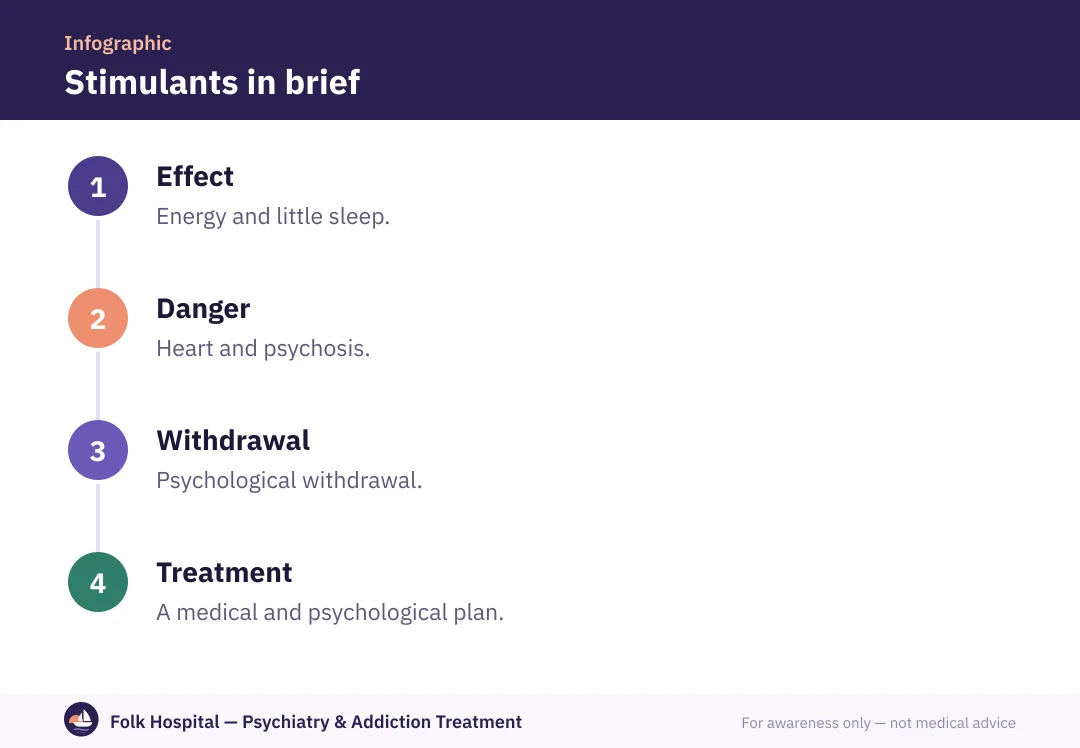
Stimulants get their name because they activate the central nervous system: heart rate and blood pressure rise, sleep and hunger drop, and the person feels unusual energy and confidence. Many start using them to stay up studying or working, or to lose weight, and then discover that the energy was a loan repaid later with deeper exhaustion and low mood.
01How do stimulants affect the brain?
Stimulants increase dopamine and noradrenaline at the synapses, either by pushing cells to release them or by blocking their reuptake. Dopamine is the «reward» messenger, and a sudden surge makes the brain tag the substance as vitally important. With repeated use, dopamine receptors become less sensitive, so the person needs larger doses and ordinary days feel flat without the drug. That explains the strong cravings that last for weeks after stopping. Read more in brain chemistry and addiction.
02The best-known substances in this group
| Substance | Common form | What sets it apart |
|---|---|---|
| Shabu (crystal meth) | Crystals, usually smoked | Among the strongest and fastest to cause dependence and psychosis |
| Captagon | Tablets | Usually amphetamine; contents are never guaranteed |
| Cocaine | White powder, snorted | A short effect that drives repeated dosing |
| Amphetamine | Tablets or powder | The parent of many manufactured stimulants |
| Ecstasy | Coloured tablets | A stimulant with sensory effects; overheating is the main danger |
| Ritalin | Prescription tablets | An ADHD medicine misused to stay awake |
| Flakka | Crystals | A synthetic cathinone causing extreme agitation |
| Khat | Leaves, chewed | A milder stimulant that still causes dependence |
| Caffeine | Coffee and energy drinks | The mildest and most widespread stimulant |
03Signs you may notice in someone using them
Common signs
- Staying awake for days, then sleeping for very long stretches.
- Loss of appetite and rapid weight loss.
- Fast speech, restlessness and irritability.
- Dilated pupils, sweating and a dry mouth.
- Suspicion and accusing others for no reason.
- Unexplained spending and missing work or school.
04Health and mental-health risks
- Heart rhythm problems, heart attacks and strokes, even in young people.
- Dangerous overheating, especially with ecstasy and dancing in crowded places.
- Psychosis: hearing voices, persecutory ideas and aggression.
- Chronic insomnia, depression and anxiety once the effect wears off.
- Tooth damage and malnutrition with shabu.
- Seizures at high doses.
- Chest pain or breathlessness.
- Very high temperature with confusion.
- Seizures or loss of consciousness.
- Severe agitation or threats to harm themselves or others.
Move the person somewhere calm and cool, don't try to restrain them forcefully, and never give them stimulants or alcohol to «calm them down».
Ambulance: 12305What is withdrawal like?
Stimulant withdrawal doesn't usually cause dangerous physical symptoms like opioids or sedatives, but it's psychologically harsh, and suicidal thoughts can appear, so it needs monitoring.
- The crash (days 1–3)severe tiredness, long sleep, hunger and low mood.
- Acute withdrawal (weeks 1–2)depression, anxiety, irritability, poor concentration and intermittent cravings.
- The extended phase (weeks to months)flatness, little pleasure, and cravings triggered by places and people.
06How does treatment differ?
There's still no approved medicine that treats stimulant addiction itself, but the doctor treats insomnia, depression or psychosis if present. Treatment rests on cognitive behavioural therapy, «contingency management» that rewards abstinence confirmed by testing, family therapy, and long follow-up because cravings return at moments of stress. If psychosis or suicidal thoughts appear, residential treatment is the safest option.
07Read also
؟Frequently asked questions
What's the difference between stimulants and depressants?
Stimulants speed up the brain and heart and reduce sleep; depressants slow them down and cause drowsiness. Mixing the two doesn't cancel the risk; it hides the signs of overdose.
Is caffeine a stimulant?
Yes, but it's the mildest, and most people use it without problems. Very large doses can cause palpitations, anxiety and insomnia.
Can shabu or captagon cause madness?
Stimulants can cause psychosis with hallucinations and persecutory ideas, especially with long sleeplessness and high doses. Many improve after stopping and treatment, but some need longer psychiatric care.
How long does stimulant withdrawal last?
Acute symptoms ease within one to two weeks, but low pleasure and cravings can last weeks or months.
Is there a medicine for stimulant addiction?
There's no approved medicine yet for the addiction itself, but related symptoms are treated, and recovery relies on psychological and behavioural rehabilitation.
Are ADHD medicines dangerous stimulants?
Used at the dose a doctor sets for a diagnosed patient, they're usually safe and helpful. The risk lies in using them without a prescription, at higher doses, or by routes other than the mouth.
Sources and references
- Methamphetamine — research topic — National Institute on Drug Abuse (NIDA)
- Cocaine — research topic — National Institute on Drug Abuse (NIDA)
- Synthetic Cathinones (Bath Salts) DrugFacts — National Institute on Drug Abuse (NIDA)
- Drugs, Brains, and Behavior: The Science of Addiction — National Institute on Drug Abuse (NIDA)
- Commonly Used Drugs Charts — National Institute on Drug Abuse (NIDA)

A psychiatrist specialising in addiction and mental illness in adults and adolescents, with a focus on dual diagnosis.
For awareness only — not a substitute for medical advice. Editorial policy · View profile