01Daytime harms
What sleep loss affects
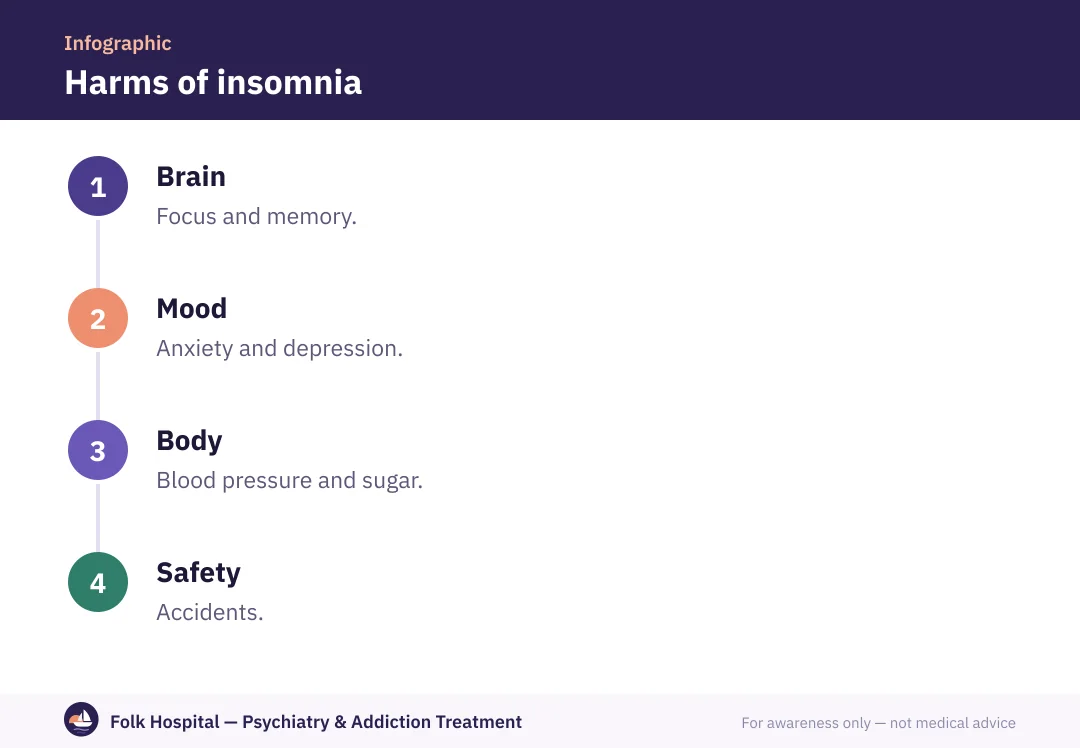
- Concentration, attention and memory.
- Mood: irritability, sensitivity and anxiety.
- Energy and motivation.
- Reaction time and driving.
- Performance at work and school.
02Long-term harms
| Area | What chronic insomnia is linked to |
|---|---|
| Mental health | Higher risk of depression and anxiety; worsening bipolar disorder |
| Heart and metabolism | Links with high blood pressure, diabetes and obesity |
| Immunity | Lower resistance to infection |
| Safety | Road and work accidents |
| Substances | Dependence on sleeping pills or alcohol |
03The sleeping pill and alcohol trap
What looks like a solution
- A pharmacy sleeping pill to sleep tonight.
- A drink to relax.
- A sedative «when needed».
What happens over time
- Tolerance and needing a bigger dose.
- Poorer-quality sleep and disturbed dreams.
- Worse rebound insomnia on stopping.
- Dependence that's hard to shake.
Read insomnia and addiction.
- You fell asleep, or nearly did, while driving.
- Insomnia comes with suicidal thoughts or hopelessness.
- You've barely slept for days with high energy and racing thoughts, which may be a manic episode.
Read insomnia, its causes and its treatment.
؟Frequently asked questions
What are the harms of sleep loss?
Poor concentration and memory, mood swings, fatigue, weaker immunity, higher accident risk, and links with chronic disease over time.
Does insomnia cause depression?
Chronic insomnia raises the risk of depression, and depression causes insomnia, so each feeds the other.
Does insomnia harm the heart?
Chronic sleep loss has been linked in studies to high blood pressure and heart disease, especially with other risk factors.
Does insomnia cause weight gain?
It may be linked to increased appetite for sugary and fatty foods and changes in hunger hormones.
Is insomnia dangerous when driving?
Yes. Sleepiness slows reactions and can cause micro-sleeps at the wheel.
Do the harms go away when insomnia is treated?
Most cognitive and mood effects improve as sleep improves, and the risk of other problems falls.
Sources and references
- Insomnia — NHS (UK)
- Mental disorders — fact sheet — World Health Organization
- Drugs, Brains, and Behavior: The Science of Addiction — National Institute on Drug Abuse (NIDA)

A psychiatrist specialising in addiction and mental illness in adults and adolescents, with a focus on dual diagnosis.
For awareness only — not a substitute for medical advice. Editorial policy · View profile