01Signs of addiction
Signs of addiction
- Losing control of gaming time.
- Neglecting study, sleep and meals.
- Severe anger when stopped.
- Lying about gaming time.
- Withdrawing from family and friends.
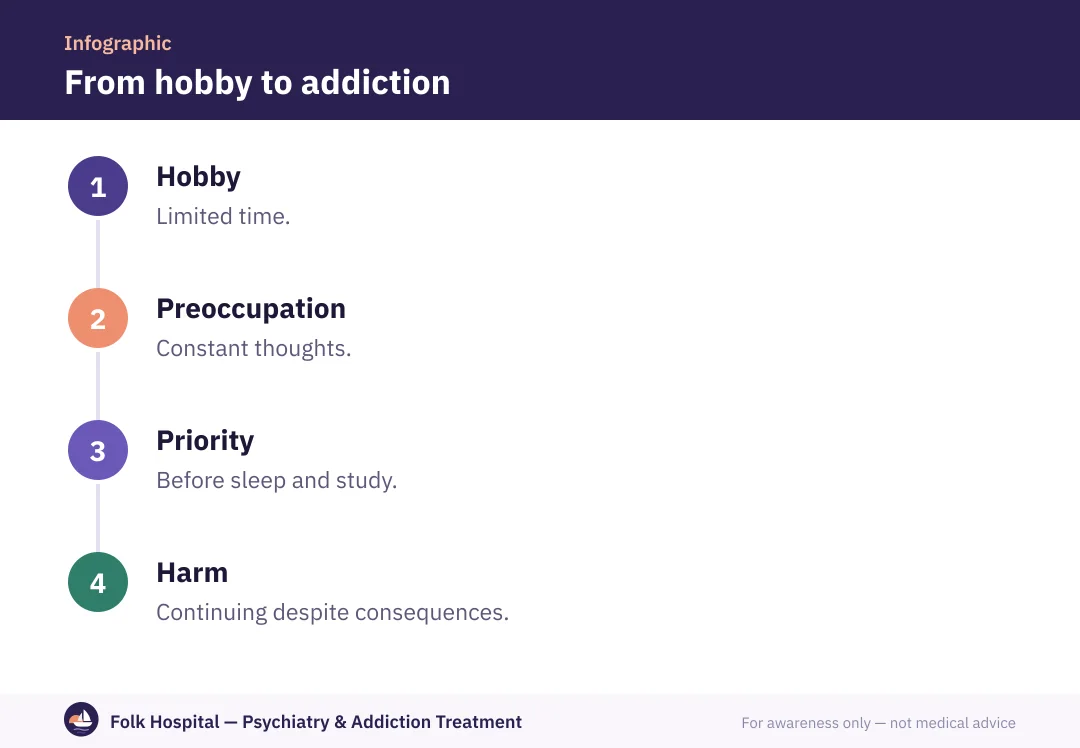
02Healthy gaming or addiction?
| Healthy gaming | Gaming disorder | |
|---|---|---|
| Control | Present | Lost |
| Priorities | Duties first | Gaming first |
| Impact | No disruption | Clear disruption |
03Treatment plan
- Assessmentand treating co-occurring ADHD or anxiety.
- Agreementon set gaming time and device locations.
- Alternativessport and social activities.
- Cognitive therapyfor gaming thoughts and drives.
Read also: signs of gaming addiction, causes, harms, treatment.
؟Frequently asked questions
Is gaming addiction a real illness?
Yes. The WHO recognises it as gaming disorder.
How many hours of gaming means addiction?
There's no set number; the standard is loss of control, disruption and continuing despite harm.
Should I take the device away suddenly?
Sudden bans cause anger and conflict; a gradual, agreed plan is better.
How is gaming linked to ADHD?
Children with ADHD are more prone to gaming addiction, and treating ADHD helps.
How is it treated?
CBT, family involvement, time structure and treating co-occurring conditions.
Does it need residential care?
Rarely, only in very severe cases with total withdrawal from life.
Sources and references
- Gaming disorder (ICD-11 FAQ) — World Health Organization
- Addictive behaviours: gaming disorder — World Health Organization

Written byDr. Mohamed HosneyConsultant in mental health and behavioural rehabilitation
A specialist in psychological rehabilitation, behaviour modification and relapse prevention, with over 15 years in addiction programmes.
For awareness only — not a substitute for medical advice. Editorial policy · View profile