01Signs
Signs
- Strong cravings for certain foods.
- Eating despite fullness.
- Losing control.
- Eating in secret.
- Guilt after eating.
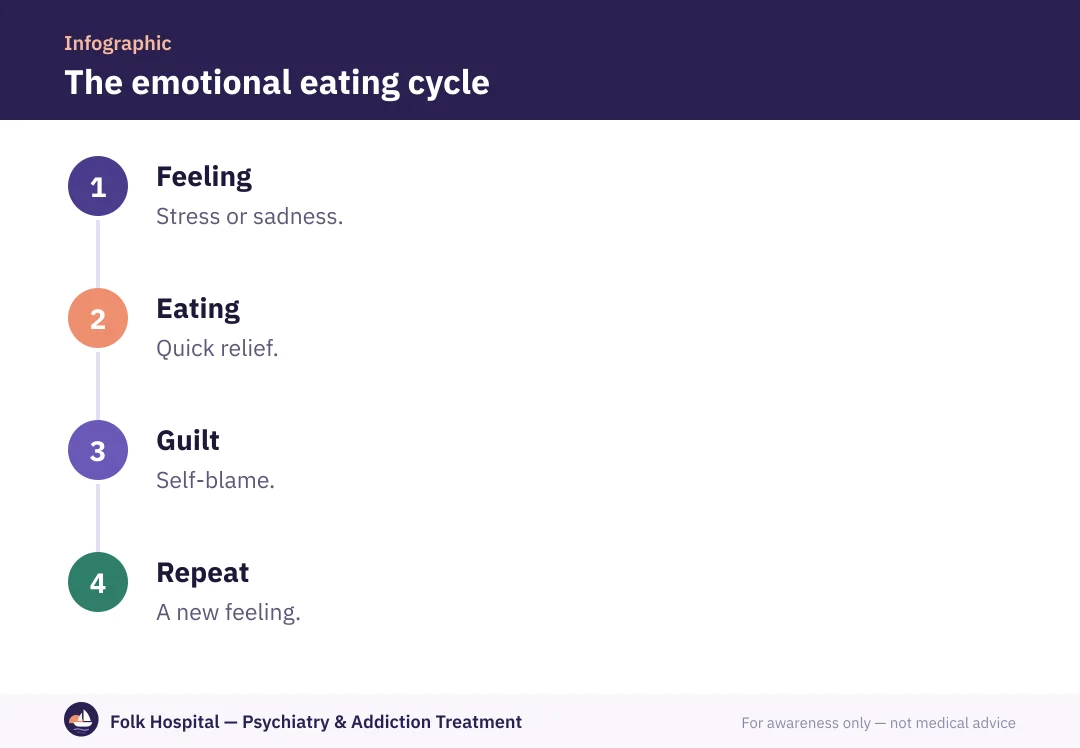
02Hunger or emotion?
| Physical hunger | Emotional eating | |
|---|---|---|
| Onset | Gradual | Sudden |
| Type | Any food | Specific foods |
| Afterwards | Satisfaction | Guilt |
03Steps
- Regular mealsto avoid deprivation.
- Notice the triggeremotions or situations.
- Alternativesfor coping with emotions.
- Supportspecialist psychological help.
Read also: signs, causes, harms, eating disorders.
؟Frequently asked questions
Is food addiction real?
Not an official diagnosis, but loss of control over eating is real and overlaps with binge eating.
How does it differ from binge eating disorder?
Binge eating disorder is a specific diagnosis with binges and loss of control; food addiction is a broader term.
Do strict diets help?
They usually increase deprivation, then binges.
What is emotional eating?
Eating to cope with sadness, stress or boredom rather than hunger.
How is it treated?
CBT, regular meals and treating the accompanying emotions.
When do I need a specialist?
With repeated binges, severe guilt or effects on health and mood.
Sources and references
- Binge eating disorder — NHS (UK)
- Eating Disorders — National Institute of Mental Health (NIMH)

Written byDr. Mohamed HosneyConsultant in mental health and behavioural rehabilitation
A specialist in psychological rehabilitation, behaviour modification and relapse prevention, with over 15 years in addiction programmes.
For awareness only — not a substitute for medical advice. Editorial policy · View profile