01Signs
Signs
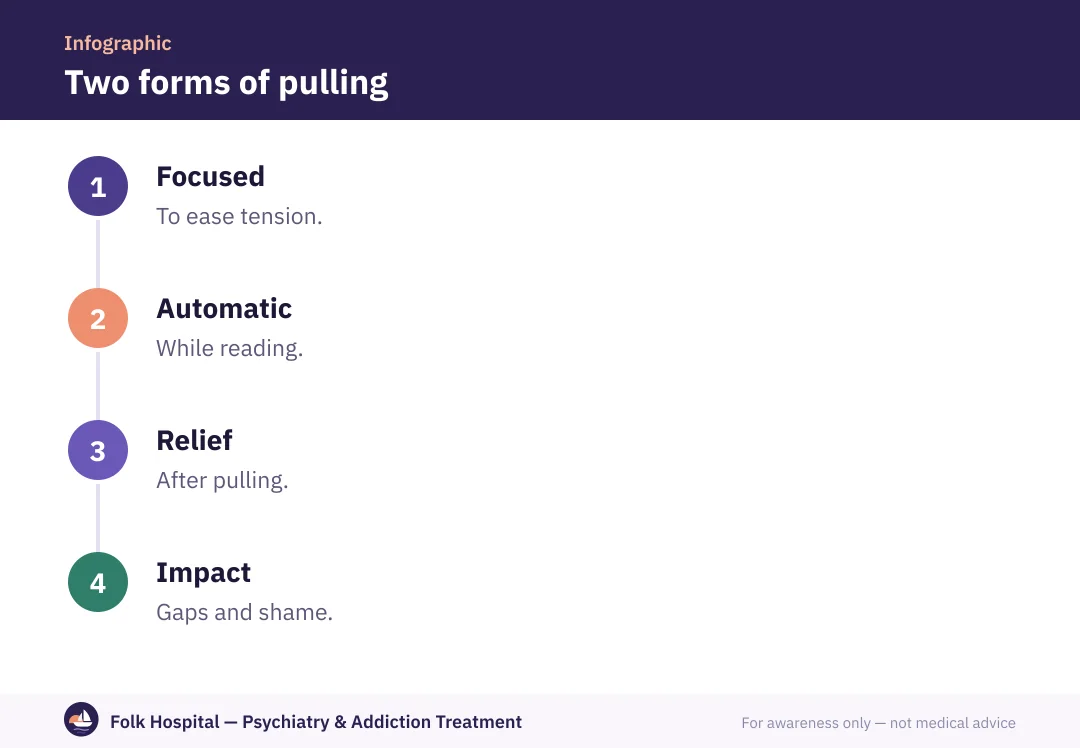
- Gaps in hair or eyebrows.
- Pulling when tense or bored.
- Relief after pulling.
- Failed attempts to stop.
- Hiding the gaps.
02Habit reversal training
- Awarenesswhen and where pulling happens.
- Early warningnotice the urge before acting.
- A competing actionclench the fist or hold something.
- Supportfamily encouragement without blame.
Makes it worse
- Blame
- Constant monitoring
Helps
- Habit reversal training
- Treating tension
Read also: causes of hair pulling, nail biting, OCD.
؟Frequently asked questions
What is trichotillomania?
A repetitive, hard-to-resist hair-pulling behaviour causing gaps and distress.
Is it OCD?
It's close to OCD and classed in the same group.
Why does it happen?
To cope with tension or boredom, or automatically without awareness.
What is habit reversal training?
Raising awareness of the behaviour and replacing it with a competing action like clenching the fist.
Does it affect children?
Yes, often starting in childhood or adolescence.
Does the hair grow back?
Usually yes, though long-term pulling can damage follicles.
Sources and references
- Body-Focused Repetitive Behavior (BFRB) Disorders — Cleveland Clinic
- Trichotillomania (hair pulling disorder) — NHS (UK)
Written byDr. Mohamed HosneyConsultant in mental health and behavioural rehabilitation
A specialist in psychological rehabilitation, behaviour modification and relapse prevention, with over 15 years in addiction programmes.
For awareness only — not a substitute for medical advice. Editorial policy · View profile