01Signs
Signs
- Gradually increasing time.
- Failed attempts to stop.
- Seeking more extreme content.
- Late nights and secrecy.
- Effects on relationships and work.
02Recovery plan
- Blockfiltering tools on devices.
- Triggersloneliness, late nights, boredom.
- Alternativesexercise and connection.
- Supportconfidential psychotherapy.
Hinders recovery
- Late nights with the phone
- Shame and isolation
Helps
- Phone outside the bedroom
- Honesty with a specialist
Read also: signs, causes, harms, treatment.
؟Frequently asked questions
Is pornography addiction real?
It's classed under compulsive sexual behaviour disorder when control is lost and use continues despite harm.
What are its signs?
Increasing time, failing to stop, seeking more extreme content, secrecy and harm.
Does it affect marriage?
It can affect trust, closeness and intimacy.
How do I stop?
Block content, change environment and routine, understand triggers, and seek treatment when needed.
Does guilt help me stop?
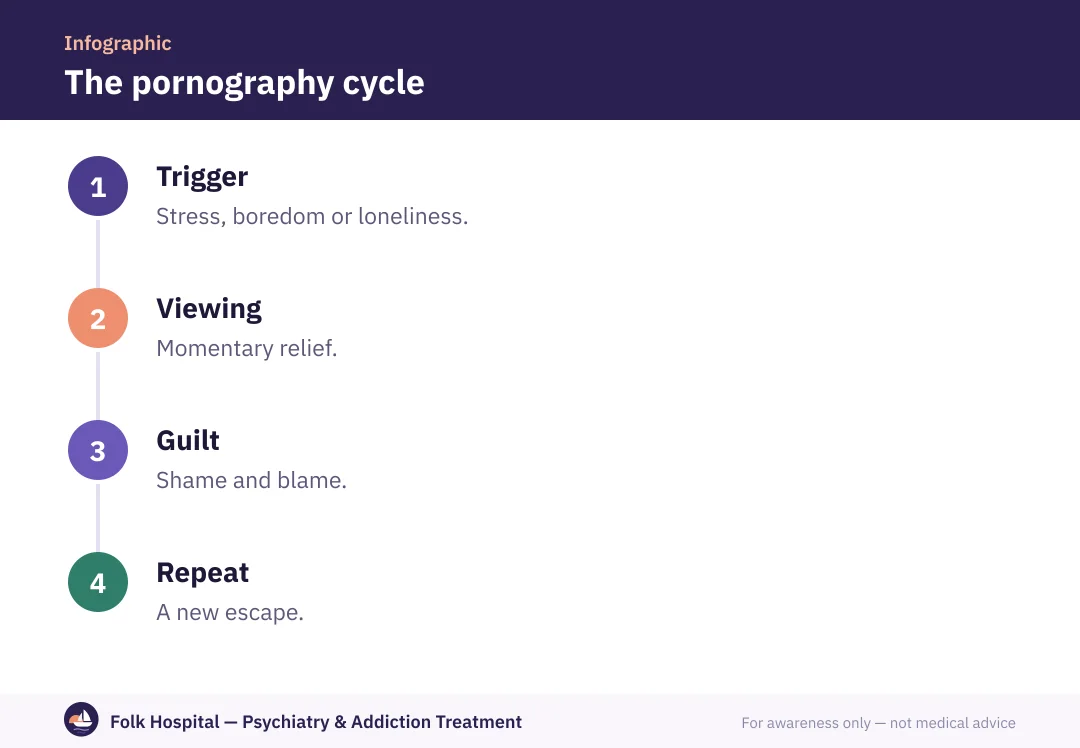
Severe guilt can raise tension then relapse; a plan and self-compassion work better.
Is treatment confidential?
Yes, completely.
Sources and references
- Compulsive Sexual Behavior Disorder (Hypersexuality) — Cleveland Clinic
- Addictive behaviours: gaming disorder — World Health Organization
Written byDr. Mohamed HosneyConsultant in mental health and behavioural rehabilitation
A specialist in psychological rehabilitation, behaviour modification and relapse prevention, with over 15 years in addiction programmes.
For awareness only — not a substitute for medical advice. Editorial policy · View profile