01Signs
Signs
- Buying things not needed.
- Hiding purchases and bills.
- Guilt after buying.
- Growing debt.
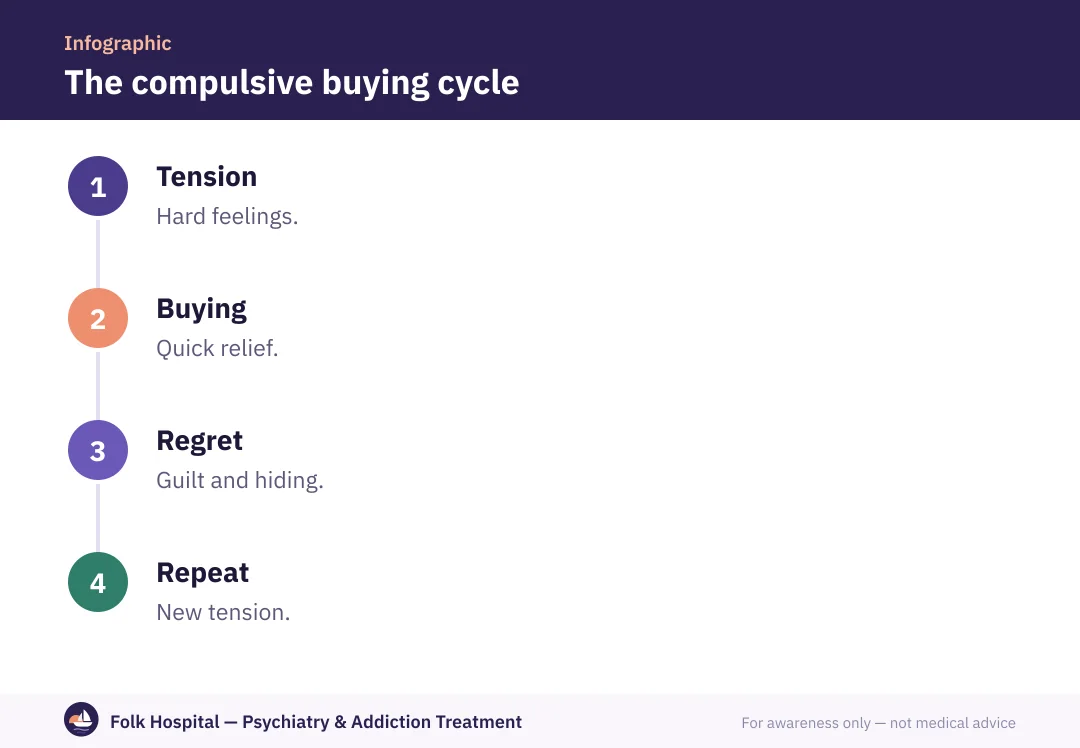
- Buying when sad or stressed.
02Healthy or compulsive?
| Healthy shopping | Compulsive buying | |
|---|---|---|
| Motive | Need | Emotion |
| Planning | Present | Absent |
| Afterwards | Satisfaction | Guilt |
03Steps
- A waiting periodbefore any unplanned purchase.
- A listbuy only what's on it.
- Deleteshopping apps and saved card details.
- Alternativesfor coping with emotions.
Read also: signs, causes, harms, hoarding.
؟Frequently asked questions
Is shopping addiction real?
Not a standalone official diagnosis, but a known harmful compulsive pattern.
How does it differ from loving shopping?
Healthy shopping is planned and comfortable; compulsive buying is urgent and followed by guilt and problems.
How is it tied to emotions?
Buying is used to escape sadness, anxiety or emptiness.
How do I stop?
A shopping list, a waiting period before buying, deleting apps, and therapy.
Is it linked to hoarding?
It can overlap in accumulating purchases.
When do I need help?
With debt, hiding or failed attempts.
Sources and references
- How To Tell if You're Addicted To Shopping — Cleveland Clinic
- Addictive behaviours: gaming disorder — World Health Organization

Written byDr. Mohamed HosneyConsultant in mental health and behavioural rehabilitation
A specialist in psychological rehabilitation, behaviour modification and relapse prevention, with over 15 years in addiction programmes.
For awareness only — not a substitute for medical advice. Editorial policy · View profile