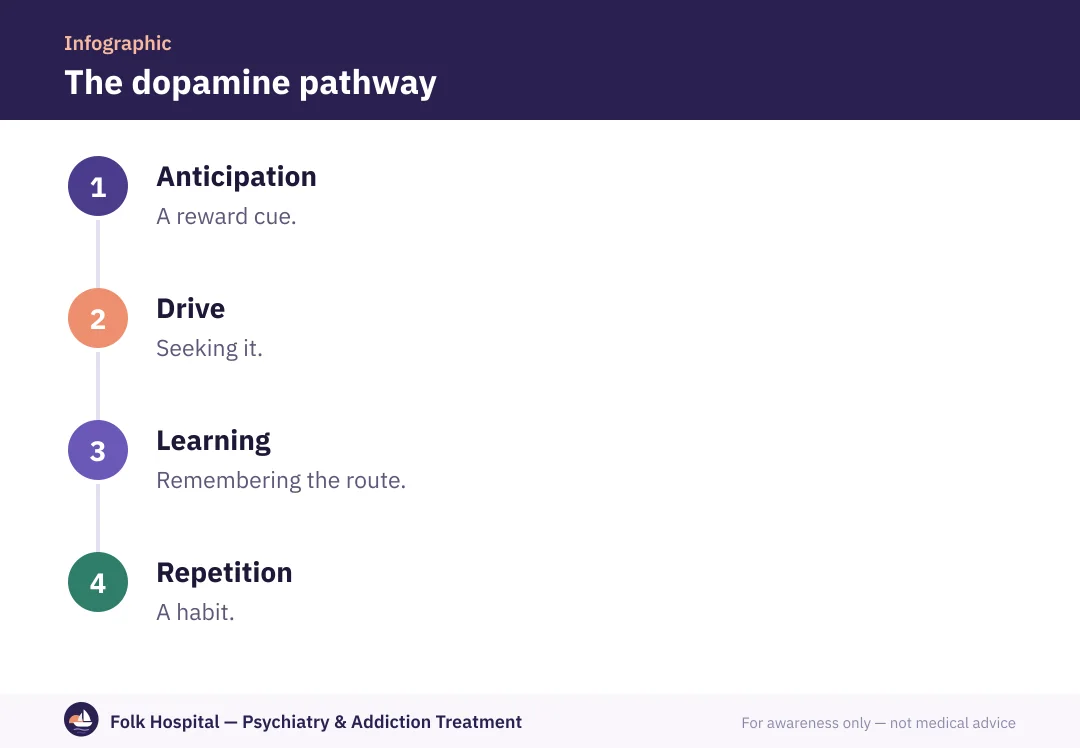
01Dopamine functions
| Function | What happens |
|---|---|
| Reward | Reinforces repeating behaviour |
| Movement | Coordinating movement |
| Attention | Focus and organisation |
| Learning | Linking action to outcome |
02Related pages
- Deficiencylow dopamine
- Excesshigh dopamine
- Addictiondopamine and addiction
- Natural boostraising dopamine naturally
Read also: dopamine vs serotonin, dopamine detox, happiness hormones.
؟Frequently asked questions
What is dopamine?
A neurotransmitter for motivation, reward, learning, movement and attention.
Is dopamine the happiness hormone?
It relates more to wanting and motivation; other messengers share in happiness.
How is it linked to addiction?
Drugs raise it strongly, so the brain learns to repeat use and natural pleasures weaken.
What are signs of low dopamine?
Listlessness, low motivation, poor focus, and in movement, tremor and slowness.
What are signs of excess?
It may be linked to mania, impulsivity and psychosis, especially with stimulants.
Can it be raised naturally?
Sleep, exercise, small achievements and connection support its balance.
Sources and references
- Dopamine — Cleveland Clinic
- Drugs, Brains, and Behavior: The Science of Addiction — National Institute on Drug Abuse (NIDA)

A psychiatrist specialising in addiction and mental illness in adults and adolescents, with a focus on dual diagnosis.
For awareness only — not a substitute for medical advice. Editorial policy · View profile