01Signs
Signs
- Constant preoccupation with the partner.
- Intense fear of abandonment.
- Justifying harm to stay.
- Neglecting self and friends.
- A new relationship right after one ends.
02Healthy love or painful attachment?
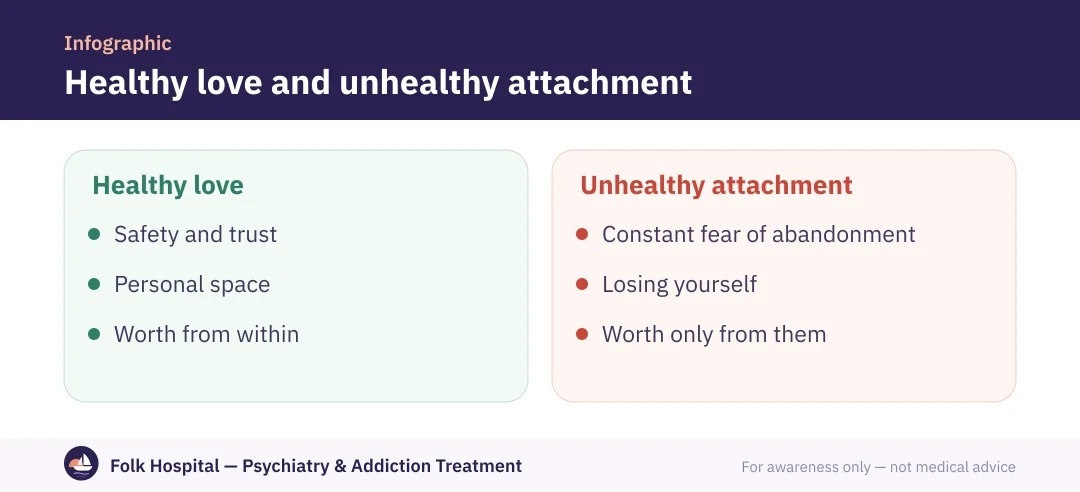
| Healthy love | Painful attachment | |
|---|---|---|
| Security | Present | Constant anxiety |
| Independence | Kept | Lost |
| Harm | Unacceptable | Justified |
03Recovery steps
- Awarenessof the pattern.
- Distancefrom the harmful relationship.
- An independent lifeactivities and friends.
- Therapyfor the roots of attachment.
Read also: emotional trauma, dependent personality, Stockholm syndrome.
؟Frequently asked questions
Is love addiction real?
Not an official diagnosis, but a known painful pattern of excessive attachment.
What are its signs?
Constant preoccupation, fear of abandonment, staying in harmful relationships and moving quickly between relationships.
What causes it?
Low self-esteem, attachment trauma, loneliness and dependence.
Is it linked to emotional trauma?
Yes, it often follows or feeds it.
How do I recover?
Psychotherapy, building an independent life and setting boundaries.
Should I start a new relationship quickly?
Recovering first is better, to break the pattern.
Sources and references
- What Is Gaslighting? — Cleveland Clinic
- Addiction: what is it? — NHS (UK)
Written byDr. Mohamed HosneyConsultant in mental health and behavioural rehabilitation
A specialist in psychological rehabilitation, behaviour modification and relapse prevention, with over 15 years in addiction programmes.
For awareness only — not a substitute for medical advice. Editorial policy · View profile