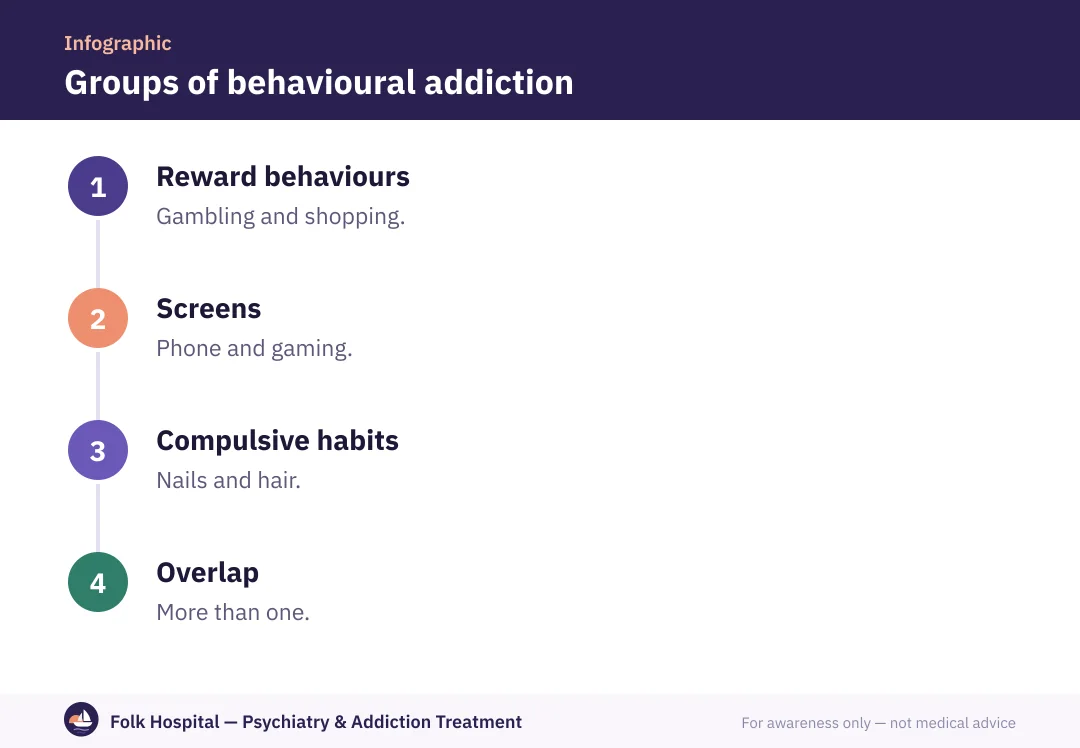
01Clusters
| Cluster | Examples |
|---|---|
| Behavioural | Gambling, sex, shopping, work, love |
| Screens | Gaming, phone, social media, pornography |
| Compulsive habits | Hair pulling, nail biting |
02The common thread
- An urgebefore the behaviour.
- Relief or pleasuretemporary.
- Loss of controlwith repetition.
- Harmand continuing despite it.
Read also: behavioural addictions, dopamine, types of mental illness.
؟Frequently asked questions
What is behavioural addiction?
Losing control over a rewarding behaviour and continuing despite harm.
What are its types?
Major behavioural, screen addictions and compulsive habits.
Is it like drug addiction?
It shares effects on the reward system and craving.
Which are officially recognised?
Gambling disorder and gaming disorder; others are being studied.
How is it treated?
CBT, adjusting the environment and treating co-occurring conditions.
Does it co-occur with substance addiction?
Yes, often.
Sources and references
- Addictive behaviours: gaming disorder — World Health Organization
- Addiction: what is it? — NHS (UK)

Written byDr. Mohamed HosneyConsultant in mental health and behavioural rehabilitation
A specialist in psychological rehabilitation, behaviour modification and relapse prevention, with over 15 years in addiction programmes.
For awareness only — not a substitute for medical advice. Editorial policy · View profile