01Signs of chronic biting
Signs of chronic biting
- Very short, cracked nails.
- Wounds around nails.
- Biting without awareness.
- Failed attempts to stop.
- Hiding the hands.
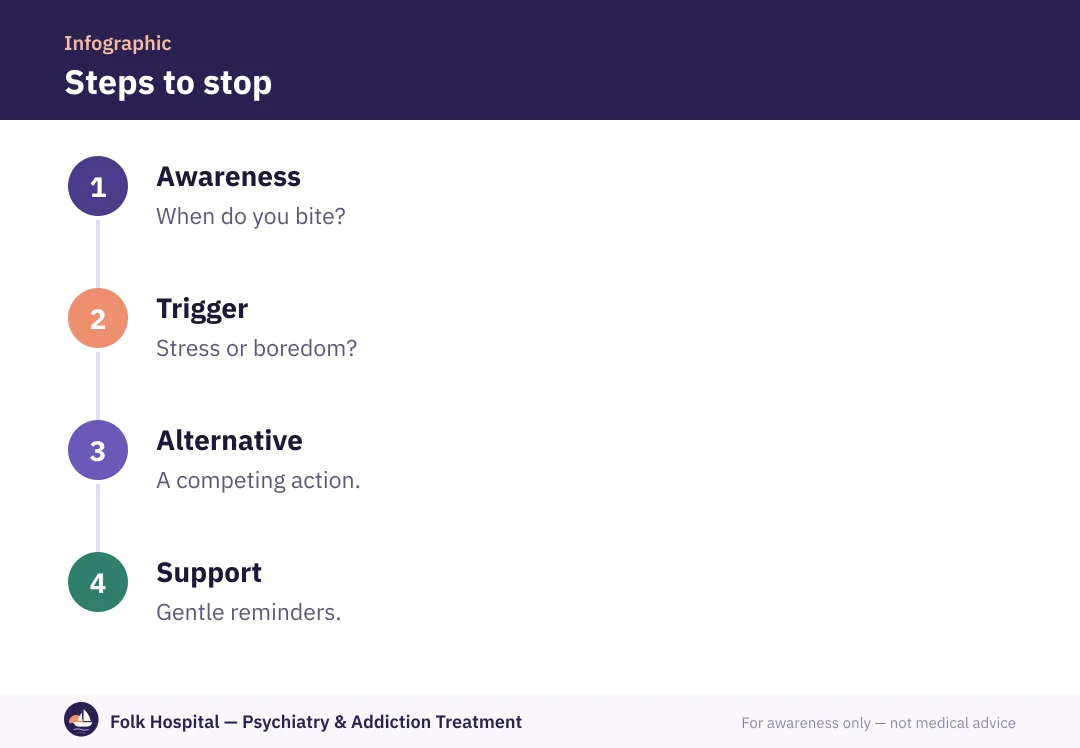
02Steps to stop
- Awarenesswhen biting happens.
- A hand alternativea stress ball or something to hold.
- Short, tidy nailsreduce temptation.
- Treating stresswith suitable methods.
Makes it worse
- Scolding
- Mockery
Helps
- Alternatives
- Rewarding progress
Read also: causes of nail biting, hair pulling, ADHD.
؟Frequently asked questions
Is nail biting a disorder?
Mild habits are common; severe chronic biting is a repetitive behaviour close to OCD.
Why do children bite their nails?
To cope with stress, boredom or mental preoccupation.
What are its harms?
Nail and skin damage, infections and dental problems.
Does bitter polish help?
It may help as a reminder, working best with habit reversal.
Should I scold my child?
No. Scolding increases tension; encouragement and alternatives are better.
When do I need a specialist?
With repeated infections, severe distress or co-occurring anxiety.
Sources and references
- How To Stop Nail Biting — Cleveland Clinic
- Body-Focused Repetitive Behavior (BFRB) Disorders — Cleveland Clinic
Written byDr. Mohamed HosneyConsultant in mental health and behavioural rehabilitation
A specialist in psychological rehabilitation, behaviour modification and relapse prevention, with over 15 years in addiction programmes.
For awareness only — not a substitute for medical advice. Editorial policy · View profile