01Signs
Signs
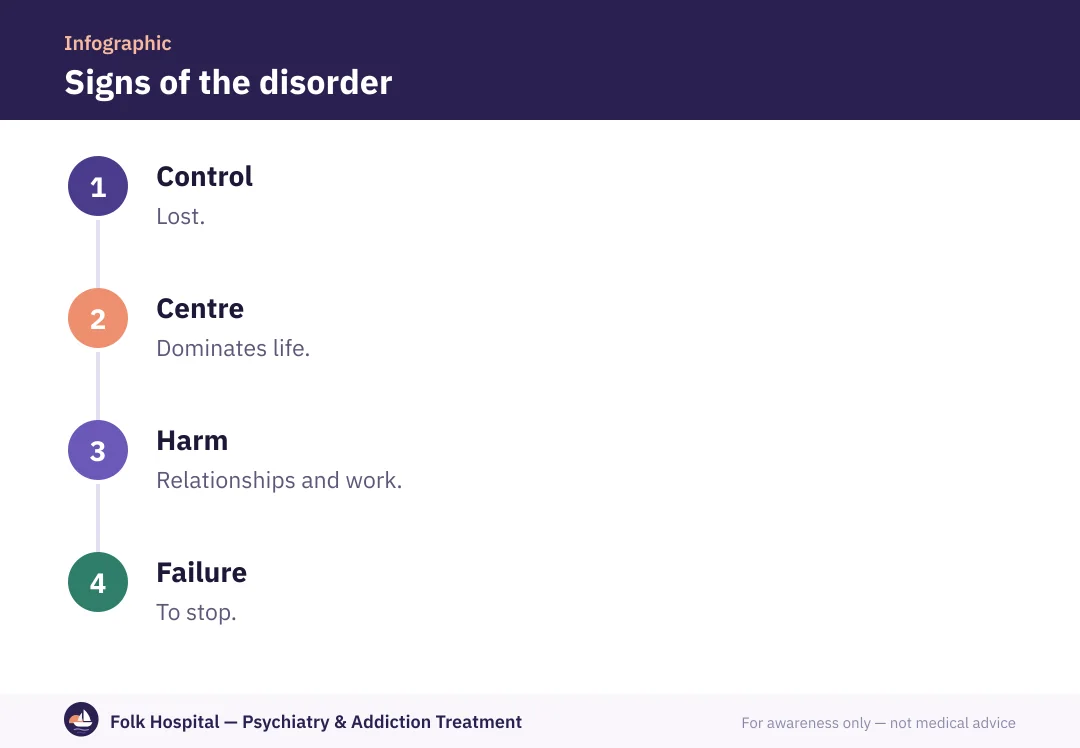
- Loss of control over urges.
- Neglecting responsibilities.
- Continuing despite harm.
- Failed attempts to stop.
- Behaviours risky to health.
02High desire or disorder?
| High desire | Compulsive behaviour | |
|---|---|---|
| Control | Present | Lost |
| Harm | No | Clear |
| Distress | No | Yes |
03Treatment plan
- Assessmentruling out medical causes and mania.
- Cognitive therapyfor triggers and drives.
- Boundariesand adjusting the environment.
- Co-occurring conditionsanxiety, depression and substance use.
Read also: pornography addiction, bipolar disorder, behavioural addictions.
؟Frequently asked questions
Is sex addiction real?
Yes. It's internationally classed as compulsive sexual behaviour disorder.
How does it differ from high desire?
High desire isn't an illness; the disorder is loss of control with harm and distress.
Does it have medical causes?
It may appear with manic episodes, some Parkinson's medicines or brain injury.
Is it linked to drugs?
Stimulants especially can increase impulsive sexual behaviour and risks.
How is it treated?
CBT and treating co-occurring conditions, sometimes medication.
Is treatment confidential?
Yes, completely.
Sources and references
- Compulsive Sexual Behavior Disorder (Hypersexuality) — Cleveland Clinic
- Addictive behaviours: gaming disorder — World Health Organization

Written byDr. Mohamed HosneyConsultant in mental health and behavioural rehabilitation
A specialist in psychological rehabilitation, behaviour modification and relapse prevention, with over 15 years in addiction programmes.
For awareness only — not a substitute for medical advice. Editorial policy · View profile