01Signs
Signs
- Working on holidays and at night.
- Anxiety when resting.
- Neglecting family and health.
- Measuring worth only by achievement.
- Difficulty delegating.
02Hard work or addiction?
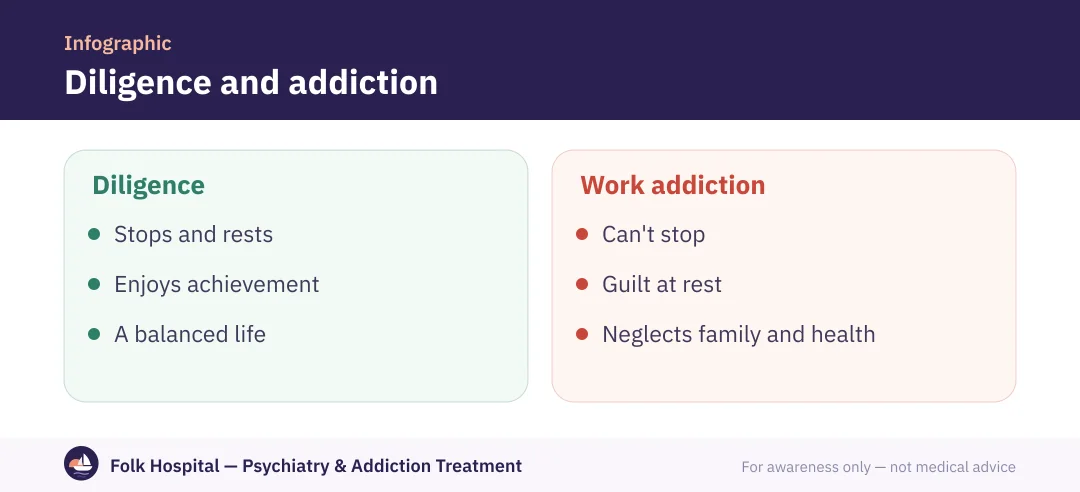
| Hard work | Work addiction | |
|---|---|---|
| Motive | Passion | Anxiety |
| Rest | Possible | Distressing |
| Family | Present | Neglected |
03Steps
- Boundariesclear working hours.
- Planned restlike a work appointment.
- Delegatingsmall tasks.
- Therapyfor anxiety and perfectionism.
Read also: burnout, OCPD, imposter syndrome.
؟Frequently asked questions
What is work addiction?
Compulsive preoccupation with work, difficulty stopping, anxiety when resting and neglecting life.
How does it differ from hard work?
A hard worker works with passion and can rest; an addict works anxiously and can't stop.
Is it a diagnosis?
Not an official one, but a known harmful pattern.
How is it linked to burnout?
It often leads to it.
Is it linked to OCPD?
It can overlap in perfectionism and overworking.
How do I recover?
Clear boundaries, planned rest and treating anxiety and perfectionism.
Sources and references
- Workaholic: Are You Addicted to Work? — Cleveland Clinic
- Burn-out an "occupational phenomenon" — World Health Organization

Written byDr. Mohamed HosneyConsultant in mental health and behavioural rehabilitation
A specialist in psychological rehabilitation, behaviour modification and relapse prevention, with over 15 years in addiction programmes.
For awareness only — not a substitute for medical advice. Editorial policy · View profile