01Signs
Signs
- Opening apps automatically.
- Anxiety about likes and comments.
- Constant comparison with others.
- Staying up scrolling.
- Failed attempts to cut down.
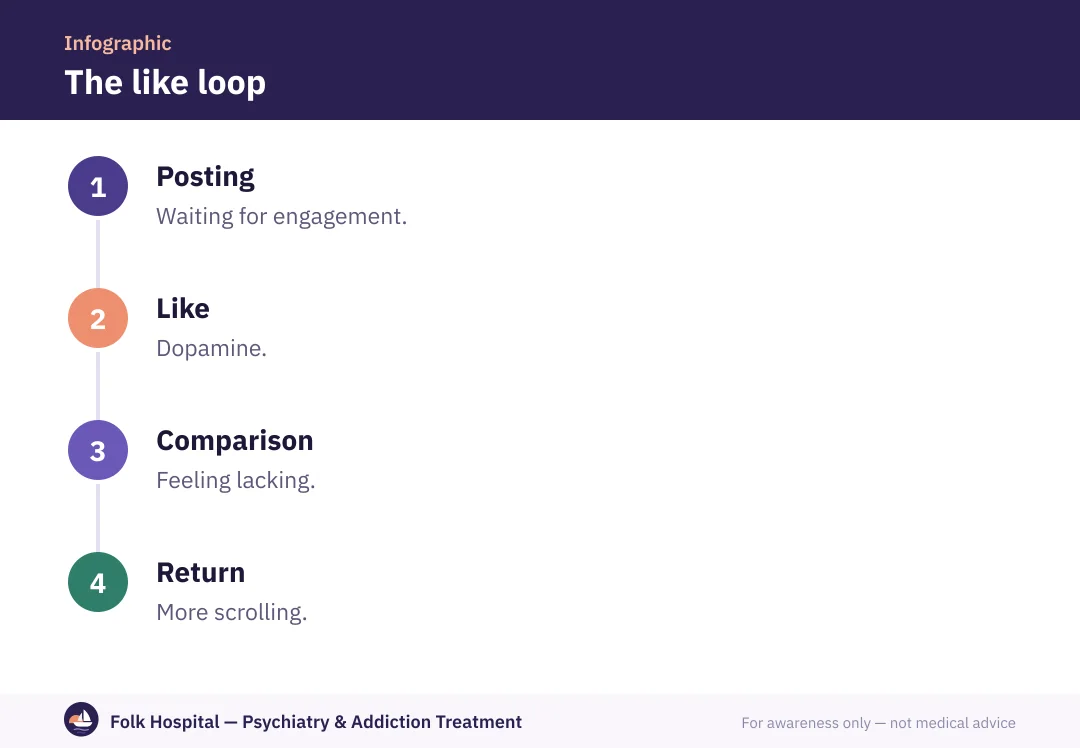
02Mindful or compulsive?
| Mindful use | Compulsive use | |
|---|---|---|
| Purpose | Connection and learning | Escape and comparison |
| Time | Limited | Unlimited |
| Feeling after | Fine | Anxious or sad |
03Practical steps
- Clean your feedunfollow what fuels comparison.
- Limit timewith a daily timer.
- Turn off notificationsunnecessary ones.
- Free timesbefore bed and at meals.
Read also: signs, causes, harms, phone addiction.
؟Frequently asked questions
Is social media addictive?
Use can become compulsive because of reward-based design.
How does it affect teenagers?
It's linked to anxiety, depression, body image and sleep, especially with long use.
Should I delete my accounts?
Not always; mindful limits may be enough.
What is cyberbullying?
Repeated online abuse that can cause serious psychological harm.
How do I protect my children?
Dialogue, rules, role modelling and privacy settings.
When do I need help?
When cutting down fails, or with depression, anxiety or bullying.
Sources and references
- Social Media and Youth Mental Health — U.S. Surgeon General's Advisory — U.S. Surgeon General
- Addictive behaviours: gaming disorder — World Health Organization

Written byDr. Mohamed HosneyConsultant in mental health and behavioural rehabilitation
A specialist in psychological rehabilitation, behaviour modification and relapse prevention, with over 15 years in addiction programmes.
For awareness only — not a substitute for medical advice. Editorial policy · View profile