01A map of causes
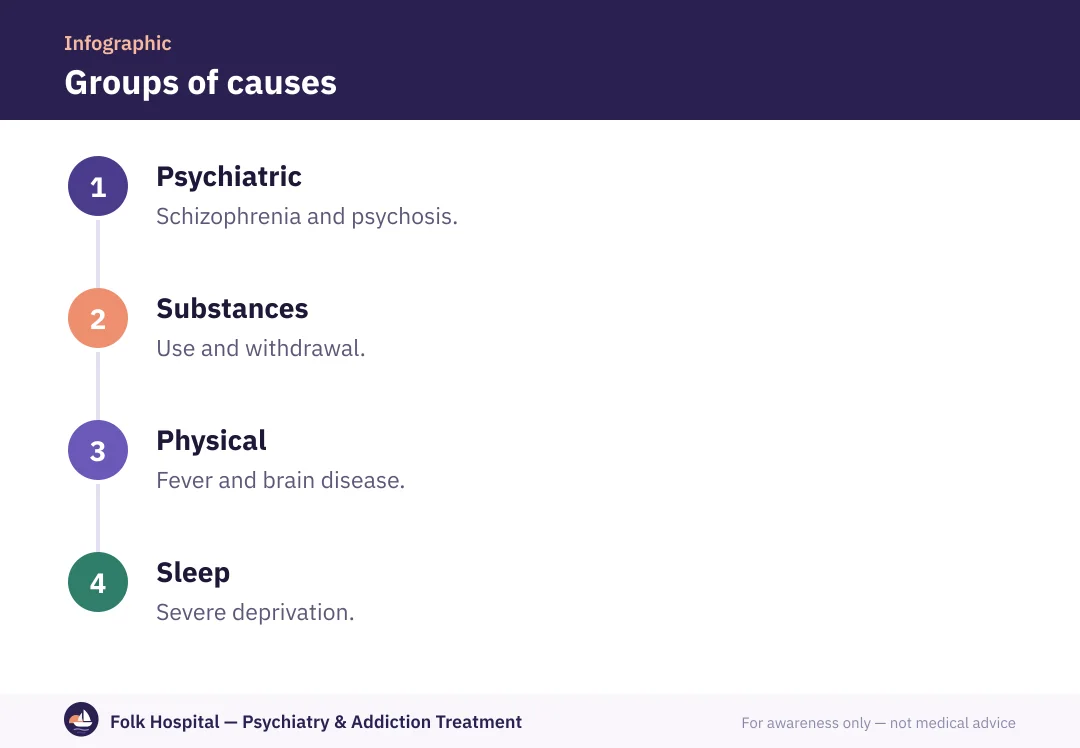
| Category | Causes | Distinctive features |
|---|---|---|
| Psychological | Schizophrenia, psychosis, bipolar disorder, psychotic depression, PTSD | Usually auditory, with delusions or mood change |
| Substances | Hallucinogens, stimulants, strox, hashish | Visual and tactile, linked to use |
| Withdrawal | Alcohol, sedatives | With tremor, sweating and confusion |
| Physical | Fever, infections, dementia, epilepsy, Parkinson's, brain tumours | Usually visual, with confusion or neurological signs |
| Sensory | Loss of sight or hearing in older people | Clear images or sounds, recognised as unreal |
| Medicines | High-dose steroids, some Parkinson's drugs | Began with the medicine |
02How the doctor thinks
- Typeauditory, visual or tactile?
- Timingwith use, withdrawal, a new medicine or an illness?
- Accompanying symptomsdelusions, mood change, confusion, fever, headache?
- Age and historya teenager using drugs, or an older person on a new medicine?
- Testsblood tests and a drug screen, sometimes imaging or an EEG.
- Threats to harm themselves or others.
- Severe agitation or violence.
- High fever, seizures or marked confusion.
- Visual hallucinations with tremor and sweating after stopping alcohol.
Mental health hotline: 08008880700.
Ambulance: 123Read hallucinations, hallucination treatment and causes of psychosis.
؟Frequently asked questions
What are the commonest causes of hallucinations?
Psychotic disorders such as schizophrenia, drugs and alcohol withdrawal, and fever and infection in children and older people.
Does lack of sleep cause hallucinations?
Severe sleep deprivation over days can cause hallucinations in healthy people, which resolve with sleep.
Does depression cause hallucinations?
Severe depression can come with psychosis and hallucinations, usually mood-congruent, such as voices blaming the person.
Why do older people hallucinate?
The cause may be infection, dehydration, medicines, dementia or poor eyesight; sudden hallucinations in older people deserve urgent assessment.
Can medicines cause hallucinations?
Some can, such as high-dose steroids, some Parkinson's medicines and others, especially in older people.
Can trauma cause hallucinations?
People with PTSD can have very vivid intrusive memories, and sometimes trauma-related hallucinations.
Sources and references
- Psychosis — NHS (UK)
- Schizophrenia — National Institute of Mental Health (NIMH)
- Alcohol withdrawal — U.S. National Library of Medicine — MedlinePlus
- Drugs, Brains, and Behavior: The Science of Addiction — National Institute on Drug Abuse (NIDA)

A psychiatrist specialising in addiction and mental illness in adults and adolescents, with a focus on dual diagnosis.
For awareness only — not a substitute for medical advice. Editorial policy · View profile