01Step one: finding the cause
Hallucinations are perceiving something that isn't there: hearing voices, seeing things, or sometimes smells or touch. They're a symptom of many causes, each with a different treatment. Read about the causes of hallucinations.
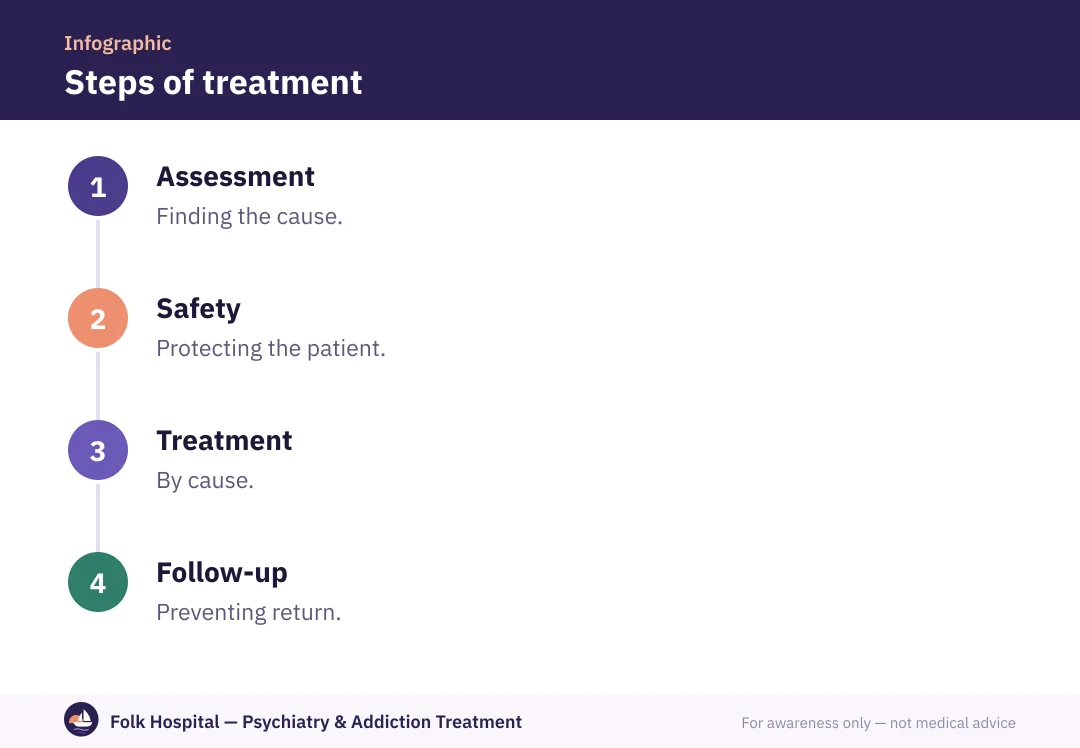
| Cause | Treatment |
|---|---|
| Psychosis and schizophrenia | Antipsychotics with psychological and family therapy |
| Drugs such as shabu, cannabis and Strox | Stopping, and treating drug-induced psychosis |
| Withdrawal from alcohol or sedatives | Supervised medical withdrawal; it's an emergency |
| Physical causes: fever, infections, brain diseases, medicines | Treating the physical illness and reviewing medicines |
| Bipolar disorder or severe depression | Mood stabilisers or antidepressants with antipsychotics |
02Medical treatment
Antipsychotics reduce hallucinations in most patients within days to weeks. The doctor starts with the lowest effective dose and monitors side effects. Stopping suddenly can bring symptoms back.
03Cognitive therapy for voices
For people whose voices persist despite medication, cognitive therapy helps to:
- Understand the voices and fear them less.
- Review beliefs about their power and control.
- Learn coping methods such as keeping busy, listening to music or talking to someone.
04Danger signs
- Voices ordering harm to self or others.
- Hallucinations with severe confusion, fever or tremor after stopping alcohol or sedatives.
- Severe agitation or dangerous behaviour.
Read about psychosis treatment and our psychiatric hospital.
؟Frequently asked questions
Do hallucinations disappear completely with medication?
They disappear or decrease greatly in most patients, and may persist mildly in some, with a better ability to cope with them.
Do all hallucinations mean a mental illness?
No. They can occur with high fever, severe lack of sleep, some medicines, brain diseases, or withdrawal from alcohol and sedatives. That's why assessment is needed.
What should I do if my relative hears voices?
Don't argue about whether the voices exist or mock them; calmly ask what they hear and whether it tells them to do anything, and seek a medical assessment, immediately if there's danger.
Are command hallucinations dangerous?
Yes. If the voices order harm to self or others, it's an emergency that needs immediate intervention.
Sources and references
- Psychosis — NHS (UK)
- Psychosis and schizophrenia in adults (CG178) — National Institute for Health and Care Excellence (NICE)
- Schizophrenia — National Institute of Mental Health (NIMH)
- Co-Occurring Disorders and Health Conditions — National Institute on Drug Abuse (NIDA)

A psychiatrist specialising in addiction and mental illness in adults and adolescents, with a focus on dual diagnosis.
For awareness only — not a substitute for medical advice. Editorial policy · View profile