01Psychotic symptoms in depression
Common examples
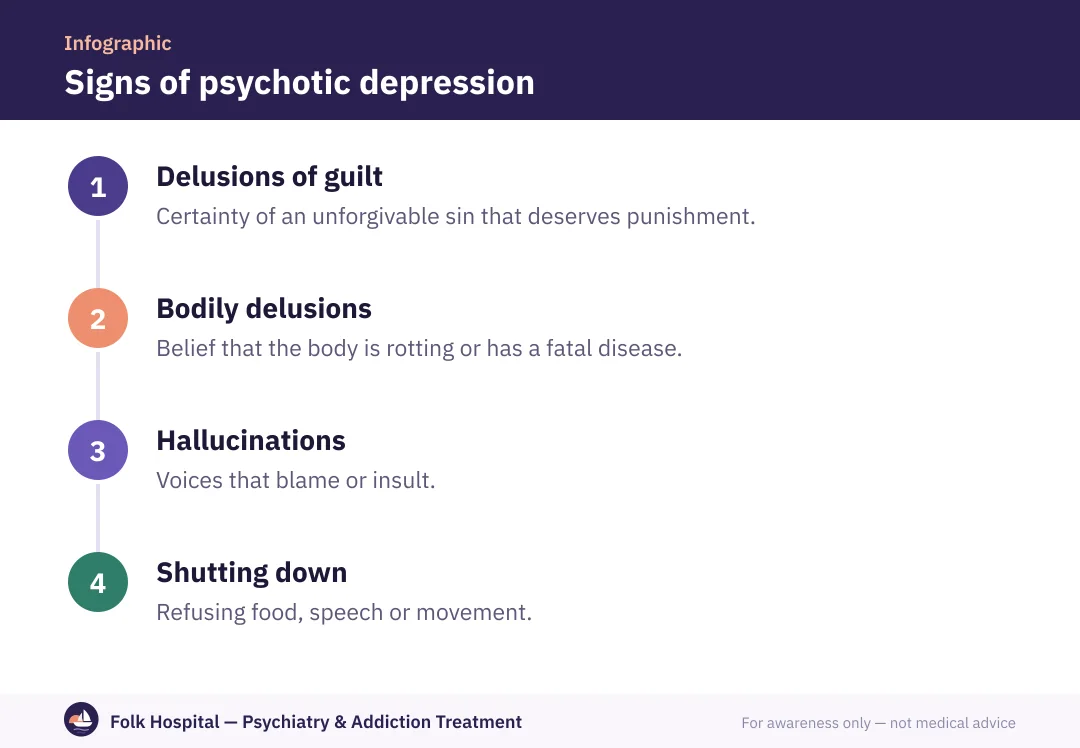
- Conviction of having committed a great sin deserving punishment.
- Conviction of total poverty despite having money.
- Conviction of fatal illness despite normal tests.
- Voices that blame, belittle or command self-harm.
- Belief that internal organs are rotting or have stopped.
02Why is it an emergency?
| Risk | Reason |
|---|---|
| Suicide | Deep despair, delusions of guilt and commanding voices |
| Refusing food | Feeling undeserving or fearing poisoning |
| Self-neglect | Lost energy and motivation |
| Delayed treatment | Hiding symptoms out of shame |
- Suicidal thoughts or plans, or self-harm.
- Hallucinations or strange beliefs with depression.
Mental health hotline 08008880700; ambulance 123.
Ambulance: 12303Treatment
- Urgent assessmentusually with safety in hospital.
- Dual medicationan antidepressant plus an antipsychotic.
- ECTin severe cases or when food is refused; safe and effective under supervision.
- Follow-upto prevent relapse and watch for bipolar disorder.
Read electroconvulsive therapy, psychosis and depression.
؟Frequently asked questions
What is psychotic depression?
Severe depression with hallucinations or delusions, usually in keeping with sadness and guilt.
How does it differ from schizophrenia?
In psychotic depression, psychotic symptoms appear during the depressive episode and resolve with its treatment; in schizophrenia psychosis persists without a mood episode.
Is psychotic depression dangerous?
Yes, because of high suicide risk and sometimes refusing food; it needs urgent treatment.
How is it treated?
Usually with an antidepressant plus an antipsychotic, often in hospital, and sometimes ECT.
Can psychotic depression be cured?
Yes, it responds well to treatment but needs follow-up to prevent relapse.
Does the person realise their thoughts are unrealistic?
Usually not during the episode; the thoughts seem entirely real.
Sources and references
- Depressive disorder (depression) — fact sheet — World Health Organization
- Depression — National Institute of Mental Health (NIMH)
- Psychosis — NHS (UK)

A psychiatrist specialising in addiction and mental illness in adults and adolescents, with a focus on dual diagnosis.
For awareness only — not a substitute for medical advice. Editorial policy · View profile