01Harms to mental health
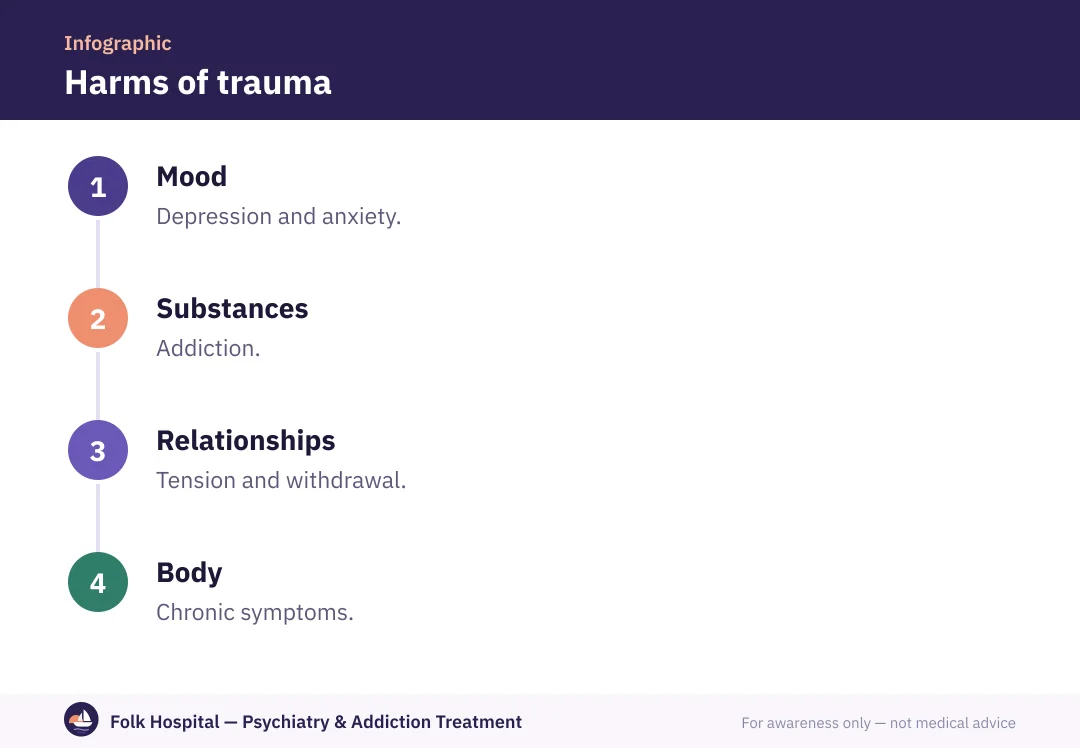
| Harm | How it links to trauma |
|---|---|
| Depression | Self-blame, numbness and hopelessness |
| Anxiety and panic | An alarm system permanently on alert |
| Insomnia | Nightmares and fear of sleep |
| Addiction | Trying to numb memories and anxiety |
| Depersonalisation | Detachment to protect oneself from pain |
02Harms to daily life
What may be affected
- Relationships: irritability, withdrawal and difficulty with closeness.
- Family: children are affected by a parent's tension and outbursts.
- Work: poor concentration, absences and avoiding certain situations.
- Social life: isolation and avoiding places.
- Driving and travel: avoidance after accidents.
03Physical harms
Chronic stress keeps the body in emergency mode, which may be linked to chronic headaches, muscle pain, digestive problems, high blood pressure and weaker immunity. Read psychosomatic symptoms and cortisol.
- Suicidal thoughts or self-harm.
- Severe detachment from reality or inability to look after oneself.
- A large increase in alcohol or substance use.
Mental health hotline: 08008880700; ambulance: 123.
Ambulance: 12304Treatment reverses most harms
- Trauma treatmentprocessing the memory reduces intrusion and avoidance.
- Treating depression and insomniaimproves energy and sleep.
- Treating addictionif present, in parallel with the trauma.
- Involving the familyto understand and handle the symptoms.
Read PTSD treatment and its symptoms.
؟Frequently asked questions
Does PTSD cause depression?
Yes. Depression accompanies a large share of cases and needs parallel treatment.
Why do sufferers turn to alcohol and drugs?
To numb memories, nightmares and anxiety, but this leads to dependence and blocks recovery.
Does it affect marriage?
Yes, through irritability, emotional detachment, avoiding closeness and poor sleep; partners benefit from guidance.
Does it have physical harms?
It may be linked to headaches, body pain, digestive problems and high blood pressure because of ongoing stress.
Does it raise suicide risk?
Yes, especially with depression and addiction, so any talk of death needs immediate attention.
Do the harms go away with treatment?
Most improve with trauma treatment and treatment of co-occurring problems, even years after the event.
Sources and references
- PTSD (post-traumatic stress disorder) — overview — NHS (UK)
- Post-Traumatic Stress Disorder — National Institute of Mental Health (NIMH)
- Psychotherapies — National Institute of Mental Health (NIMH)
- Comorbidity: Substance Use and Other Mental Disorders — National Institute on Drug Abuse (NIDA)

A psychiatrist specialising in addiction and mental illness in adults and adolescents, with a focus on dual diagnosis.
For awareness only — not a substitute for medical advice. Editorial policy · View profile