01Re-experiencing
Intrusion symptoms
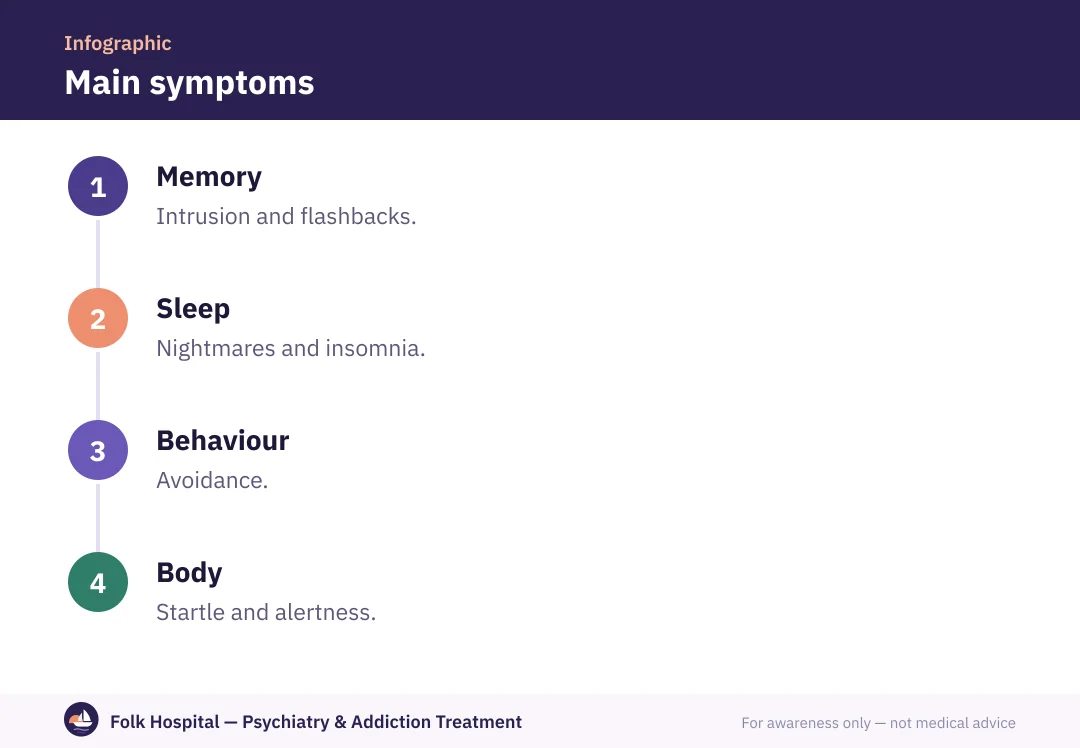
- Painful memories intruding without will.
- Recurrent nightmares about the event or its emotions.
- Flashbacks: feeling the event is happening now.
- Intense distress or physical symptoms when exposed to reminders.
02Avoidance
- Avoiding places, people, sounds or smells linked to the event.
- Refusing to talk or think about it.
- Over-busying oneself with work or substances to avoid thinking.
03Changes in thinking and mood
| Symptom | What it looks like |
|---|---|
| Self-blame | «I should have done something» or «it's all my fault» |
| Negative beliefs | «The world is completely dangerous» or «no one can be trusted» |
| Numbness | Difficulty feeling joy or love |
| Lost interest | Withdrawing from activities and relationships |
| Memory gaps | Forgetting important parts of the event |
04Hyperarousal
- Insomnia and difficulty staying asleep.
- Irritability and angry outbursts.
- Strong startle at sudden noises.
- Constantly scanning surroundings for danger.
- Poor concentration.
- Sometimes reckless or self-destructive behaviour.
05In children
Signs particular to children
- Re-enacting the event in play or drawing.
- Nightmares without clear content.
- Clinging to parents and fear of separation.
- Regression in speech or bladder control.
- Irritability, tantrums and school difficulties.
- Suicidal thoughts or self-harm.
- Severe detachment from reality or inability to look after oneself.
- A large increase in alcohol or substance use.
Mental health hotline: 08008880700; ambulance: 123.
Ambulance: 123Read PTSD, its harms, its treatment and depersonalisation.
؟Frequently asked questions
What is a flashback?
A vivid re-living of the event in which the person feels they're going through it again with images, sounds and emotions, sometimes briefly losing touch with the present.
Are nightmares a symptom of trauma?
Yes. Recurrent nightmares about the event or its emotions are common, causing insomnia and fear of sleep.
Why do sufferers blame themselves?
The brain tries to find an explanation and control over what happened, so the person convinces themselves they could have prevented it, even when they couldn't.
Is emotional numbness a symptom?
Yes. Sufferers may feel cut off from others or unable to feel joy or love as before.
How do symptoms show in children?
Through re-enacting the event in play, nightmares, clinginess, regression in speech or bladder control, and tantrums.
Can symptoms be delayed?
Yes, they can appear months or years later, often after new stress or a strong reminder.
Sources and references
- PTSD (post-traumatic stress disorder) — overview — NHS (UK)
- Post-Traumatic Stress Disorder — National Institute of Mental Health (NIMH)
- Psychotherapies — National Institute of Mental Health (NIMH)

A psychiatrist specialising in addiction and mental illness in adults and adolescents, with a focus on dual diagnosis.
For awareness only — not a substitute for medical advice. Editorial policy · View profile