01What is this test based on?
We wrote the questions in plain language to cover the main signs of post-traumatic stress that specialists ask about in an assessment. It helps you see whether you need another step.
02How to read your result
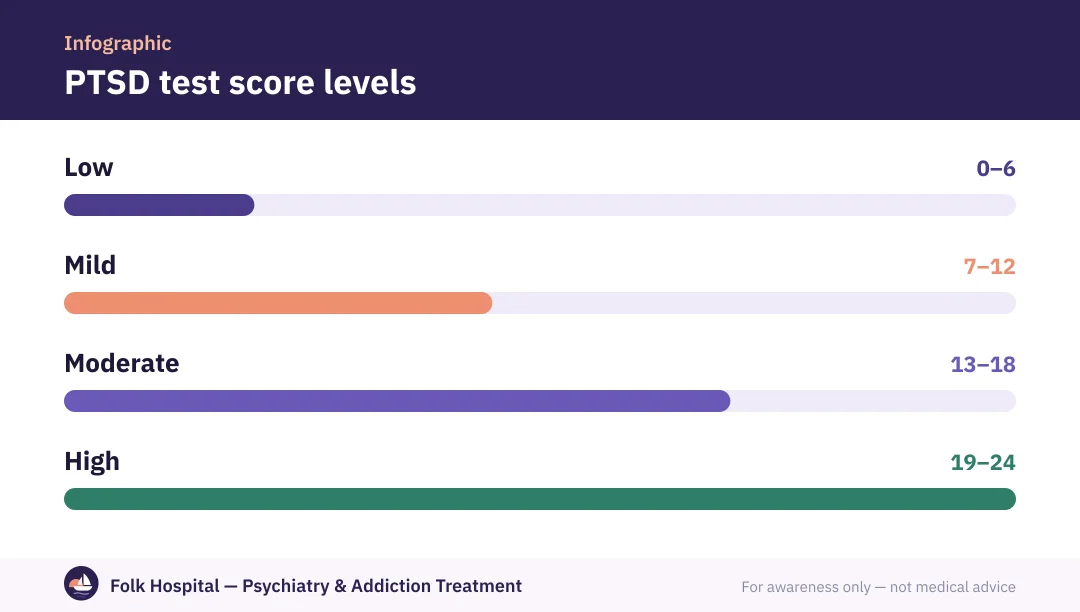
| Score | Level |
|---|---|
| 0–6 | Low |
| 7–12 | Mild |
| 13–18 | Moderate |
| 19–24 | High |
Read about PTSD.
03The four symptom groups
| Group | Examples |
|---|---|
| Re-experiencing | Intrusive memories and nightmares |
| Avoidance | Staying away from places and conversations |
| Mood changes | Guilt and detachment from others |
| Hyperarousal | Startle, insomnia and irritability |
- Don't blame yourselfyour reactions make sense.
- Avoid alcohol and sedativesthey delay recovery.
- Keep a routinesleep, food and movement.
- Seek specialist treatmentif symptoms last over a month.
- Suicidal thoughts or intent to harm yourself or others.
- Losing touch with reality or severe agitation.
In Egypt call the ambulance on 123 or the mental-health hotline 08008880700.
Ambulance: 123؟Frequently asked questions
When do PTSD symptoms appear?
Usually in the first months after the event, sometimes later. If they last more than a month and affect your life, an assessment matters.
Does the site store my answers?
No, the score is calculated on your device and isn't sent or stored.
Does everyone who experiences trauma get PTSD?
No. Many recover naturally within weeks.
When does a normal reaction become a disorder?
When symptoms last over a month with clear impact on life.
How is trauma linked to addiction?
Some turn to substances to ease memories and insomnia.
Do I have to talk about the trauma?
Therapy moves at a safe pace agreed with your therapist.
Sources and references
- Post-Traumatic Stress Disorder — National Institute of Mental Health (NIMH)
- PTSD (post-traumatic stress disorder) — overview — NHS (UK)

A psychiatrist specialising in addiction and mental illness in adults and adolescents, with a focus on dual diagnosis.
For awareness only — not a substitute for medical advice. Editorial policy · View profile