01Functions
| Function | Effect |
|---|---|
| Energy | Raises sugar |
| Pressure | Maintains it |
| Immunity | Calms inflammation |
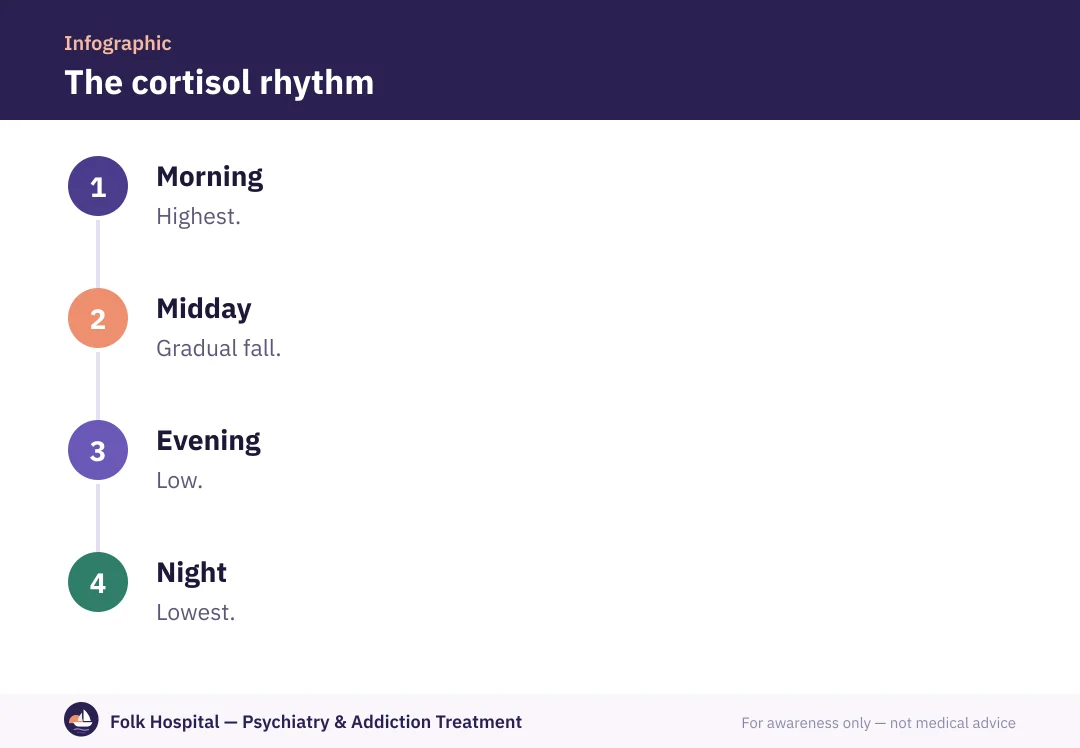
| Waking | Morning peak |
02Related pages
- Highhigh cortisol
- Addictioncortisol and addiction
- Loweringlowering it naturally
Read also: stress, adrenaline, psychosomatic disorders.
؟Frequently asked questions
What is cortisol?
A stress hormone from the adrenal glands regulating sugar, pressure and immunity.
When does it rise?
Naturally in the morning, and with stress, illness and lack of sleep.
Can it be measured?
Yes, with blood, saliva or urine tests as medically needed.
Does it cause weight gain?
Chronic elevation can increase abdominal fat.
How is it linked to addiction?
Stress raises substance-use risk, and withdrawal raises cortisol.
How can I lower it?
Sleep, exercise, relaxation techniques and relationships.
Sources and references
- Cortisol — Cleveland Clinic
- Stress — questions and answers — World Health Organization

Written byDr. Mahmoud ElsawyConsultant in psychiatry and addiction treatment
A psychiatrist specialising in addiction and mental illness in adults and adolescents, with a focus on dual diagnosis.
For awareness only — not a substitute for medical advice. Editorial policy · View profile