01What does treatment address?
PTSD appears after a traumatic event in four main forms: re-experiencing through memories and nightmares, avoidance of reminders, changes in thoughts and feelings such as guilt and numbness, and hyperarousal with tension and insomnia. Treatment aims for the memory to become a memory of the past, not an experience relived. Read about the symptoms of PTSD.
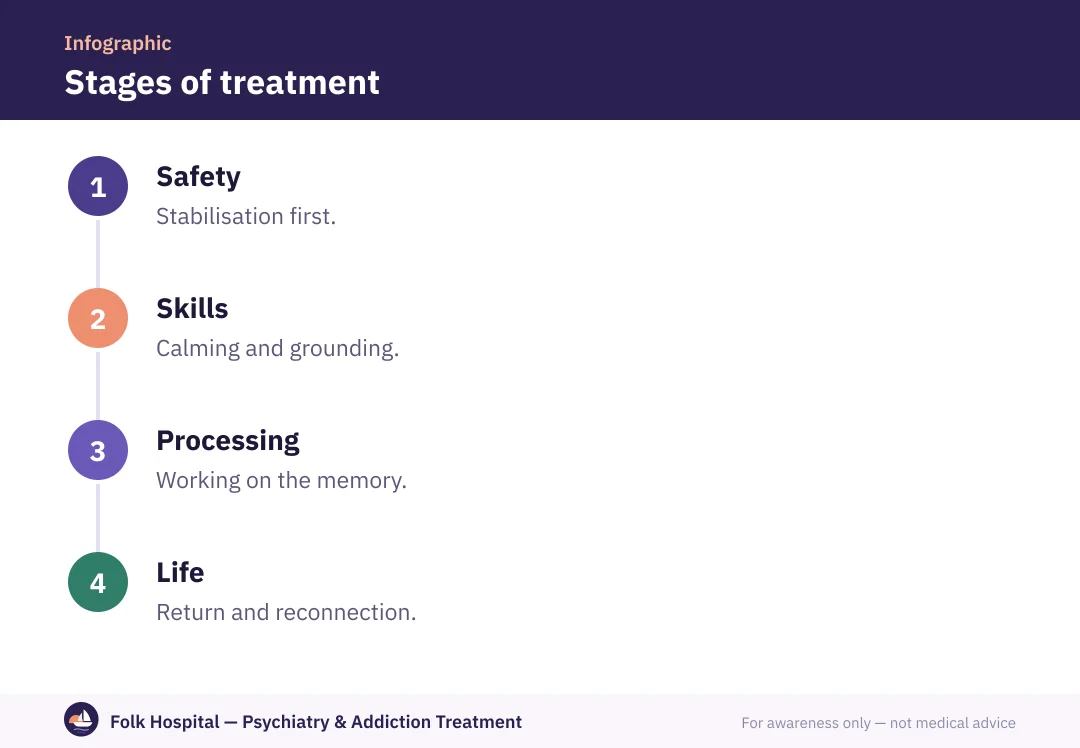
02The stages of treatment
- Safety and stabilisationmaking sure the person is safe now and learning skills for calming and handling anxiety attacks.
- Understanding traumahow trauma affects the brain and body, and why symptoms happen.
- Processing memorieswith trauma-focused therapy, at the right pace.
- Rebuilding lifereturning to the activities and relationships the person has avoided.
03Trauma-focused therapies
| Therapy | How it works |
|---|---|
| Trauma-focused cognitive therapy | Works on thoughts linked to the trauma, such as guilt, self-blame and constant danger |
| Prolonged exposure | Gradually facing the memory and avoided situations until their impact lessens |
| EMDR | Recalling the memory in a structured way with guided eye movements |
All are first-line in international guidelines, and the therapist chooses the right one with the patient.
04Medication
Antidepressants such as sertraline help many patients, especially with co-existing depression or anxiety. The doctor treats insomnia and nightmares with suitable medicines and techniques. Sedatives aren't recommended as a main treatment, because of the risk of dependence and because they can hinder recovery.
05Trauma and addiction
Be aware
Many people with trauma turn to alcohol, sedatives or drugs to silence memories and sleep. This brings temporary relief, then worsens symptoms and adds an addiction. Treating both together is the right path. Read about PTSD and addiction and dual diagnosis.
06The family's role
- Don't pressure the person to talk, and don't play down their experience.
- Respect their need for safety, and help them return to activities gradually.
- Watch for signs of depression or thoughts of self-harm.
- Call an ambulance on 123 or the mental health hotline on 08008880700.
؟Frequently asked questions
Can trauma from years ago be treated?
Yes, trauma-focused treatments are effective even many years after the event.
Will I have to describe the details of the trauma?
Treatment approaches memories gradually, at a pace you can bear, after safety and trust are built. You won't be asked to do what you can't.
How long does treatment take?
Many trauma-focused treatments involve a set number of sessions, often 8 to 16, and repeated trauma may need longer.
What is EMDR?
An approved psychological treatment for trauma in which the person recalls the memory in a structured way with guided eye movements, so its emotional impact gradually fades.
Do nightmares improve?
Yes, they usually improve with treating the trauma itself, and there are techniques and medicines for sleep that the doctor decides on.
Sources and references
- Post-Traumatic Stress Disorder — National Institute of Mental Health (NIMH)
- Psychotherapies — National Institute of Mental Health (NIMH)
- Mental Health Medications — National Institute of Mental Health (NIMH)
- Mental disorders — fact sheet — World Health Organization

A psychiatrist specialising in addiction and mental illness in adults and adolescents, with a focus on dual diagnosis.
For awareness only — not a substitute for medical advice. Editorial policy · View profile