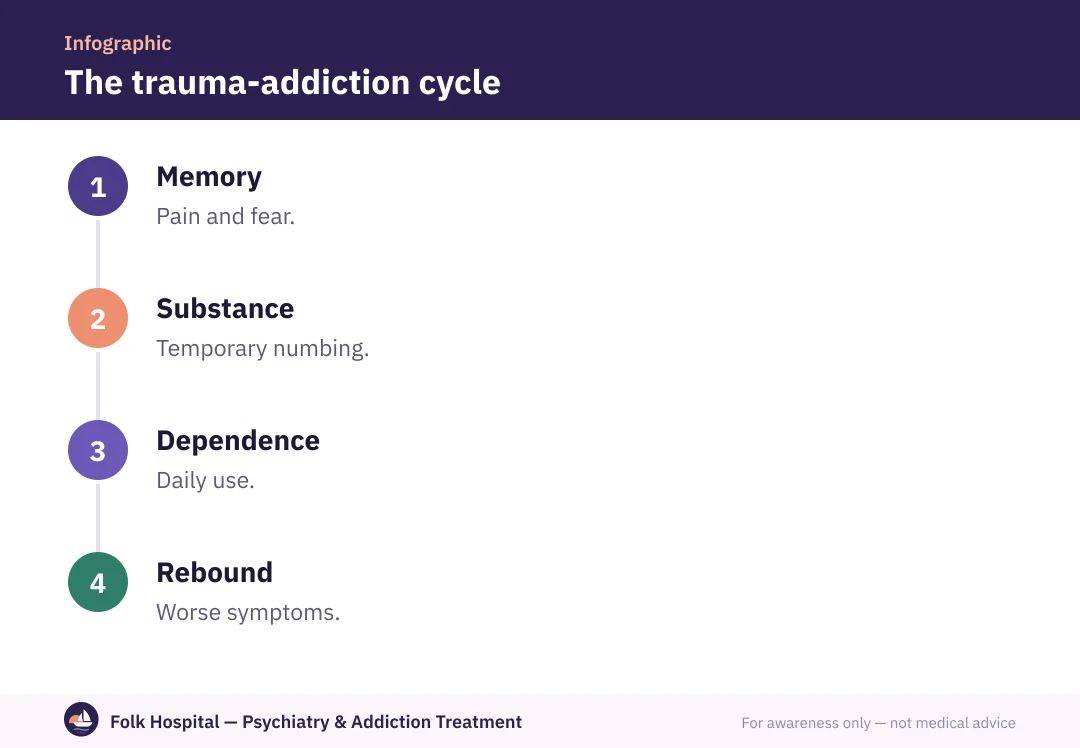
01The numbing cycle
- Traumamemories, nightmares, anxiety and insomnia.
- Numbingalcohol, a sedative or hashish eases the pain for hours.
- Avoidancethe brain never processes the memory, so it stays vivid.
- Dependencetolerance and rising doses.
- Withdrawalanxiety and nightmares increase, so the person returns to the substance.
02Substances most linked to trauma
| Substance | Why it's used | The problem |
|---|---|---|
| Alcohol | Numbing and falling asleep faster | Worse sleep, depression, dangerous withdrawal |
| Sedatives | Calming anxiety and startle | Dependence, withdrawal seizures |
| Hashish | Temporarily fewer nightmares | Dependence; suspicion and anxiety with continued use |
| Tramadol and opioids | Numbing physical and emotional pain | Rapid dependence, overdose risk |
03Why treat both together?
Treating only one
- Addiction without trauma: memories return, so numbing returns.
- Trauma with ongoing use: the substance blocks processing the memory.
- Result: repeated relapse.
Integrated treatment
- Safe detox with symptom support.
- Trauma-focused therapy after stabilisation.
- Alternative skills for handling memories.
- Result: more stable recovery.
- Suicidal thoughts or self-harm.
- Severe detachment from reality or inability to look after oneself.
- A large increase in alcohol or substance use.
Mental health hotline: 08008880700; ambulance: 123.
Ambulance: 123Read dual diagnosis, PTSD and causes of addiction.
؟Frequently asked questions
Why is PTSD linked to addiction?
Substances temporarily numb memories, anxiety and insomnia, so sufferers use them to ease symptoms, and dependence follows.
Which substances are most used after trauma?
Alcohol, sedatives, hashish and opioids such as tramadol, because they calm and ease sleep.
Should I treat the addiction or the trauma first?
It's usually best to treat them in parallel after a period of stabilisation and safe detox, rather than postponing one.
Do symptoms get worse when I stop the substance?
Nightmares, anxiety and insomnia may increase temporarily during withdrawal, so the patient needs support and treatment for these symptoms.
Does childhood trauma cause addiction?
It clearly raises the risk but doesn't make addiction inevitable; treatment and support reduce the risk.
Is recovery from both possible?
Yes. Many patients recover when trauma and addiction are treated together with an integrated plan and follow-up.
Sources and references
- PTSD (post-traumatic stress disorder) — overview — NHS (UK)
- Post-Traumatic Stress Disorder — National Institute of Mental Health (NIMH)
- Psychotherapies — National Institute of Mental Health (NIMH)
- Comorbidity: Substance Use and Other Mental Disorders — National Institute on Drug Abuse (NIDA)

A psychiatrist specialising in addiction and mental illness in adults and adolescents, with a focus on dual diagnosis.
For awareness only — not a substitute for medical advice. Editorial policy · View profile