01A two-way relationship
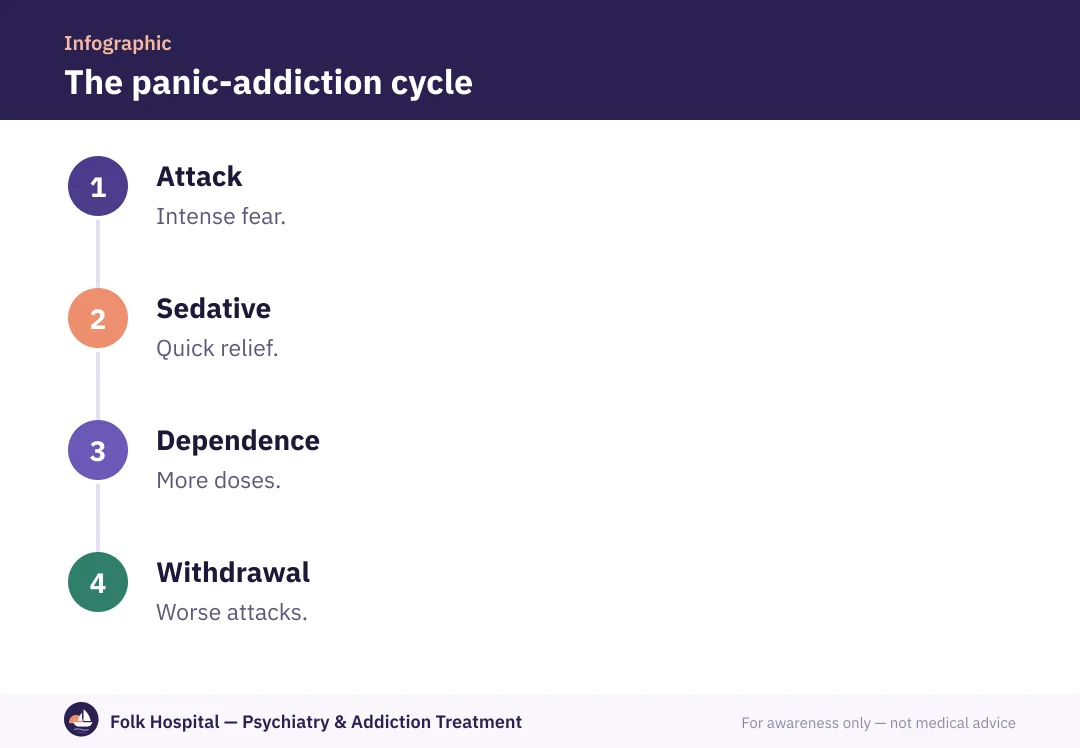
Panic leads to substances
- Sedatives to stop attacks quickly.
- Alcohol before frightening situations.
- Pregabalin or tramadol for calm.
- Result: dependence on top of panic.
Substances lead to panic
- Stimulants raise adrenaline and palpitations.
- Hashish and synthetic cannabinoids trigger terror.
- Withdrawal from sedatives and alcohol.
- Result: more frequent, harsher attacks.
02Substances most linked to panic
| Substance | Link with panic |
|---|---|
| Xanax and benzodiazepines | Fast calm, then tolerance, dependence and rebound anxiety |
| Alcohol | Temporary calm, then worse anxiety and attacks in withdrawal |
| Pregabalin | Self-medicated for calm; can cause dependence |
| Hashish | Can trigger panic attacks, especially strong strains |
| Strox | Severe panic, freezing and palpitations |
| Stimulants | Palpitations, insomnia, anxiety and attacks |
| Caffeine | Can trigger attacks in large amounts |
03Why sedatives don't treat panic
Panic treatment relies on the brain learning that bodily sensations aren't dangerous. A sedative that stops every attack denies the brain that learning, so the fear remains, and fear of running out of medicine is added. Over time its effect fades, the dose rises, and anxiety appears between doses.
- Sedatives were mixed with alcohol, tramadol or pregabalin and deep drowsiness or slow breathing appears.
- Seizures occur after suddenly stopping a sedative.
- Suicidal thoughts appear.
Call an ambulance on 123 or the mental health hotline on 08008880700.
Ambulance: 12304Treatment: both together
- Full assessmentthe substance, dose and duration, the severity of panic, and any depression.
- Safe withdrawala gradual sedative taper or medical alcohol detox, not an abrupt stop.
- Treating paniccognitive behavioural therapy and gradual exposure, with a non-addictive medicine when needed.
- Relapse preventiona plan for facing attacks without turning to the substance.
Read dual diagnosis, benzodiazepine withdrawal and anxiety and addiction.
؟Frequently asked questions
Does Xanax cause addiction in people with panic?
It can cause dependence with long daily use because it's fast and short-acting, so if used at all it's for a very short period.
Does hashish treat panic?
No. It may calm some people briefly, but it can cause panic attacks and increase anxiety with regular use.
Why do panic attacks increase when I stop my sedative?
The brain has adapted to the sedative, so rebound anxiety and withdrawal symptoms resembling panic appear. A gradual taper reduces this.
Does alcohol ease panic?
It eases tension for hours, then anxiety rises as it wears off and attacks can occur during withdrawal, creating a cycle.
How do I stop a sedative while I have panic disorder?
With a gradual taper planned by the doctor, alongside psychological treatment for panic and a non-addictive medicine if needed.
Can panic and addiction be treated together?
Yes, and that's best, because treating one and leaving the other raises the risk of relapse.
Sources and references
- Panic disorder — NHS (UK)
- Anxiety Disorders — National Institute of Mental Health (NIMH)
- Anxiety disorders — fact sheet — World Health Organization
- Psychotherapies — National Institute of Mental Health (NIMH)
- Comorbidity: Substance Use and Other Mental Disorders — National Institute on Drug Abuse (NIDA)

A psychiatrist specialising in addiction and mental illness in adults and adolescents, with a focus on dual diagnosis.
For awareness only — not a substitute for medical advice. Editorial policy · View profile