01What happens in a panic attack?
A panic attack is a sudden wave of intense fear with palpitations, breathlessness, dizziness, tingling, and a sense of dying or losing control. The mind reads these sensations as danger, so fear rises, so the sensations rise. Panic disorder means repeated attacks with constant fear of the next one, and avoiding places and situations because of it. Read about the symptoms of panic attacks.
02Cognitive behavioural therapy
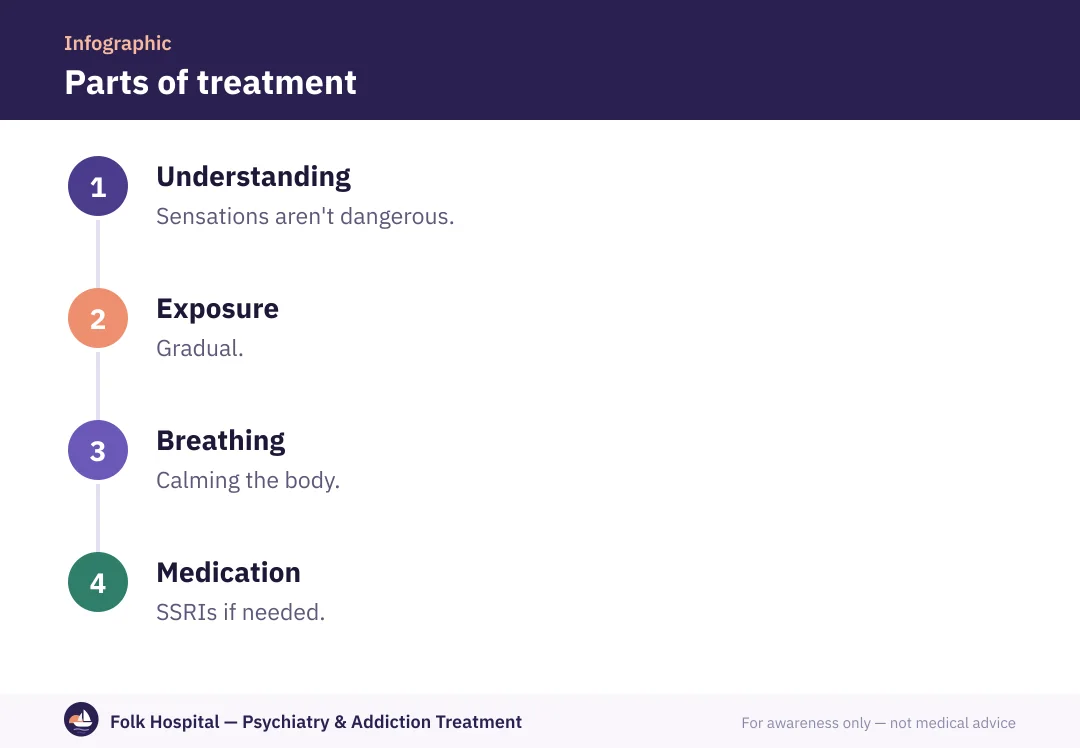
- Understandingwhy panic happens, and how physical sensations turn into a cycle of fear.
- Correcting the interpretationpalpitations aren't a heart attack, and dizziness isn't imminent fainting.
- Breathingslow-breathing exercises that calm the body.
- Exposure to sensationssafe exercises that bring on similar sensations, such as running on the spot, so the brain learns they aren't dangerous.
- Exposure to placesgradually returning to avoided places, such as public transport or markets.
- Preventing returna plan for stressful periods.
Read about cognitive behavioural therapy.
03Medication
| Type | Role |
|---|---|
| Antidepressants (such as SSRIs) | First choice; reduce how often attacks happen and take weeks to work |
| Sedatives | Very short-term if used at all, because of the risk of dependence |
A sedative for every attack?
Relying on a fast sedative for every attack brings momentary relief but stops the brain learning that the attack passes on its own, and can cause dependence. Read about Xanax addiction treatment.
04Habits that help
- Less caffeine and stimulants, including energy drinks.
- Regular sleep, because exhaustion increases attacks.
- Physical activity, which accustoms the body to a racing heart without fear.
- Avoiding alcohol and cannabis, which raise anxiety and attacks. Read about panic disorder and addiction.
05When do you need a prompt check?
If this is your first attack, or chest pain comes with exertion or cardiac risk factors, get a medical check to rule out a physical cause. Once that's ruled out, psychological treatment is the way forward.
؟Frequently asked questions
Can panic disorder be cured completely?
Many patients improve fully or almost fully with CBT and suitable medication.
Can I die during a panic attack?
No. A panic attack is very frightening but doesn't cause death or madness. New chest pain still needs a medical check to rule out a heart cause, especially with risk factors.
How long does an attack last?
It usually peaks within minutes and then gradually fades, even if it feels much longer at the time.
Should I take a sedative with every attack?
It isn't advised, because repeated use causes dependence and stops the brain learning that the attack passes on its own.
Sources and references
- Anxiety Disorders — National Institute of Mental Health (NIMH)
- Anxiety disorders — fact sheet — World Health Organization
- Psychotherapies — National Institute of Mental Health (NIMH)
- Mental Health Medications — National Institute of Mental Health (NIMH)

A psychiatrist specialising in addiction and mental illness in adults and adolescents, with a focus on dual diagnosis.
For awareness only — not a substitute for medical advice. Editorial policy · View profile