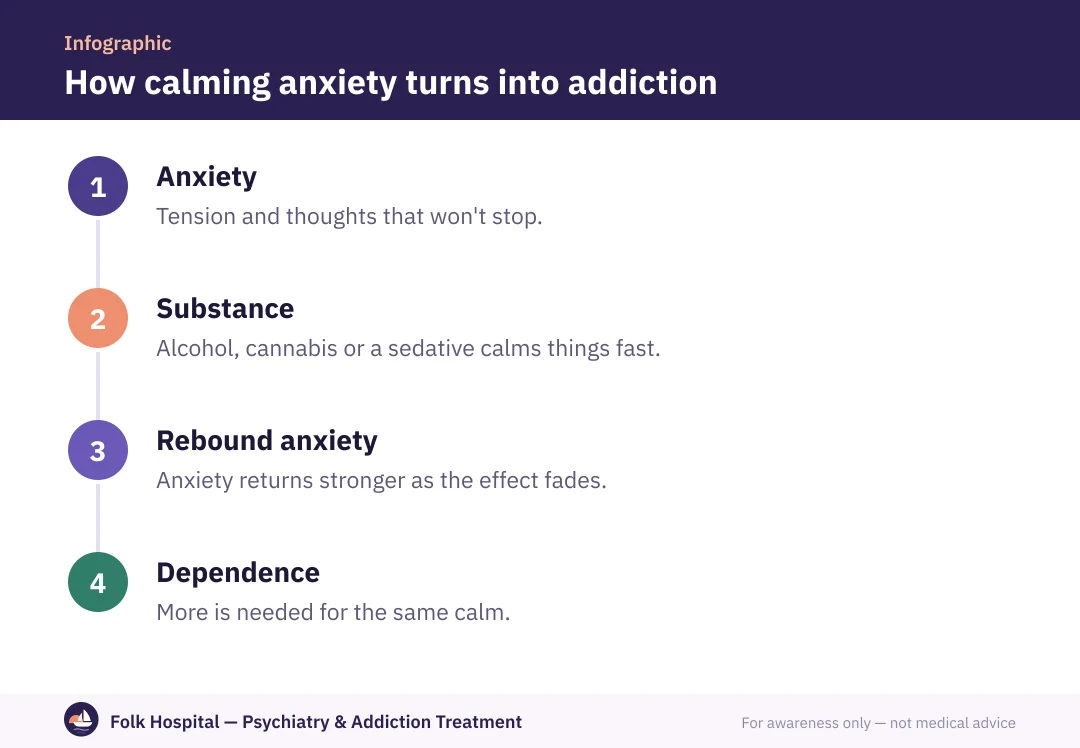
01The anxiety-substance cycle
- Anxietytension and unstoppable thoughts.
- A calming substancequick relief.
- Tolerancethe same dose no longer works.
- Rebound anxietyworse when the substance wears off.
- Dependenceusing to avoid anxiety the substance itself causes.
02The commonest substances
| Substance | What happens with anxiety |
|---|---|
| Benzodiazepines | Quick calm, then tolerance, dependence and rebound anxiety |
| Alcohol | Calm in the evening, anxiety in the morning |
| Pregabalin | Self-medication that can cause dependence |
| Hashish | Temporary calm, then anxiety and suspicion |
| Stimulants | Increase anxiety and palpitations |
03Treatment
Steps
- Assessing the substance, dose and duration.
- A supervised gradual sedative taper.
- Medical alcohol detox when needed.
Treating anxiety
- Cognitive behavioural therapy.
- A non-addictive antidepressant.
- Alternative calming skills.
- Seizures after suddenly stopping a sedative or alcohol.
- Mixing sedatives with alcohol or opioids with deep drowsiness.
Ambulance 123.
Ambulance: 123Read dual diagnosis, benzodiazepine withdrawal and pregabalin for anxiety.
؟Frequently asked questions
Why does anxiety lead to addiction?
Because sedatives, alcohol and others calm quickly, so they're used repeatedly until tolerance and dependence develop.
What is rebound anxiety?
Worse anxiety that appears as sedative or alcohol levels fall, making people think their original anxiety has grown.
Should I stop my sedative suddenly?
No. Stopping suddenly after long use can cause severe anxiety, insomnia and sometimes seizures. A supervised gradual taper is better.
What are safe alternatives to sedatives?
CBT, non-addictive antidepressants, breathing and relaxation skills, and regular sleep.
Does hashish treat anxiety?
It may calm briefly but increases anxiety and suspicion with continued use, and causes dependence.
Can anxiety and addiction be treated together?
Yes, and that's best, with a plan including safe withdrawal and anxiety treatment.
Sources and references
- Anxiety Disorders — National Institute of Mental Health (NIMH)
- Anxiety disorders — fact sheet — World Health Organization
- Psychotherapies — National Institute of Mental Health (NIMH)
- Comorbidity: Substance Use and Other Mental Disorders — National Institute on Drug Abuse (NIDA)
- Prescription Medicines — research topic — National Institute on Drug Abuse (NIDA)

A psychiatrist specialising in addiction and mental illness in adults and adolescents, with a focus on dual diagnosis.
For awareness only — not a substitute for medical advice. Editorial policy · View profile