01Interacting factors
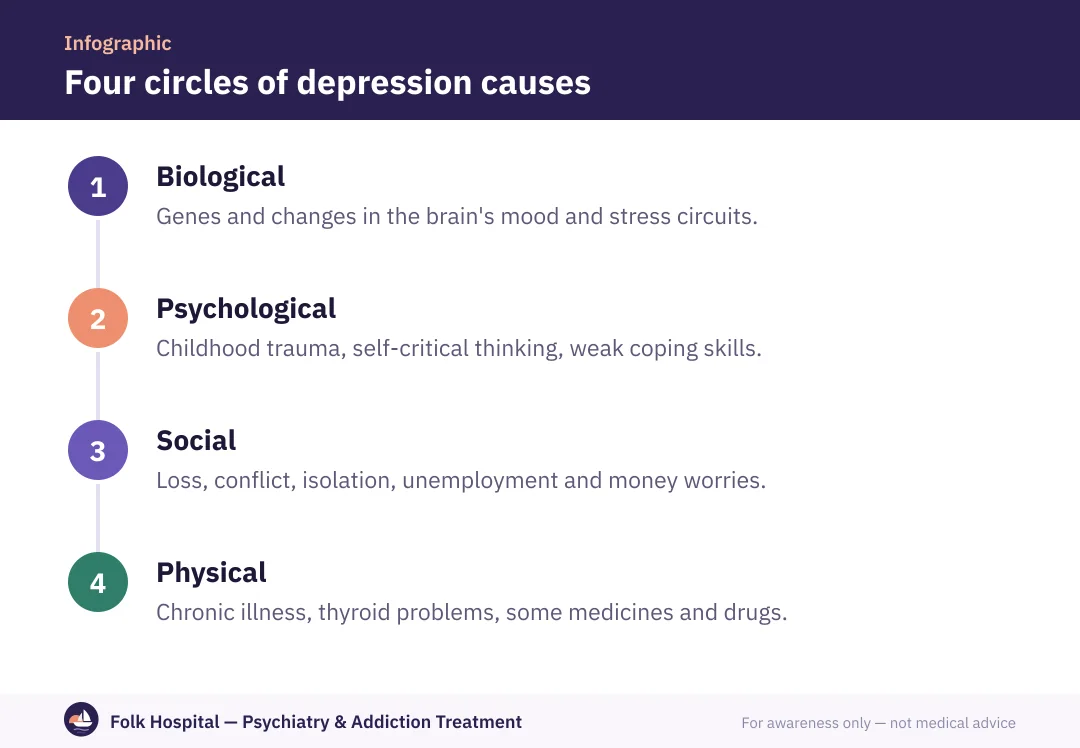
| Factor | Examples |
|---|---|
| Genes | A relative with depression or bipolar disorder |
| Brain | Serotonin, dopamine, mood circuits, stress hormones |
| Events | Loss, separation, unemployment, debt |
| Childhood | Neglect, trauma, losing a parent |
| Body | Thyroid, chronic illness, chronic pain |
| Hormones | After childbirth, midlife changes |
| Substances | Alcohol, stimulant withdrawal, hashish |
02Vulnerability and stress
- Vulnerabilitygenetic or from early experiences.
- A stress or eventloss, illness or setback.
- Changes in brain and bodysleep, energy and mood.
- Negative thoughts and withdrawalfeeding the depression.
- An ongoing cycleunless broken by treatment.
03Myths and facts
Myths
- Weak willpower.
- Weak faith.
- Self-indulgence or acting.
Facts
- An illness with multiple causes.
- Affects every group.
- Treatable.
- Suicidal thoughts or plans, or self-harm.
- Stopping eating and drinking or being unable to care for oneself.
- Hallucinations or strange beliefs with depression.
Mental health hotline 08008880700; ambulance 123.
Ambulance: 123Read depression, depression and addiction and causes of mental illness.
؟Frequently asked questions
What causes depression?
An interaction of genes, brain chemistry, stress, experiences, physical health and substances.
Is depression hereditary?
Genes play a role: an affected relative raises risk, but environment and stress matter greatly.
Can depression come without a reason?
Yes, it can appear without a clear event, especially in genetically vulnerable people.
Does alcohol cause depression?
Yes. Alcohol is a depressant that worsens depression, and depression drives drinking, each feeding the other.
Which physical illnesses are linked to depression?
Underactive thyroid, chronic illnesses such as diabetes and heart disease, chronic pain and some brain disorders.
Is depression weak faith?
No. It's an illness with biological, psychological and social causes, affecting believers and others alike, and treatment doesn't conflict with faith.
Sources and references
- Depressive disorder (depression) — fact sheet — World Health Organization
- Depression — National Institute of Mental Health (NIMH)
- Psychotherapies — National Institute of Mental Health (NIMH)

A psychiatrist specialising in addiction and mental illness in adults and adolescents, with a focus on dual diagnosis.
For awareness only — not a substitute for medical advice. Editorial policy · View profile