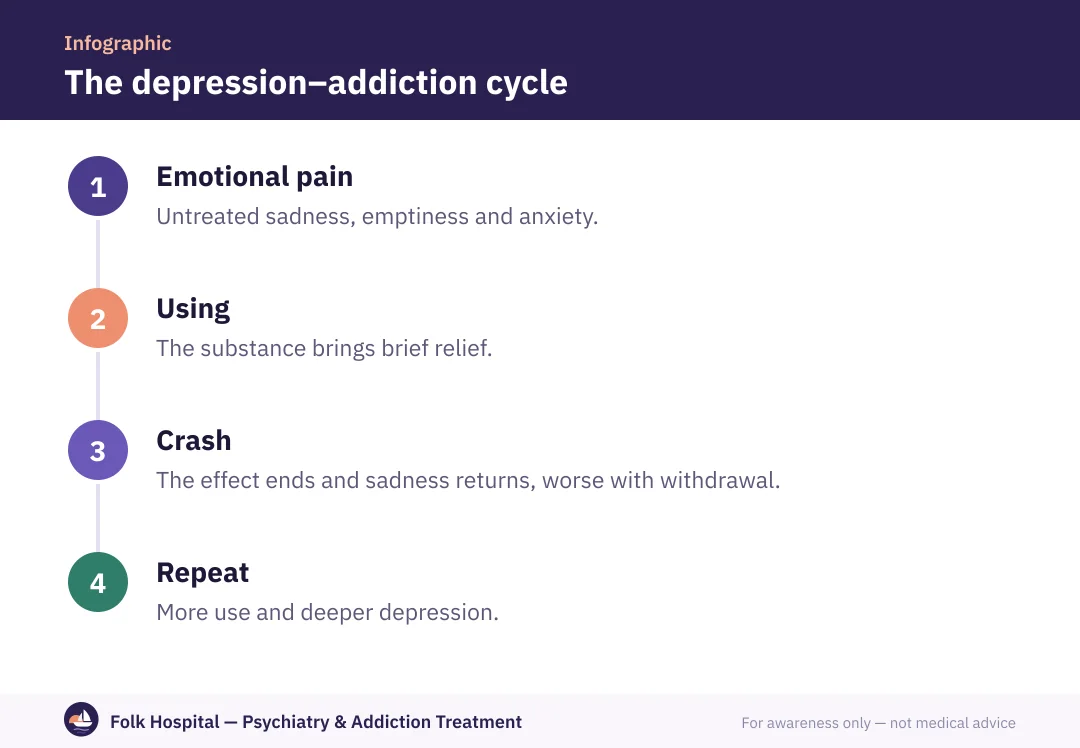
01The depression-substance cycle
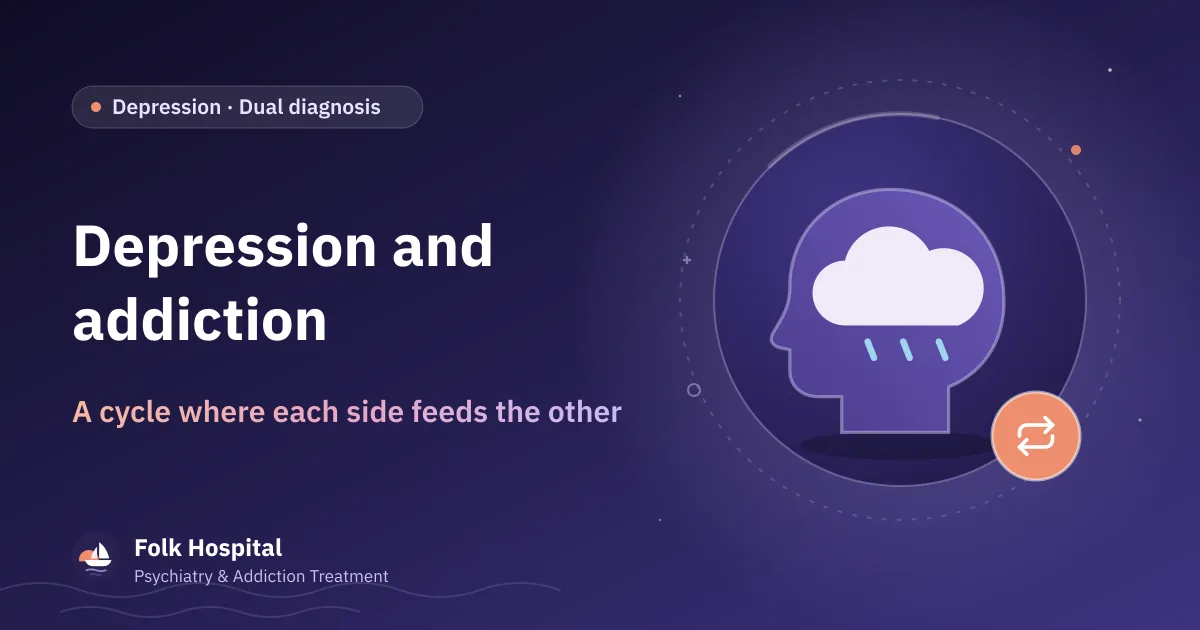
- Emotional painsadness, emptiness and despair.
- Numbingalcohol, a sedative or hashish.
- Temporary reliefthen sadness returns stronger.
- New problemsmoney, work and relationships.
- More despairand more use.
02Substances and mood
| Substance | Effect on mood |
|---|---|
| Alcohol | Deepens depression and increases impulsivity |
| Stimulants | A severe depressive crash in withdrawal |
| Opioids | Numbness, then depression in withdrawal |
| Sedatives | Suppression and dependence |
| Hashish | Apathy and lost motivation with continued use |
03Integrated treatment
The patient needs
- Safe detox from the substance.
- Depression assessment after stabilising.
- A suicide safety plan.
Then
- Psychological and medical treatment for depression.
- Addiction rehabilitation.
- Long-term follow-up.
- Suicidal thoughts or plans, or self-harm.
- Hallucinations or strange beliefs with depression.
Mental health hotline 08008880700; ambulance 123.
Ambulance: 123Read dual diagnosis, depression and suicidal thoughts.
؟Frequently asked questions
Why is depression linked to addiction?
Substances numb emotional pain briefly and in turn deepen depression, creating a cycle.
Does alcohol cause depression?
Yes. Alcohol is a depressant that worsens depression and anxiety, especially with regular drinking.
How do I know if depression is caused by drugs?
Through medical assessment and observing mood for weeks after stopping; if it persists, it may be independent depression.
Can antidepressants be taken during addiction treatment?
Yes, on medical advice, and many dual-diagnosis patients benefit.
Does withdrawal cause depression?
Yes, especially withdrawal from stimulants, alcohol and opioids, which needs monitoring because suicidal thoughts can appear.
What's the best treatment for both?
Integrated care including safe detox, psychological and medical treatment for depression, addiction rehabilitation and follow-up.
Sources and references
- Depressive disorder (depression) — fact sheet — World Health Organization
- Depression — National Institute of Mental Health (NIMH)
- Comorbidity: Substance Use and Other Mental Disorders — National Institute on Drug Abuse (NIDA)

A psychiatrist specialising in addiction and mental illness in adults and adolescents, with a focus on dual diagnosis.
For awareness only — not a substitute for medical advice. Editorial policy · View profile