01Signs of depression in a teenager
What the family may notice
- Irritability and quick anger.
- Withdrawing to their room for hours.
- A sudden drop in grades.
- Oversleeping or insomnia.
- Losing interest in friends and hobbies.
- Talk of worthlessness or death.
- Cuts, or always wearing long sleeves.
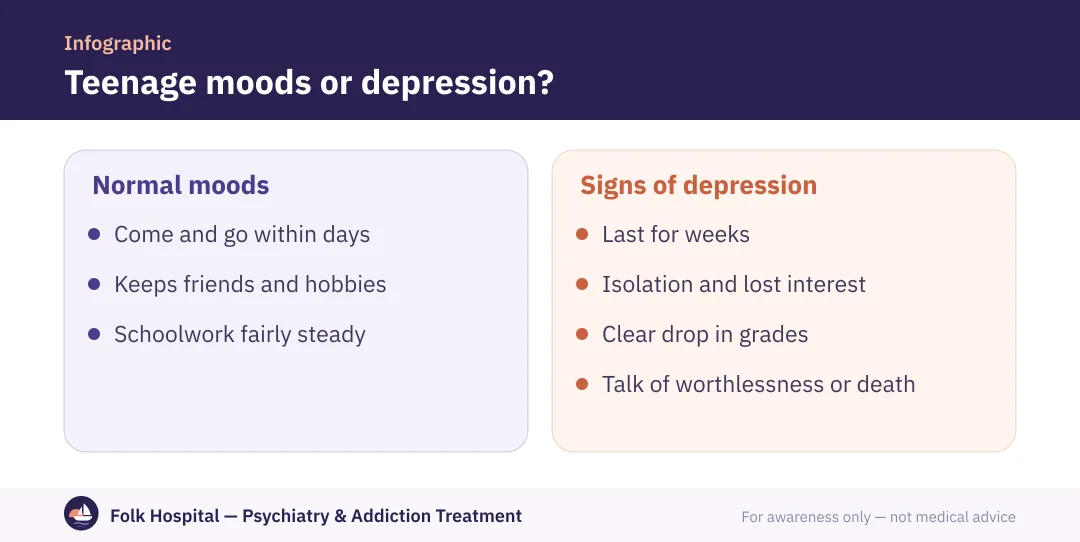
02Depression or ordinary adolescence?
| Normal moodiness | Depression | |
|---|---|---|
| Duration | Hours or days | Two weeks or more |
| Areas | A specific situation | School, family and friends |
| Enjoyment | Present | Lost |
| Performance | Stable | Declining |
03Risk factors
- Bullying, in person or online.
- Exam pressure and comparison.
- Parental conflict or separation.
- A family history of depression.
- Substance use.
- Suicidal thoughts or plans, or self-harm.
- Hallucinations or strange beliefs with depression.
Mental health hotline 08008880700; ambulance 123.
Ambulance: 12304How to help
- Noticepersistent changes.
- Talkcalmly and without blame.
- Listenmore than you speak.
- Seek assessmentfrom a specialist.
- Support treatmentand be part of it.
Read depression, teen psychological changes and self-harm.
؟Frequently asked questions
How do I know if my teenager is depressed?
Persistent irritability or sadness, withdrawal, falling grades, changed sleep and eating, and lost interest for more than two weeks.
How does depression differ from teenage moodiness?
Normal swings are brief and changeable; depression persists and affects school, relationships and activity.
Does social media cause depression?
Excessive use, cyberbullying and comparison can raise risk, but aren't the only cause.
What should I do if I discover self-harm?
Don't shout or punish; talk calmly, seek a prompt psychiatric assessment and remove dangerous items.
Are antidepressants used for teenagers?
They may be used in moderate and severe cases with careful supervision and monitoring, alongside psychotherapy.
How do I talk to my teen about feelings?
Choose a calm time, listen without interrupting or judging, express your worry and love, and offer help.
Sources and references
- Depressive disorder (depression) — fact sheet — World Health Organization
- Depression — National Institute of Mental Health (NIMH)

A psychiatrist specialising in addiction and mental illness in adults and adolescents, with a focus on dual diagnosis.
For awareness only — not a substitute for medical advice. Editorial policy · View profile