01Stages of higher risk
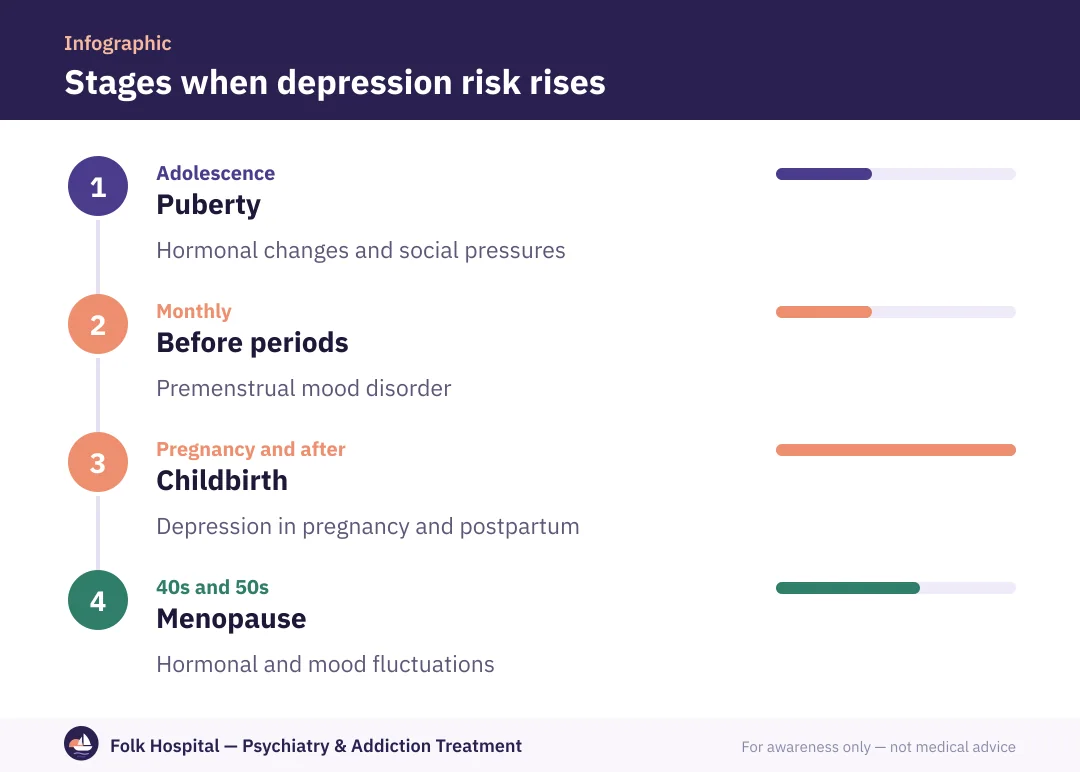
| Stage | What may happen |
|---|---|
| Premenstrual | Severe mood disturbance before periods |
| Pregnancy | Depression during pregnancy |
| After birth | Depression lasting weeks after delivery |
| Menopause | Hormonal and physical changes |
02Social factors
Common pressures
- The burden of caring for children and older relatives.
- Domestic violence.
- Financial strain.
- Isolation after marriage or childbirth.
- A husband's addiction.
03Treatment
Options
- Cognitive behavioural or interpersonal therapy.
- Antidepressants under supervision.
- Family and social support.
In pregnancy and breastfeeding
- Weighing benefits and risks.
- Choosing suitable medicines under supervision.
- Not stopping treatment suddenly.
- Suicidal thoughts or plans, or self-harm.
- Hallucinations or strange beliefs with depression.
Mental health hotline 08008880700; ambulance 123.
Ambulance: 123Read depression, postpartum depression and women and addiction.
؟Frequently asked questions
Why is depression more common in women?
Hormonal changes at certain stages, social pressure and caregiving burdens, and greater exposure to some forms of violence.
What is premenstrual depression?
Severe mood symptoms before periods, such as sadness, irritability and anxiety, improving once the period starts and affecting life.
How do baby blues differ from postpartum depression?
Baby blues pass in the first days; postpartum depression is more severe, lasts weeks and needs treatment.
Can depression be treated in pregnancy?
Yes, with psychotherapy and, when needed, some relatively safe medicines under supervision.
Does menopause cause depression?
It can raise risk through hormonal and physical changes, and deserves assessment.
Does a mother's depression affect her child?
It can affect care and bonding; treating the mother protects both.
Sources and references
- Depressive disorder (depression) — fact sheet — World Health Organization
- Depression — National Institute of Mental Health (NIMH)
- Mental Health Medications — National Institute of Mental Health (NIMH)

A psychiatrist specialising in addiction and mental illness in adults and adolescents, with a focus on dual diagnosis.
For awareness only — not a substitute for medical advice. Editorial policy · View profile