01A direct comparison
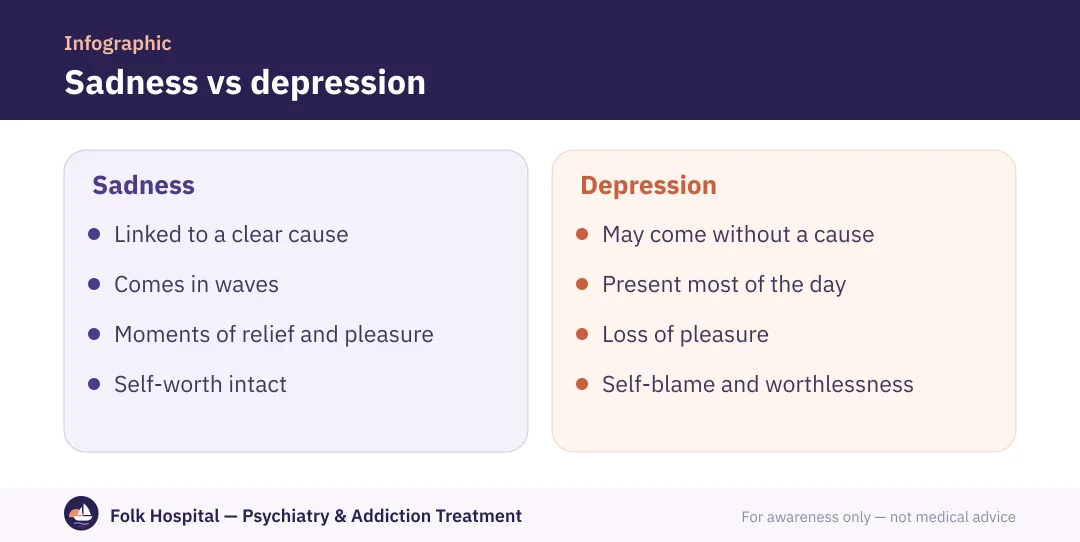
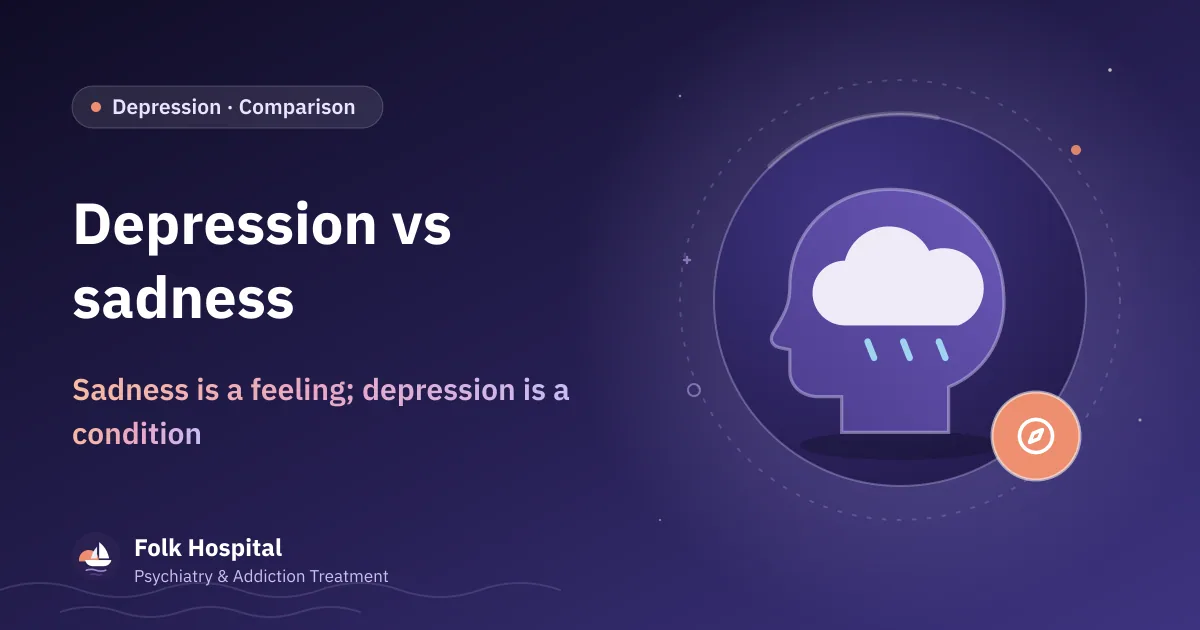
| Aspect | Sadness | Depression |
|---|---|---|
| Cause | Usually a specific event | May come without clear cause |
| Pattern | Waves | Persistent most of the day |
| Pleasure | Partly remains | Lost |
| Self-esteem | Usually intact | Worthlessness and guilt |
| Body | Limited effect | Changed sleep, appetite and energy |
| Duration | Eases with time | Two weeks or more without improvement |
| Life | Goes on despite pain | Is disrupted |
02Grief after loss
Grief after a loved one's death can last months, coming in waves linked to memories and occasions. It becomes concerning if it's very intense and persistent, or comes with worthlessness, a wish to die or inability to function for a long time.
03When to seek help
Seek assessment if
- Sadness lasts two weeks or more most of the day.
- You've lost enjoyment in almost everything.
- Your sleep, eating and energy have clearly changed.
- Thoughts of death appear.
- Suicidal thoughts or plans, or self-harm.
Mental health hotline 08008880700; ambulance 123.
Ambulance: 123Read depression, sadness for no reason and depression symptoms.
؟Frequently asked questions
What's the difference between sadness and depression?
Sadness is tied to an event, comes in waves and eases with time; depression persists and spreads to everything with loss of pleasure and changed sleep and energy.
When does sadness become depression?
When it lasts two weeks or more most of the day, with loss of pleasure, physical symptoms and an impact on life.
Is grief after a death depression?
Grief is natural and can be long, but it may become depression or complicated grief needing help.
Do I need treatment for sadness?
Ordinary sadness needs support and time; if it lasts and disrupts your life, assessment helps.
Is sadness for no reason depression?
It may be, especially if it persists with other symptoms. Read about sadness for no reason.
How can I help a sad person?
By being present and listening without too much advice, watching whether symptoms persist, and encouraging help if they do.
Sources and references
- Depressive disorder (depression) — fact sheet — World Health Organization
- Depression — National Institute of Mental Health (NIMH)

A psychiatrist specialising in addiction and mental illness in adults and adolescents, with a focus on dual diagnosis.
For awareness only — not a substitute for medical advice. Editorial policy · View profile