01What are the physical signs of heroin use?
Signs on the body
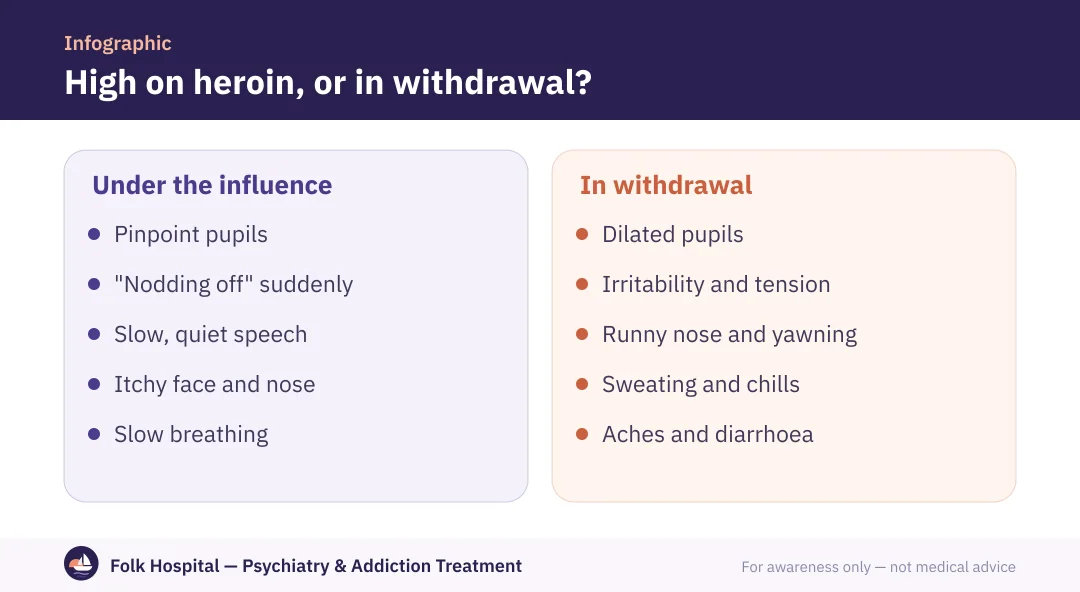
- Pinpoint pupils.
- Heavy drowsiness and sudden dozing mid-conversation ("nodding off").
- Frequent itching, especially of the nose and face.
- Chronic constipation, poor appetite and weight loss.
- Wounds or track marks on arms or feet, and long sleeves in hot weather.
- Frequent nose irritation or a runny nose in people who snort it.
02What are the behavioural and emotional signs?
Changes in behaviour
- Money or valuables going missing, and constant requests to borrow.
- Lies about where they've been and when.
- Isolation and long periods in the bathroom or bedroom.
- Neglecting hygiene, appearance, work or study.
- New, secretive friends and short, frequent phone calls.
- Sharp swings between unnatural calm and intense irritability.
03What items might suggest heroin use?
Foil burnt on one side, small tubes or empty pen casings, spoons blackened underneath, syringes, or very small plastic bags. Finding these alongside physical signs makes suspicion much stronger.
04What are the signs of an overdose?
- No response to shouting or shaking.
- Very slow, irregular breathing or unusual snoring sounds.
- Blue lips and fingernails.
- Pinpoint pupils with cold skin.
Call 123 immediately, place the person on their side and don't leave them alone.
Ambulance: 123؟Frequently asked questions
What do the eyes of someone on heroin look like?
Under the influence the pupils shrink to tiny points even in dim light and the eyelids may look heavy. In withdrawal the opposite happens: pupils widen and the eyes water.
Can heroin be detected by a test?
Yes. It usually shows in urine for one to three days after the last dose, and much longer in hair. See how long heroin stays in the body.
What should I do if I'm sure my son is using?
Avoid confronting him while you're angry and choose a calm moment. Start by expressing worry rather than accusing, and get specialist advice first if you can. Read how to deal with someone using heroin.
Sources and references
- Heroin — research topic — National Institute on Drug Abuse (NIDA)
- Opioids — research topic — National Institute on Drug Abuse (NIDA)
- Opioid overdose — fact sheet — World Health Organization

A psychiatrist specialising in addiction and mental illness in adults and adolescents, with a focus on dual diagnosis.
For awareness only — not a substitute for medical advice. Editorial policy · View profile