01Substances and dopamine
| Substance | Effect on dopamine |
|---|---|
| Stimulants (meth, cocaine) | Strong direct rise |
| Opioids | Indirect rise |
| Cannabis | Moderate rise |
| Nicotine | Quick, short rise |
| Alcohol | Indirect rise |
02From use to addiction
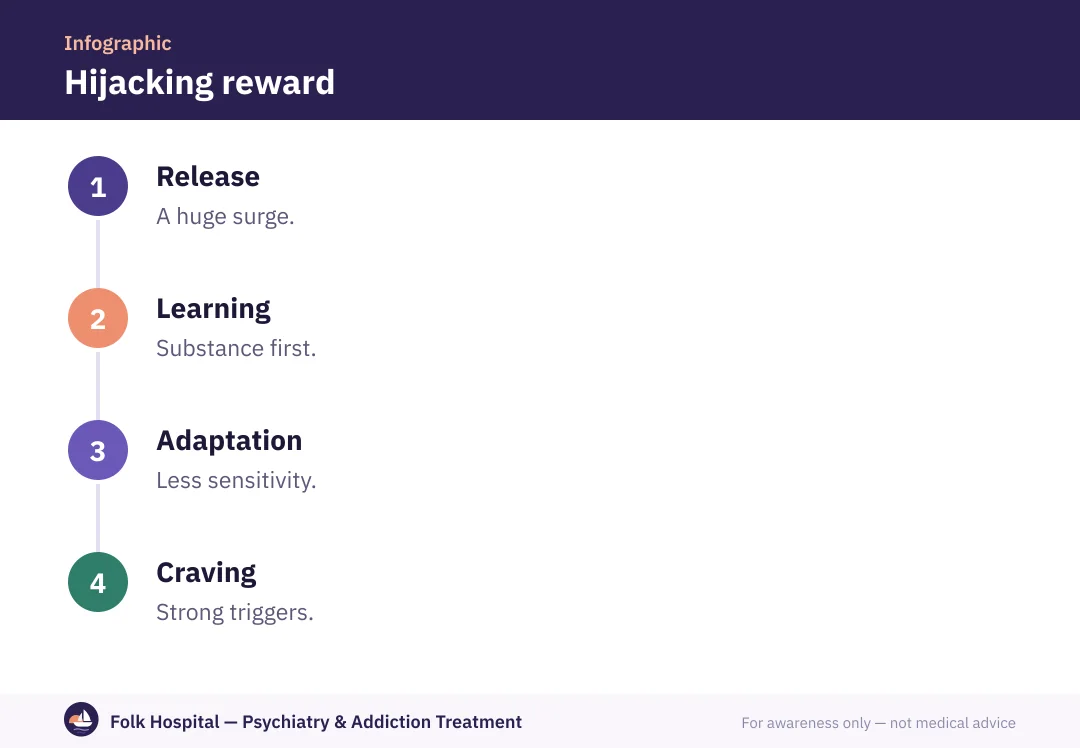
- Excess releasea strong high.
- Learningthe brain links the substance with reward.
- Tolerancefewer receptors, bigger doses.
- Dependencelistlessness without the substance.
- Cravingat triggers.
Read also: dopamine, anhedonia, relapse prevention.
؟Frequently asked questions
How do drugs cause addiction?
By strongly raising dopamine in the reward pathway, so the brain learns to repeat use.
Why do I need a bigger dose?
The brain reduces dopamine receptors, so the effect weakens.
Why can't I enjoy anything after stopping?
The reward system needs time to recover.
Does the brain recover?
Yes, gradually over months with abstinence and treatment.
Do behavioural addictions affect dopamine?
Yes. Gambling and gaming activate the same system to a lesser degree.
How is dopamine linked to relapse?
Triggers raise craving via dopamine, so avoiding them matters.
Sources and references
- Dopamine — Cleveland Clinic
- Drugs, Brains, and Behavior: The Science of Addiction — National Institute on Drug Abuse (NIDA)

Written byDr. Mahmoud ElsawyConsultant in psychiatry and addiction treatment
A psychiatrist specialising in addiction and mental illness in adults and adolescents, with a focus on dual diagnosis.
For awareness only — not a substitute for medical advice. Editorial policy · View profile