01How do you start the conversation?
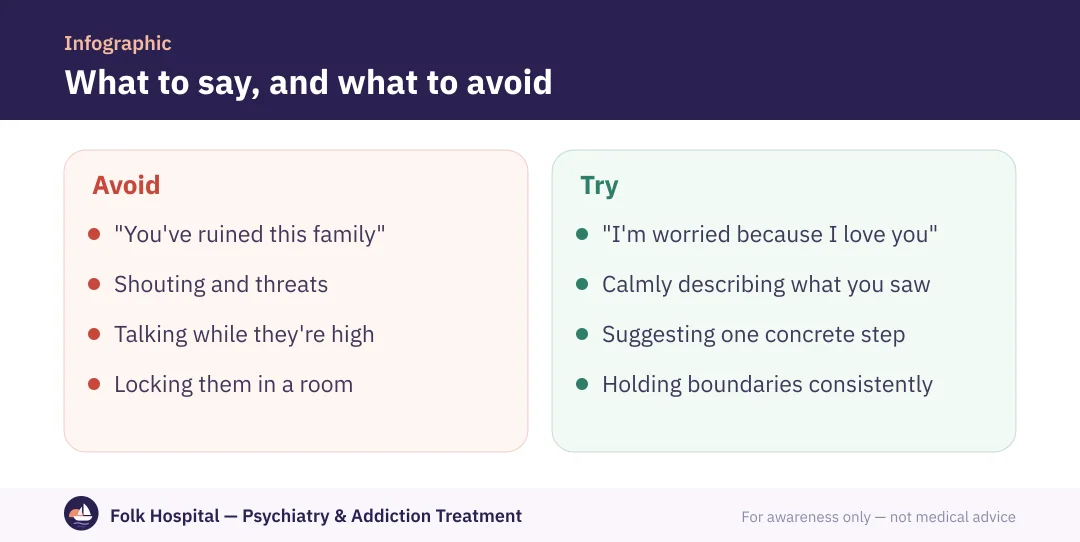
- Pick your momenta calm time when they're clear-headed, not straight after using or while in withdrawal.
- Lead with worry, not blame"I've noticed you're not yourself, and I'm scared for you."
- Mention specific factswhat you've seen yourself, without exaggeration or interpretation.
- Suggest one stepa call with a specialist or an assessment appointment, not "get treatment now or else".
- Expect to try againrefusal the first time is normal; what matters is keeping the door open.
02What boundaries should the family set?
Healthy boundaries
- No money without knowing where it goes.
- No using in the house.
- No covering for absences or lies at work or with relatives.
- Stated consequences that are actually carried out.
Common mistakes
- Paying off dealers to rescue them.
- Threatening to throw them out, then backing down.
- Hiding the problem from the rest of the family for years.
- Attempting detox at home.
03When is urgent intervention needed?
- There are signs of overdose: no response, slow breathing or blue lips.
- They talk about suicide or harming themselves.
- They become violent or a danger to others at home.
Call an ambulance on 123, then contact us to arrange admission.
Ambulance: 12304How do you protect yourself and the rest of the family?
Living with addiction is emotionally and financially draining. Get support for yourself, talk to someone you trust, and don't let the whole household revolve around the person using. A steadier family is better able to help. See the family programme.
؟Frequently asked questions
Should I give him money so he doesn't steal?
Giving money funds use and delays treatment. It's better to cover basic needs directly, such as food or specific transport, without free cash, and to protect valuables.
What if he flatly refuses treatment?
Start with family counselling for yourself. If there's a risk to his life or others, the law allows admission under medical safeguards. Talk to us and we'll explain the options.
Sources and references
- Heroin — research topic — National Institute on Drug Abuse (NIDA)
- Treatment Approaches for Drug Addiction — DrugFacts — National Institute on Drug Abuse (NIDA)
- Opioid overdose — fact sheet — World Health Organization

A psychiatrist specialising in addiction and mental illness in adults and adolescents, with a focus on dual diagnosis.
For awareness only — not a substitute for medical advice. Editorial policy · View profile