01Why do people try heroin the first time?
Curiosity, pressure from friends, wanting to escape a problem or believing that "once won't hurt". For others, heroin comes after years of other drugs or after getting used to opioid painkillers.
02Why do some go on to become addicted?
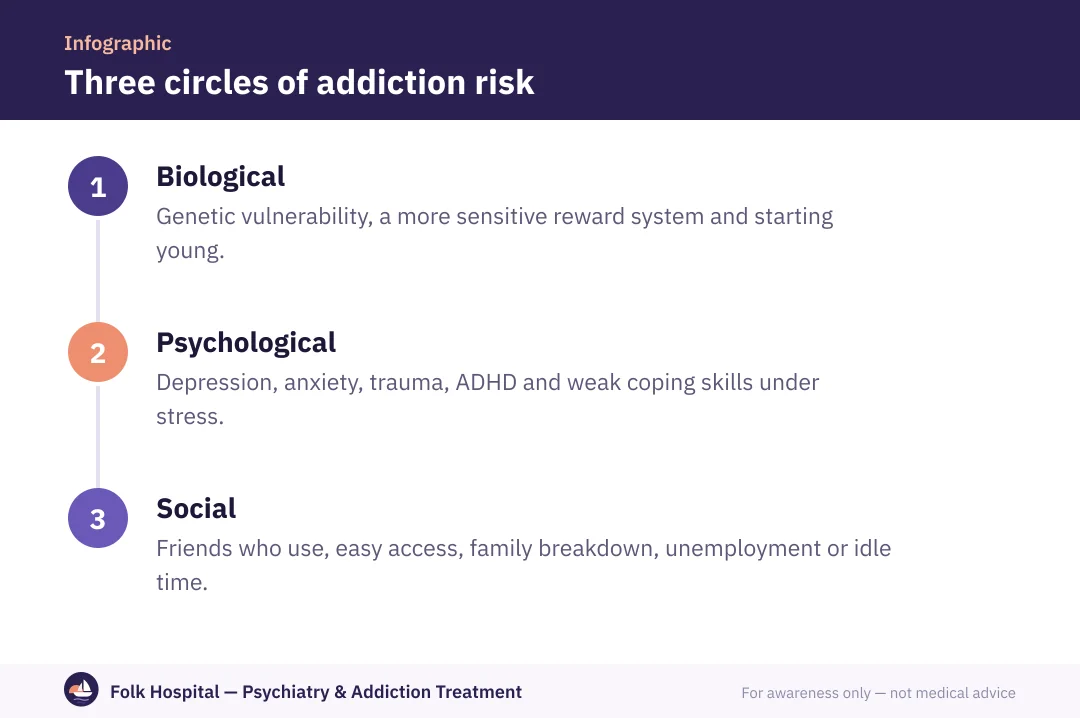
What brings people back isn't just the high, but what the drug quietens: old grief, constant anxiety, painful memories or a sense of emptiness. Once the brain learns that heroin switches that pain off within seconds, letting go becomes very hard. That's why addiction so often comes with mental illness that needs dual diagnosis care.
03Who is most at risk?
Risk factors
- Starting any substance in the teenage years.
- A family history of addiction.
- Untreated depression, anxiety or trauma.
- Violence or neglect in childhood.
- Friends who use and easy access to drugs.
- Unsupervised use of opioid painkillers.
04How does understanding the cause help treatment?
When a patient understands why they turned to the drug, they can learn a healthier way to meet the same need: treatment for depression, skills for anxiety, or support after trauma. That's the work of rehabilitation.
؟Frequently asked questions
Is addiction genetic?
Genes explain an important part of vulnerability, but they aren't destiny. Environment, upbringing and how someone handles stress decide whether that vulnerability becomes addiction.
Can painkillers lead to heroin?
Yes. Some people used to opioid painkillers such as tramadol move to heroin when their tolerance rises or the medicine becomes hard to get.
Sources and references
- Heroin — research topic — National Institute on Drug Abuse (NIDA)
- Drugs, Brains, and Behavior: The Science of Addiction — National Institute on Drug Abuse (NIDA)

A psychiatrist specialising in addiction and mental illness in adults and adolescents, with a focus on dual diagnosis.
For awareness only — not a substitute for medical advice. Editorial policy · View profile